
Substantive concepts
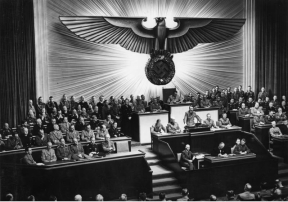
The knowledge that ‘flavours' a claim: towards building and assessing historical knowledge on three scales While marking some Year 11 essays, Kate Hammond found her interest caught by significant differences between one kind of strong analysis and another. Some scored high marks but were less convincing. The achievement in these...

This issue's problem: Rose Valognes feels she hasn't got enough ways of getting knowledge across to the students before they can do something with it. After a positive start to her training year, Rose Valognes seems to have got stuck in a rut in her thinking, with her lessons falling...
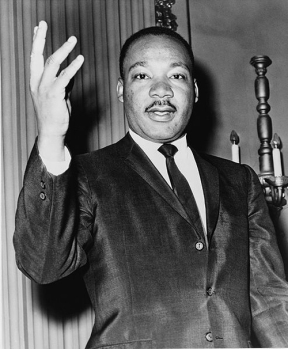
The more things change, the more they stay the same: developing students' thinking about change and continuity Finding ways to characterise the nature of change and continuity is an important part of the historian's task, yet students find it particularly challenging to do. Building on her previous work on change,...
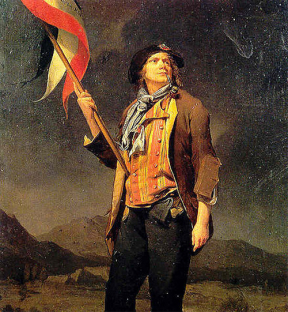
Silk purse from a sow's ear? Why knowledge matters and why the draft History NC will not improve it Katie Hall and Christine Counsell attempt to construct a Key Stage 3 scheme of work out of the draft National Curriculum for history that was released for consultation in England in...
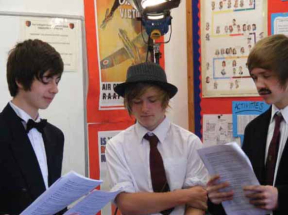
An article on scripted drama might seem an unlikely choice for an edition devoted to getting students talking. Surely the point about a script is that the words used are chosen and prescribed by others. However, the examples presented here by Helen Snelson, Ruth Lingard and Kate Brennan demonstrate how...
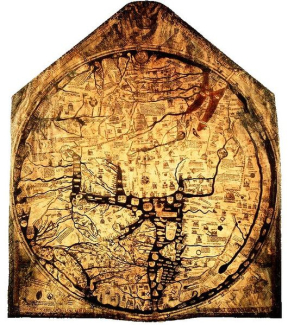
In recent decades, a novel approach to history has emerged, called ‘big history', which provides an overview of all of human history, embedded within biological, geological and astronomical history covering the grandest sweep of time and space, from the beginning of the universe to life on Earth here and now....

How my interest in what I don't teach has informed my teaching and enriched my students' learning Flora Wilson argues here for the importance of maintaining a fascination with history as an academic subject for experienced, practising history teachers. Just as medical professionals keep their knowledge up to date by...

Understanding historical interpretation involves understanding how historical knowledge is constructed. How do sixth formers model historical epistemology? In this article Arthur Chapman examines a small sample of data relating to sixth form students' ideas about why historians construct differing interpretations of the past. He argues that understanding interpretation requires students...
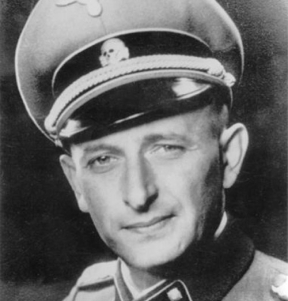
Almost 60 years ago Adolf Eichmann went on trial for crimes committed against the Jews while he was in the service of the Nazi regime. His capture by the Israeli secret service and his abduction from Argentina triggered a number of journalistic books that portrayed him as a pathological monster...

In this powerfully argued article Paul Salmons focuses directly on the distinctive contribution that a historical approach to the study of the Holocaust makes to young people's education. Not only does he question the adequacy of objectives focused on eliciting purely emotional responses; he issues a strong warning that turning...
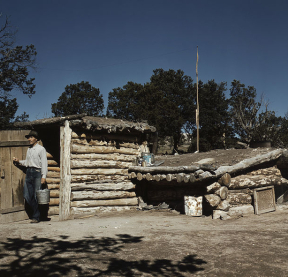
When Peter Clements was introduced to the creative strategy that he describes in this article, his immediate reaction was to dismiss it as childish and trivial. Yet, upon closer examination, he realised that ‘Picture This' offered far more than a lively way of increasing variety and engagement in his GCSE...

Please note: this article pre-dates the 2014 National Curriculum and some content may be outdated. Peter Seixas recounts the development of a history education reform project in Canada. Like all good histories, it is a complex story and a matter of unanticipated consequences and ironic narrative twists. Seixas' history is,...
One of the challenges facing pupils in the history classroom is conceptual understanding. Pupils also find it difficult to recognise themes or patterns across different parts of time and space. Ian Myson has recognised the importance of analogy as a way to facilitate pupils’ understanding. He is quick to recognise,...
As history teachers, we talk about concepts all the time. We know that pupils need to understand them in order to make sense of the past. Precisely what we mean when we talk about concepts is less clear, however. Research into how history teachers talk about their practice suggests that,...
Sometimes it is precisely in the interest of building better historical knowledge that facts and detail need temporarily to be abandoned. Gary Howells aims to secure discernible foundation understandings in his students by getting them to engage quickly with those aspects of political concepts that they can grasp. He is...