

The Big Summer Read
HA resources
In the Year of Reading, we've selected a few reads linked to the month, alongside some seasonal suggestions – all drawn from the riches of our own archive.
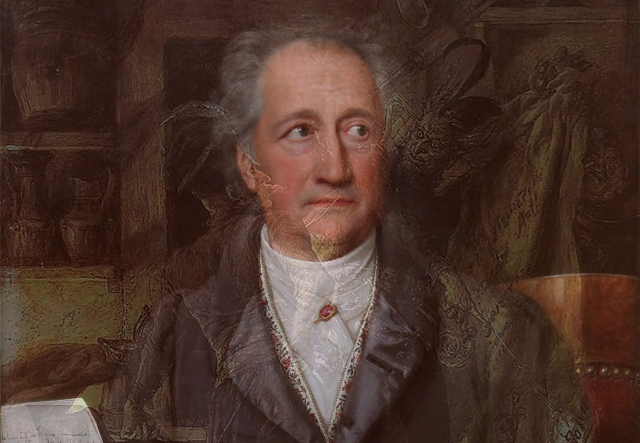
Goethe (1749–1832)
28 August is the anniversary of the birth of Goethe (1749–1832), the German polymath who is often considered the most influential German writer. His works are numerous, covering law, literature, language, philosophy, the natural sciences and history, though he is especially noted for his reworking of the story of Faust.
In the Year of Reading, it might be time to give some Goethe a go. If you don't fancy that, there is always A. N. Wilson's biography Goethe: His Faustian Life, in which he tells the spellbinding story of Goethe's life, from his youth as a wild literary prodigy to his later years as Germany's most celebrated intellectual figure.
Alternatively, you could watch the interview the HA carried out with Wilson in November 2024. In this conversation, Wilson discusses what it is like to tell the story of one of Germany's and Europe's most important writers, whose influence continues through to today, and explores what Goethe and his obsession with Faust can tell us about the search for the human soul, both then and now.
Explore further in A Conversation on Goethe with A. N. Wilson (open access)
Frankenstein
30 August is Mary Shelley's (1797–1851) birthday, sometimes known as Frankenstein Day. This summer might be the time to dive back into her original work or, if that seems a little weighty for a summer read, to explore our article on the Hammer horror films, which produced their own memorable and rather trashy interpretations of Frankenstein.
Read more in Hammer, House of Horror: The Making of a British Film Company, 1934–1979.
If that is a little too light, you might want to listen to our podcasts on the early women's movement, of which Shelley and her family were very much a part. Women in 18th-Century Britain and The Origins of the Victorian Women's Movement provide fascinating background to the intellectual and political world in which she lived.
The Normans
Alternatively, this summer you could get yourself ready for one of the most anticipated exhibitions of recent years. After a wait of almost a thousand years, the Bayeux Tapestry is in Britain and about to go on display at the British Museum.
To celebrate this, the HA has dedicated its next short course to the Norman world. However, as that does not begin until September, August provides an opportunity to catch up on some background reading through our classic pamphlets. They may also offer some perspective on how the period has been interpreted over time.
Why not start with Edward the Confessor and the Norman Conquest, Harold Son of Godwin, William the First and the Sussex Rapes, or Norman Barons?
Downing Street of the North?
If recent announcements on the rebalancing of regional power sound vaguely familiar, then you might want to take a look at one of our classic pamphlets on The Council of the North, established in 1537 to govern northern England on behalf of the Crown.
If that prompts further questions about British democracy, you might also enjoy The Evolution of the British Electoral System, 1832–1987.
And if all that reading is just too much, why not watch our latest film series, Power and Freedom in Britain and Ireland, 1714–2010, which may leave you rethinking some of the political debates and developments of the last two decades?