

Polychronicon 142: 'instructive reversals' - (re)interpreting the 1857 events in Northern India
Teaching History feature
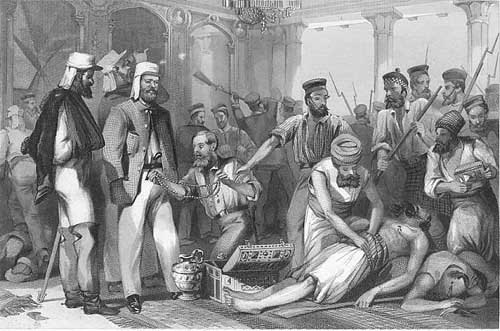
‘A history of instructive reversals': (re)interpreting 1857
The dramatic, chaotic and violent events that took place in Northern India in 1857/8 have been interpreted in many ways, as, for example, the ‘Indian Mutiny', the ‘Sepoy War' and the ‘First Indian War of Independence'. The tales that have been told about these events have been profoundly shaped, however, by two facts: first, most of the archives of 1857/8 are British archives, largely constructed as part of the brutal process of re-imposing control; second, it was not possible to tell anything other than an Anglocentric story in print until at least a generation after the events themselves.
Two recent books that address aspects of the events of 1857 exemplify attempts to break the hold of the imperial archive. They are very different kinds of book. Rudrangshu Mukherjee's The Spectre of Violence: The 1857 Kanpur Massacres (1998) is a work in the subaltern studies tradition of ‘history from below' and, in origin, a very academic book, albeit one that was republished by Penguin India in 2007 as a mass market paperback to coincide with the 150th anniversary of the ‘mutiny'. William Dalrymple's...
This resource is FREE for Secondary HA Members.
Non HA Members can get instant access for £2.75