
Europe
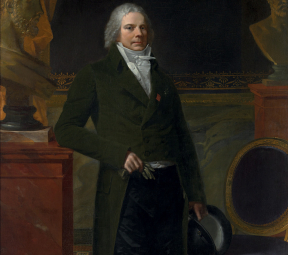
In France during the turbulent decades of revolution, republic and empire around the turn of the nineteenth century, political leaders were fortunate if they kept their heads; forging any kind of lasting legacy was out of the question for most. Bucking the trend was Talleyrand, lesser-known as a revolutionary, but...
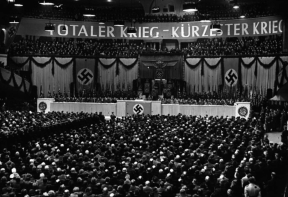
Throughout history, war has been one of the great producers of disability, and the disabled veteran has often provoked feelings of pride and pity. In this article, Christopher Thomas Goodwin explores the multiple meanings of the disabled soldier in Nazi Germany...
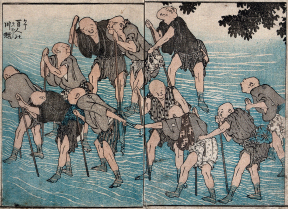
Expansion into new periods and places, new revelations of human diversity and difference, and a rethink of the tools we use to recover the past – disability history is not just thriving but is also exciting, as Daniel Blackie and Alexia Moncrieff demonstrate in their update on the state of...
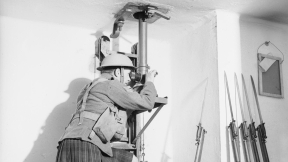
Why did the the Maginot Line – that marvel of 1930s engineering with its miles of fortifications and bunkers to deter German invasion – fail so spectacularly in 1940? Its vast underground forts were designed to withstand artillery and chemical attack, yet France fell in just six weeks, leaving the...
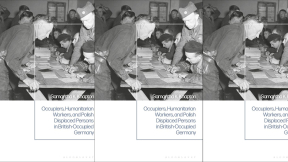
Dr Samantha K. Knapton [she/her] is an Assistant Professor in History at the University of Nottingham, UK. She is an historian of central and east-central Europe, forced displacement, and international humanitarianism. In 2023, she has published her first monograph, Occupiers, Humanitarian Workers, and Polish Displaced Persons in British-occupied Germany and...
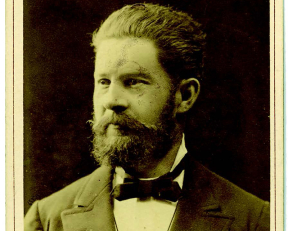
In this article, Alex van der Ham and Ling-Hua Huang explain how a casual browse through a nineteenth century journal led to an intriguing research journey into the author of a scientific dissertation. Here they discovered interesting insights into Prussian society in the years leading to the Unification of Germany,...
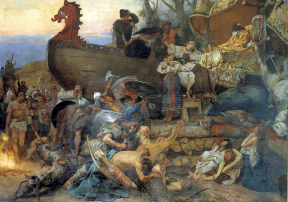
Martyn Whittock explores the lesser-known world of the Vikings who travelled east, forging the early state of Kyivan Rus and leaving a legacy still debated in Russia and Ukraine today. From silver routes and sagas to modern political claims, this article explores how their story and origins remain as dramatic...
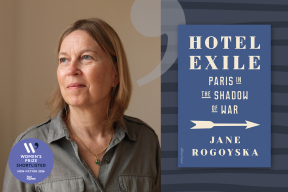
Jane Rogoyska tells the story of the Hôtel Lutetia, the only ‘grand’ hotel on the city’s bohemian Left Bank, serving as a meeting place for artists, musicians and politicians. André Gide took his lunch here, James Joyce lived in one of its rooms, Picasso and Matisse were regular guests. But...
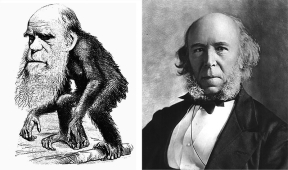
‘Social Darwinism’ has been associated in academia and popular consciousness with negative concepts such as hyper-nationalism and eugenics. Geoffrey M. Hodgson challenges the notion that Social Darwinism or its proponents were ever well-defined. By tracing the use of ‘Social Darwinism’ across academic disciplines and globally over a long period, Hodgson...
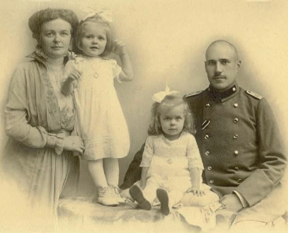
Our series ‘Real Lives’ seeks to put the story of the ordinary person into our great historical narrative. We are all part of the rich fabric of the communities in which we live and we are affected sto greater and lesser degrees by the big events that happen on a...
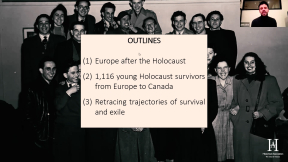
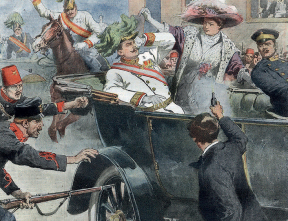
Historians love making analogies to the present day, and in 2014, during the 100th anniversary of the Sarajevo assassination and outbreak of the First World War, many were tempted to see parallels to the 9/11 terrorist attacks. But not only is this analogy mistaken, it conceals the blundering true nature...
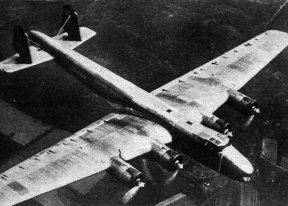
The Luftwaffe had been a real achievement of Prussian military culture, but under poor Nazi leadership it degenerated into an ineffective fighting force, writes Stephen Graham.
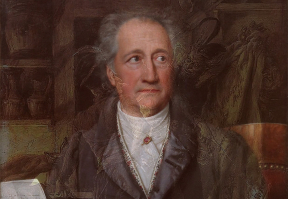
In Goethe: His Faustian life, award-winning biographer, critic and writer A. N. Wilson tells the spellbinding story of the life of Goethe. From his youth as a wild literary prodigy, to his later years as Germany’s most heroic intellectual figure, Wilson hones in on Goethe’s undying obsession with the work...
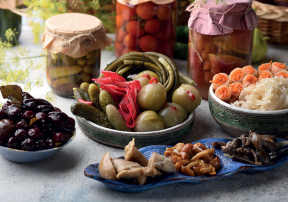
Olena Braichenko examines the most common dishes of Ukrainian cuisine, describing the culinary traditions of the indigenous people of Ukraine – the Crimean Tatars. She explains how the Soviet past influenced the gastronomic culture of Ukrainians and what peculiarities of Ukrainian culinary behaviour contribute to stability and survival in the...
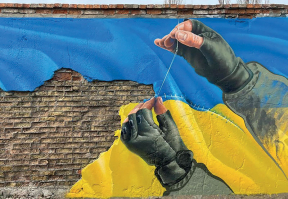
Kateryna Petrova explores the history and evolution of street art, especially graffiti and murals in Ukraine from the Soviet era to the present day. She traces the transformation of street art from a forbidden and persecuted activity to one coordinated with city authorities and embraced by the public. She also...
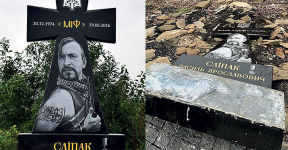
Olha Makliuk outlines the challenges faced by Ukraine as Russia tries to rewrite the narrative of Ukrainian sovereignty. Through a process of historical and cultural appropriation as well as the destruction of monuments, she explores how history has been weaponised by the Putin regime. Finally, she considers how the impact...
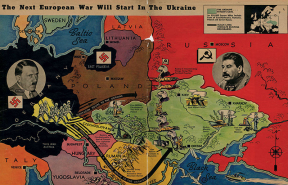
How has the understanding of what Ukraine is and, therefore, its image changed through the centuries? What did the word ‘Ukraine’ mean in the Middle Ages, the early modern times, or in the twentieth century? Even during the last four decades, this image has transformed dramatically, and the first association...
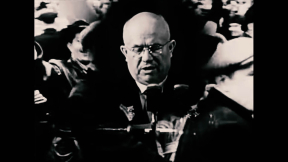
(Student and corporate secondary members can view these films in our Student Zone) Khrushchev came to power in the Soviet Union at a time when the whole region was used to living on a knife's edge. He appeared to usher in a more relaxed calm era as though that had...
In this film, Dr Alexander Titov (Queen's University of Belfast), provides a profile of Khrushchev’s background and personality and how these influenced his politics and ideas. Dr Titov takes us on a journey from Khrushchev's peasant beginnings in Kursk, his rapid rise in the communist party, his role in the...