
Europe

All aspects of Hungarian nationalism – with one exception, which I shall consider later – had more or less similar counterparts elsewhere in Europe; but the blending of those elements yielded a unique constellation. Moreover, the ingredients of this mixture proved highly disruptive for central Europe, indeed at times for...
During the last century or so there has developed a new ‘public role’ for history: the past as personal history, a vital element in the nourishing of people in society. During the past decades a new perception of what history is has manifested itself on two levels: first a shift...
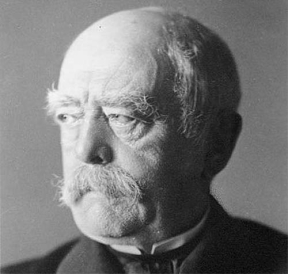
Readers of this journal will need no introduction to Otto von Bismarck. There are almost as many English-language biographies of him as those written in German. The four short studies by Lynn Abrams, Bismarck and the German Empire, 1871-1918 (1995); Andrina Stiles, The Unification of Germany, 1815-1890 (1986); D. G....
A journalistic coup broke over Germany on 2 January 1978. The West German news magazine, Der Spiegel, published the first part of a longer piece in which an association calling itself the ‘Alliance of German Democratic Communists’ seriously criticized the policies of the East German Communist Party, the SED, and...
Z.A.B. Zeman uncovers a fateful link between Czechoslovakia’s brief monopoly of uranium in Europe and the country’s subordination to the USSR. The great uranium rush started in 1943 and lasted for about seven years. Unlike the gold rushes of the past, uranium did not promise untold riches to individuals but...
During the First World War air operations were on a much smaller scale on the Italian front than in France and Flanders. Italian fighter pilots claimed to have shot down fewer than a tenth of the number of enemy aircraft officially credited to German fighter pilots operating over the Western...
The pamphlet printing industry in England received an unexpected boost in 1871 with the appearance of numerous works written, mainly, as commentaries, satires or allegories in Britain’s attitude regarding the Franco-Prussian War. The cause of this deluge was one particular tract, first issued on Salisbury in October 1870, whose purpose...
Carl Watts outlines the shift in British security policy and examines the role played by the Foreign Office during the post-War period. April 1999 marks the 50th anniversary of the signature of the North Atlantic Treaty, which came into effect in August 1949. The Cold War is over, but NATO...
Dr Julian Jackson examines the position and treatment of Jews in Occupied France. When in 1945 France came to try those who had ‘collaborated’ during the war, the fate of the Jews was not central. It was even possible for Xavier Vallat, Vichy’s Commissioner for Jewish Affairs, to defend himself...
Malcolm Crook examines the remarkable ascent to power of Napoleon at the turn of the nineteenth century. The great Bicentenary of the French Revolution of 1789 may be drawing to a close, but that of Napoleon is about to commence. So now is an opportune moment to present a critical...
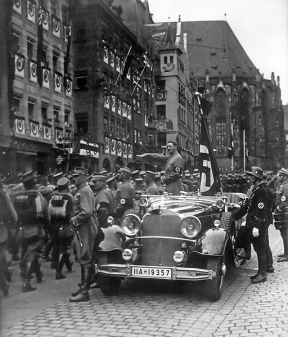
Kenneth Thomson reflects on major aspects of the ‘era of the dictators’ after the collapse of Soviet Communism and its satellite regimes. In 1939, on the eve of the Second World War, almost the whole of continental Europe was ruled by dictatorships of various political hues. Even countries, like France,...
Ian Beckett reviews recent revisionist interpretations of the Western Front. English teachers have much to answer for in terms of the enduring popular image of the Great War. Siegfried Sassoon, Wilfred Owen and Robert Graves are still pressed regularly into action as if they could possibly stand representatives of the...
While migration from Europe to North America and elsewhere is well known, that from India is less familiar to Western readers. Ananda Dulal Sarkar provides an account of Indian migrants to the former British and Dutch Guianas. Within India, particularly during British rule, young and able-bodied males migrated hundreds of...
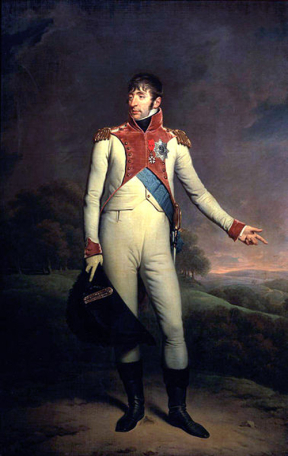
The French Second Empire has been variously described as a precursor of Twentieth Century Fascism and a prime example of a modernising regime. Roger Price continues recents efforts to achieve a more balanced assessment by setting the regime within its particular social and political context. The origins of the Second...
Following the recent ‘Euro 96’ championship, Jim Phillips looks at two earlier international football tours which had major political and ideological connotations. In November 1945 Moscow Dynamo became the first Soviet football team to visit Britain, playing in Cardiff, Glasgow and twice in London. With English, Welsh and Scottish crowds...
As the leading athletes of all nations prepare to come together this summer in Atlanta, the global communications media of the late twentieth century are constantly reminding us that 1996 marks the first centenary of the modern Olympic Games. The worldwide impact now made by these sporting festivals is all...
Mark Cornwall reflects on past and present attempts by the international community to protect national minorities in Eastern Europe. On 19 March 1995, the Prime Ministers of Hungary and Slovakia met in Paris to sign a ‘Treaty of Friendship and Co-operation’ between their two countries; on 13 June it was...