
Europe
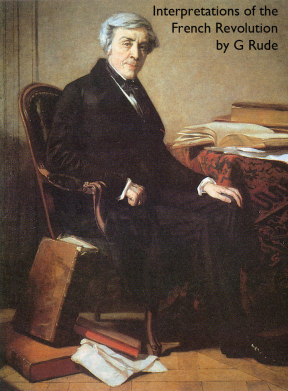
The French Revolution raises many questions not least: What sort of Revolution was it - one of "poverty" or "prosperity" ? a bourgeois revolution that overthrew feudalism? A national struggle for liberty, democracy, or "eternal Justice" ? or, again, a criminal conspiracy against the old social order? What did it...
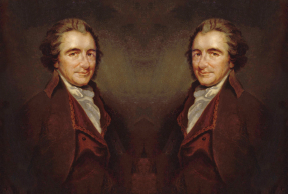
In this set of podcasts Emeritus Professor W. A. Speck of the University of Leeds looks at the life and ideas of Thomas Paine.
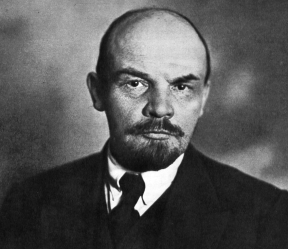
An HA Podcasted History of Russia and the USSR featuring Dr Beryl Williams, Dr Jonathan Davis of Anglia Ruskin University, Dr Edwin Bacon of Birkbeck University of London and Professor Peter Waldron of the University of East Anglia.
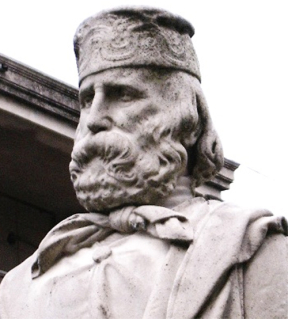
One approach used by British local historians is to explore and examine patterns in the landscape, based on a belief that the patterns will instruct and develop our historical awareness and understanding. Although approaches to local history may be less developed abroad, we can still apply our techniques to the...
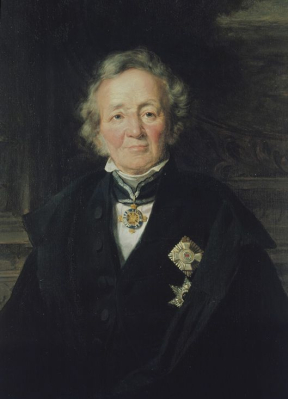
Leopold von Ranke (21 December 1795 - 23 May 1886) was a German historian and a founder of modern source-based history. According to Caroline Hoefferle, "Ranke was probably the most important historian to shape historical profession as it emerged in Europe and the United States in the late 19th century."...
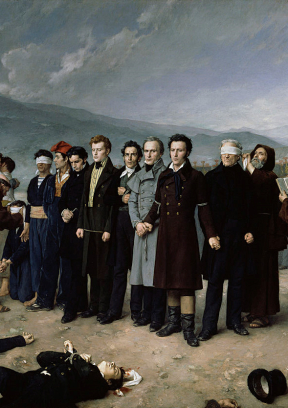
Irene Collins explores the origins of Liberalism within a turbulent nineteenth century Europe. From the beginnings of its use for Spanish rebels in 1820 and the insult it became when used by French royalists, to the growth of political Liberalism in Marxism and Russia in the turn of the century....
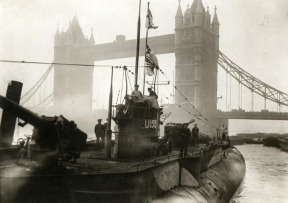
This year the Historical Association's Medlicott medal for services to history went to Professor Sir Richard Evans. Richard Evans is the Regius Professor of History at Cambridge and President of Wolfson College, Cambridge. He has written numerous highly respected and internationally best-selling books. Evans is bests known for his works...
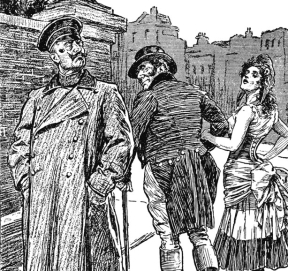
Gary Sheffield, Professor of War studies, the University of Wolverhampton, is one of the UK's foremost historians on the First World War. He is the author of numerous books and previously held posts at the University of Birmingham and the Royal Military Academy Sandhurst. In April 2014 he spoke at...
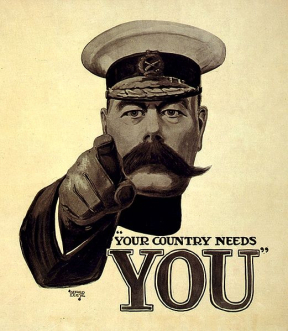
We are delighted to have an original article by Gary Sheffield in this edition of The Historian. Gary Sheffield is Professor of War Studies, University of Wolverhampton. He is a specialist on Britain at war 1914-45 and is one of Britain's foremost historians on the First World War. He has...
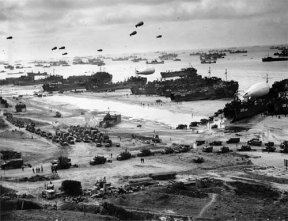
This year it was the 70th anniversary of D-Day. The world's politicians and media went into overdrive about it. The BBC dedicated a whole day to the coverage, mainly live from Normandy while small events took place around the UK. For a whole day the upcoming centenary of the First...
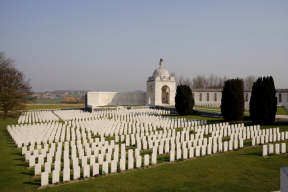
My Favourite History Place: Tyne Cot Cemetery, near Ypres, Belgium We can truly say that the whole circuit of the Earth is girdled with the graves of our dead. In the course of my pilgrimage, I have many times asked myself whether there can be more potent advocates of peace...
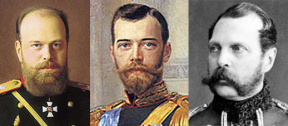
The spring of 2013 was unusually significant for devotees of the Romanov dynasty. Though there was little international recognition of the fact, the season marked the 400th anniversary of the accession of Russia's first Romanov tsar. Historically, the story was a most dramatic one, for Mikhail Fedorovich had not seized...
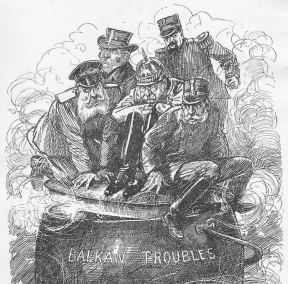
The First World War broke out suddenly and unexpectedly in midsummer 1914, following the murder of the Archduke Francis Ferdinand of Hapsburg, heir to the throne of Austria-Hungary, at Sarajevo, in Bosnia, on 28 June. Since no war involving the European great powers had occurred since 1871, the possibility of...
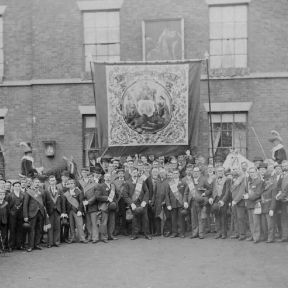
Friendly societies were designed to help members to cope with the illness, death or unemployment of a household's breadwinner. Each month members, mostly men, paid into the society, often at a meeting in a pub and in return payments from the pooled funds were made to ill members and to...
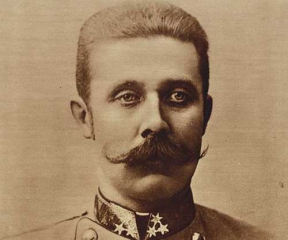
The Kapuzinerkirche (Church of the Capuchins) in Vienna's Neue Markt is one of the more curious attractions of the city, housing as it does the Kaisergruft crypt in which the Habsburgs are entombed, or rather in which their bodies are entombed: the hearts are usually kept in the Loreto Chapel...
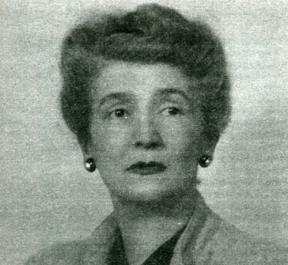
Meeting in Berlin Three days before the outbreak of the Second World War, William Joyce, the leader of the British Nazi group, the National Socialist League, was in Berlin. He and his wife, Margaret, had fled there fearing internment by the British government if war broke out. Yet as war...
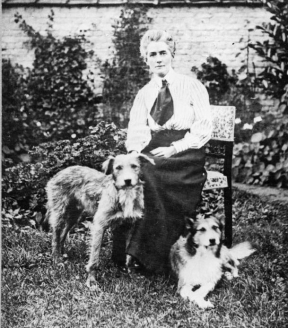
With the centenary approaching, article after article will appear on battles, the men who fought, those who refused, those that died, those who returned and those that made the decisions. There will be articles on the home front and the women that stepped into the men's shoes often to be...
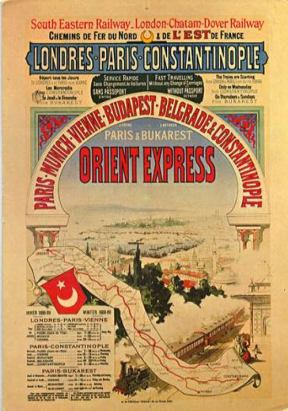
It was the most luxurious long distance rail journey in the history of travel. Royalty, aristocracy, the rich and the famous travelled regularly on the Orient Express. Gourmet chefs prepared exquisite meals, chandeliers, luxury compartments, staterooms and dining rooms on a par with famous hotels like the Ritz were all...
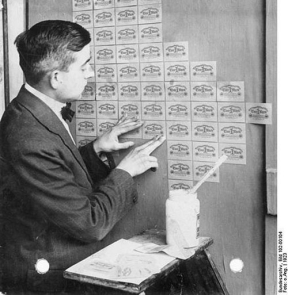
The Weimar Republic in its last days as seen and remembered by a five-year-old English boy. A long-standing member of the Historical Association remembers an experience from eighty years ago. As Mrs Merkel is well aware, the fear of inflation is deeply embedded in the German folk memory. Eighty years...
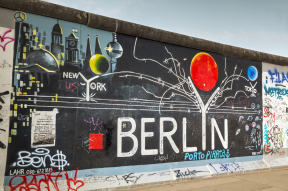
An HA Podcasted History of the Cold War featuring Dr Elena Hore of the University of Essex, Dr Matthew Grant of Teeside University, Dr Holger Nehring of the University of Sheffield, Dr Michael Shin of the University of Cambridge, Professor Mark White of Queen Mary University of London, Professor Charles...