
Europe
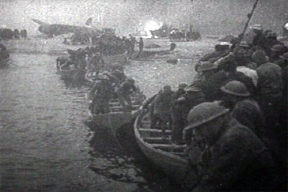
Seventy years after the outbreak of the Second World War, British foreign policy in the 1930s remains as controversial as ever. While appeasement is now a byword for political failure, the reasons for its adoption and the responsibility of the statesmen concerned are constantly debated. In general, opinion looks unfavourably...
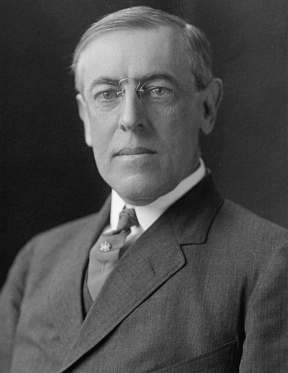
It is common to see the failure of the League of Nations in its inability to stand up to the crises of the inter-war years.Peter Raffo shows that the League was flawed from the start. Never more than a voluntary association of sovereign states hoping to create ‘an atmosphere capable...
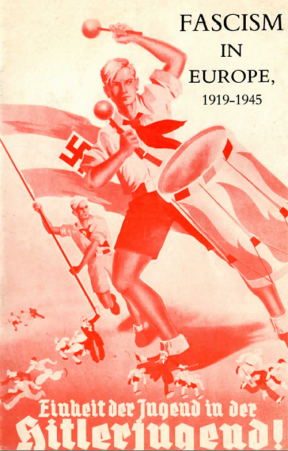
The importance of fascism in 20th Century Europe is beyond question. But what was - or is - fascism?It is synonymous with authoritarian rule or the totalitarian state, or with both? In political terms, is fascism ‘right-wing' or ‘left-wing', revolutionary or reactionary? Why did it develop? Was it truly only...
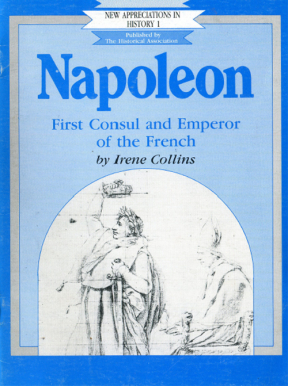
Four years after the battle of Waterloo, Richard Whately publicised a philosophical essay in which he argued that there was no real proof of Napoleon's existence. The deeds attributed to him were either so wondrously good or so amazingly bad that they far outran the evidence available to support them:...
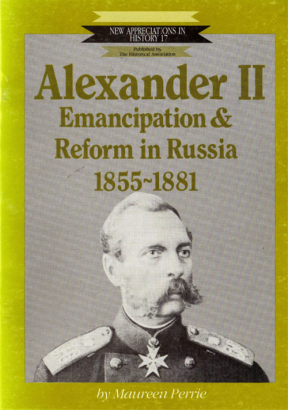
The ‘great reforms' of Tsar Alexander II (1855-81) are generally recognised as the most significant events in modern Russian history between the reign of Peter the Great and the revolutions of 1905 and 1917. The most important of Alexander's reforms, the emancipation of he serfs in 1861, has been described...
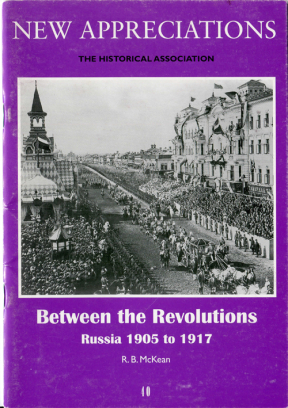
"The key question is this - is the peaceful renovation of the country possible? Or is it possible only by internal revolution?"This quotation succintly expresses the problem that faced both contemporaries and subsequant generations of historians confronting the development of Russia between the revolutions of 1905 and 1917. The upheavals...
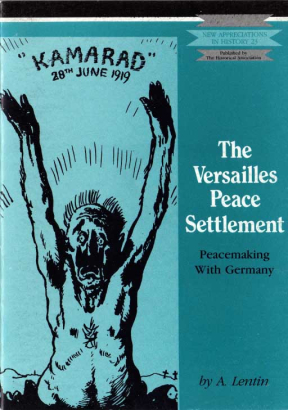
This classic pamphlet takes you through the Paris Peace Conference and the 'German Question', Peacemaking and the Treaty of Versailles, Europe and the German question after Versailles.
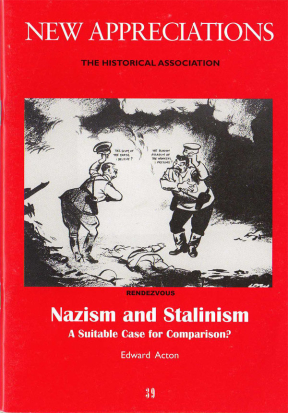
Is it legitimate to compare the Nazi and Stalinist regimes? There might seem little room for doubt. It is often taken as self-evident that the two regimes were variations of a common type. They are bracketed together in school and university courses, as well as text books, under labels such...
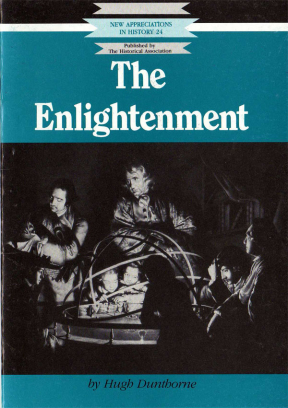
Can a movement as varied and diffuse as the Enlightenment of the eighteenth century be contained within the covers of a short pamphlet? The problem would certainly have appealed to the intellectuals of that time. Generalists rather than specialists, citizens of the whole world of knowledge, they relished the challenge...
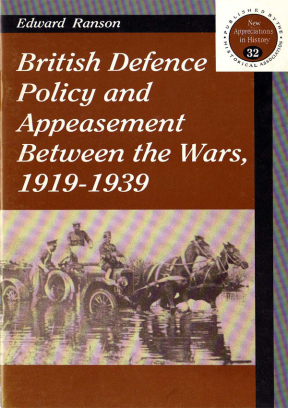
Armed forces never exist in isolation, but always operate against a background of political, economic, social, cultural, intellectual and ideological conditions and attitudes, as well as in relation to diplomatic and strategic factors. Some governments regards their military forces especially their armies, more as instruments for maintaining internal order than...
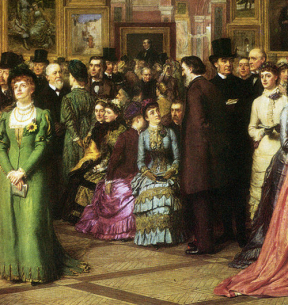
First referred to by Richard Morton (1637-98) in his Phthisiologia under the denomination phthisis nervosa as long ago as 1689, anorexia nervosa was given its name in a note by Sir William Gull (1816-90) in 1874. Gull had earlier described a disorder he termed apepsia hysterica, involving extreme emaciation without...
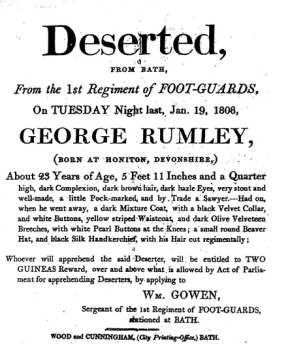
Wellington's Soldiers in the Napoleonic Wars The war with France, which began in 1793, had moved to the Iberian Peninsula by 1808. This year is therefore the two-hundredth anniversary of the commencement of the Peninsular War campaigns. War on the Peninsula demanded huge resources of manpower in order to defeat...

Much has been written during the last 50 years about the events leading up to and during the Hungarian Uprising of 1956. Less consideration has been given to the students who arrived in Britain as refugees. During the weeks following the Soviet intervention in Hungary around 25,000 people were killed...
The Place Stanislas in Nancy has a high reputation. But expectations are far surpassed as one surveys the beautifully proportioned square, with its imposing buildings such as the Hôtel de Ville and the Governor's Palace, its Arc de Triomphe and its magnificent iron work. It is a reminder of how...
What role do individuals wielding great power play in determining significant historical change? And how do historians locate human agency in historical change, and explain it? These are the issues I would like to reflect a little upon here. They are not new problems. But they are inescapable ones for...
On 14 February 1868, the Carlisle Journal reported as follows: … two meetings were held in the Athenaeum in this city , “for the purpose of forming an auxiliary to co-operate with the Church Association in London, to uphold the principles and order of the United Church of England and...
When the Bolsheviks seized power in what was essentially a carefully organised coup d’état in October 1917, they seized control only of the levers of central power in the then capital, Petrograd, which had already become the centre of working-class discontent. What they most emphatically did not do was to...
Fascism failed in Britain in the 1930s – Europe’s decade of the ‘Brown plague’. Unlike in many European countries, fascists in Britain were never a serious threat to the democratic order. This was not for want of trying, especially on the part of Sir Oswald Mosley and his British Union...
To blame the failure of the denazification process in postwar Germany entirely on a vague and generalised concept such as apathy is simplistic and does not stand up to serious scrutiny. Denazification was one of the most ambitious attempts ever at provoking an artificial revolution; it is reasonable to assume...
Despite Britain’s longstanding membership of the European Union, the question of ‘Europe’ continues to loom large in the nation’s politics. Whilst the economic pros and cons of Britain ‘joining’ the euro might be understood by only a select few, that issue provides for the many an opportunity to debate Britain’s...