Change and continuity

This particular concept is more appropriate for fourth stage Key Stage 1 than Key Stage 2. It is about developing an understanding of the idea that some things change while others old and new stay the same. A house for example will both have doors and windows (continuity) but what those doors are made of and how they work will be different (change) this is about comparing and contrasting in particular to your students own experiences and lives. This should become a process that children can apply in a less explicit manner across Key Stage 2. Read more

Sort by: Date (Newest first) | Title A-Z
Show: All | Articles | Podcasts | Multipage Articles
  • The Elizabeth cake

    Article

    Hidden away on top of a dusty, battered cupboard in a local primary school were two equally dusty and battered log books. Each has seen better days and each could provide a range of links to local and national history. The log book was one of two found in one...

    Click to view
  • The Great Fire of London and the National Curriculum

    Article

    The Great Fire of London is a favourite National Curriculum teaching topic. This paper draws on the latest resources and teaching ideas to suggest how you can meet both the NC history requirements and the wider ones of the National Curriculum, particularly in integrated programmes that include teaching about the Great...

    Click to view
  • The Maya: a 4,000-year-old civilisation in the Americas

    Article

    Obscured by the fame of the Aztec empire or shrouded by a veil of mystery, the cultural history of the Maya has generally been misunderstood by the British public. Maya civilisation developed in a territory the size of Germany and Denmark together (nearly 400,000 km2). This vast territory shows three...

    Click to view
  • The end of the Cold War with a personal perspective

    Article

    This article is free to everyone. For access to hundreds of other high-quality resources by primary history experts along with free or discounted CPD and membership of a thriving community of teachers and subject leaders, join the Historical Association today The beginning of the 1990s, just as this publication was...

    Click to view
  • Turning technology: making life better in Iron Age Britain

    Article

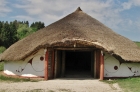
    So who were the people living in Britain in the Iron Age? The Iron Age describes the period in Britain when the use of iron became widespread. It ranged from 800 BC to AD 43 and the invasion by the Roman Empire. The people of Iron Age Britain were part of...

    Click to view
  • Using 'Development Matters' in the Foundation stage

    Article

    Using ‘Development Matters' to plan learning for history in the Foundation stage You won't find the term history in the Early Years curriculum framework at all. That being so, it can be difficult to know how best to support our Nursery and Reception colleagues when developing historical understanding within the...

    Click to view
  • Using original sources

    Article

    Why would I want those old books in my classroom? It has always been recognised that good primary history is able to connect the past with the world the children currently inhabit. That is why focusing on schools can be so useful. If there is one experience the children have...

    Click to view
  • Using picture books to explore ideas around history with very young children

    Article

    This article looks at the relevance of picture books in the Early Years Foundation Stage as a resource for introducing children to the idea of the past. Firstly examining its relevance to the Framework, Karin identifies some appropriate resources and how they can be used.  In particular, she links them...

    Click to view
  • Using shoes as an historical source

    Article

    There is something fascinating about what people wore in the past. From corsets to clogs, the evolution of clothing and footwear can give an insight into different periods of history, an excellent way of engaging with the past. Shoes, in some form or another, have been around from the earliest...

    Click to view
  • Victorians

    Article

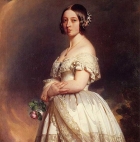
    The Victorians is a much-loved unit of work in many schools and some teachers were disappointed to see it had been removed but there are still ways to continue to teach it under the 2014 National Curriculum. In many localities there will be a huge variety of Victorian buildings - including...

    Click to view
  • When your parents were young…

    Article

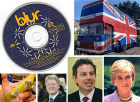
    This article is free to everyone. For access to hundreds of other high-quality resources by primary history experts along with free or discounted CPD and membership of a thriving community of teachers and subject leaders, join the Historical Association today Susie Townsend explores the theme of life in the 1990s,...

    Click to view
  • Who is in charge?

    Article

    Children are introduced from the start of their lives to the idea that someone is in charge.  Helen Crawford and Karin Doull explore how the question ‘Who is in charge?’ can be used with EYFS children to develop ideas of power, authority and agency. The article looks at its relevance...

    Click to view
  • Why stories?

    Article

    Please note: this article was written before the 2014 National Curriculum and some content and references may no longer be relevant. During the Early Years and Foundation Stage children should listen to stories, ask how and why and talk about the past (DfE 2012). Young children are comfortable with stories. Through...

    Click to view
  • Writing in Primary History edition 1 and 100: has there been a dramatic shift?

    Article

    This article is free to everyone. For access to hundreds of other high-quality resources by primary history experts along with free or discounted CPD and membership of a thriving community of teachers and subject leaders, join the Historical Association today Tim Lomas was astounded and partly horrified that he was...

    Click to view