
Transition KS2-KS3
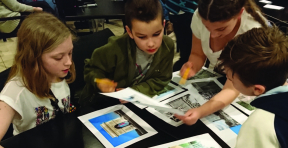
What’s been happening in primary history lately? Invited to write an update on this, I decided to identify some themes that might be helpful to secondary teachers. As a senior lecturer in primary education with responsibility for history and as a member of the HA Primary Committee, I was able...
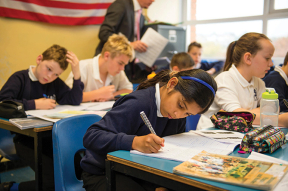
Often, primary schools and secondary schools are seen as separate entities. But why? At primary, is it our responsibility to nurture our children and to encourage them only until they finish their primary education after the Year 6 SATs? Do we then just wave goodbye as they embark on their...
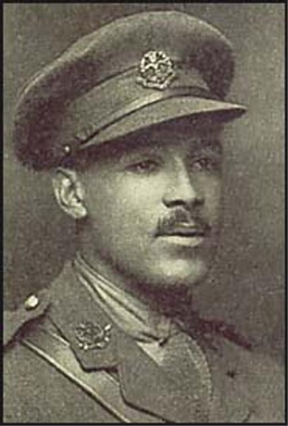
Schemes of work and resource packs Produced by the Northamptonshire Black History Association and originally published in 2008, these packs comprise a teachers' resource book and a schemes of work booklet of 10 activities for teachers to use in the classroom. The resource book contains a description of how to...
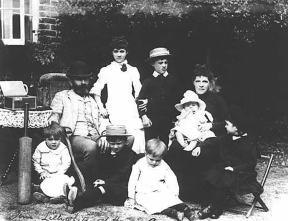
Transitions. Pivotal points in a child’s life and a phase in the educational journey that should be celebrated. How do we ensure that transitions are efficiently prepared for, when an ever increasing list of school pressures means that transitions can feel like the poor relation in the list of priorities?...
It can sometimes seem that the primary and secondary phases of education live in isolation from each other. After all, most primary teachers are generalists (despite sometimes having specialist experience of a particular curriculum area), having to turn their hands to all subjects on the curriculum whatever they feel about...
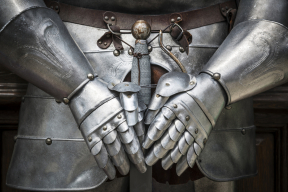
Do they learn about Agincourt in France? 2015 was a year of anniversaries. As part of our funded commemoration projects surrounding the 600th anniversary of the Battle of Agincourt, we have commissioned an enquiry looking at the battle and how it has been remembered, particularly aimed at pupils in years...
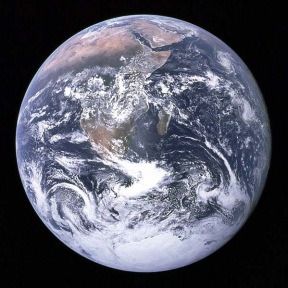
The Global Learning Programme (GLP) is a ground-breaking new programme which will create a national network of like-minded schools, committed to equipping their students to make a positive contribution to a globalised world by helping their teachers to deliver effective teaching and learning about development and global issues at Key...
Events which encapsulate family, community, national and global history provide rich opportunities for engaging children. Some of these draw on positive memories associated with past events: the coronation of Queen Elizabeth II, how people responded to the first flight to the moon, the Millennium celebrations. Yet it is perhaps gruelling...
The new (2014) Primary History National Curriculum is finally upon us. The first thing you might notice is that the level descriptions have gone. These were first introduced in 1995 and became the mainstay for assessing pupil progression and attainment in Key Stages 1, 2 and 3 across schools in...
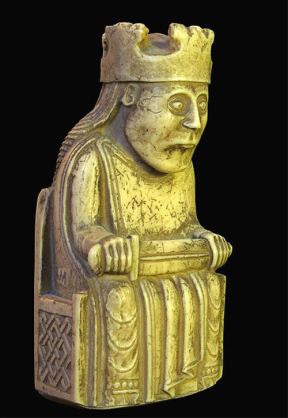
This e-cpd unit models how primary and secondary teachers of history might improve transition between KS2 and KS3 through collaboration on a transition unit aimed at Year 6 pupils on the Vikings. It contains original teaching and training materials written by Andrew Wrenn, former Cambridgeshire Humanities Advisor and funded as...
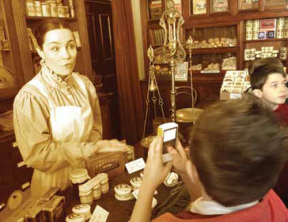
How do we engage young people with their Heritage, answer curriculum needs and make that big leap of transition from primary to secondary school that bit easier? English Heritage's Geosong treasure hunt website went some way to providing answers. What does the website do? Using handheld GPS devices, groups must...

Please note: these resources pre-date the 2014 National Curriculum. For more recent resources on Transition KS2-KS3 please see: Transition KS2–KS3 (Primary History article, 2021) Smooth Transitions: Key Stage 2 to 3 (Primary History article, 2020) Transition Key Stage 2 and 3 (Primary History article, 2016) Before 1066 & All That:...
This is the first of 5 sessions arising from the 2005 KS2-KS3 History Transition Project: Transition training session 1: Historical Enquiries & Interpretations Transition training session 2: Using ICT in the teaching of history Transition training session 3: Extended writing in history Transition training session 4: Joan of Arc -...

This is the second of 5 sessions arising from the 2005 KS2-KS3 History Transitions Project: Transition training session 1: Historical Enquiries & Interpretations Transition training session 2: Using ICT in the teaching of history Transition training session 3: Extended writing in history Transition training session 4: Joan of Arc -...
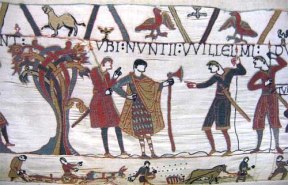
This is the third of 5 sessions arising from the 2005 KS2-KS3 History Transitions Project: Transition training session 1: Historical Enquiries & Interpretations Transition training session 2: Using ICT in the teaching of history Transition training session 3: Extended writing in history Transition training session 4: Joan of Arc -...
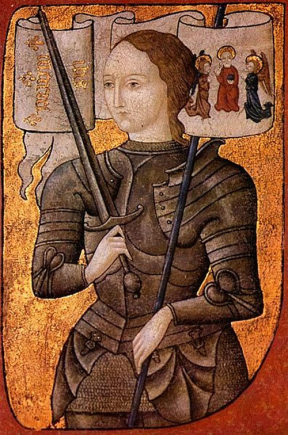
This is the 4th of 5 sessions arising from the 2005 KS2-KS3 History Transitions Project: Transition training session 1: Historical Enquiries & Interpretations Transition training session 2: Using ICT in the teaching of history Transition training session 3: Extended writing in history Transition training session 4: Joan of Arc -...
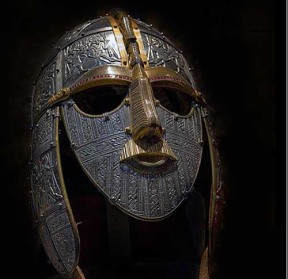
This is the 5th in a series of 5 sessions arising from the 2005 KS2-KS3 History Transitions Project: Transition training session 1: Historical Enquiries & Interpretations Transition training session 2: Using ICT in the teaching of history Transition training session 3: Extended writing in history Transition training session 4: Joan...
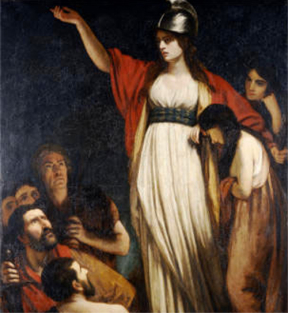
Please note: this resource pre-dates the 2014 National Curriculum. This unit centres on Queen Boudicca. While factual knowledge about her life and the Roman occupation are an essential component of the unit, the main focus is on contrasting interpretations of Boudicca over time and exploration of the reasons behind her...
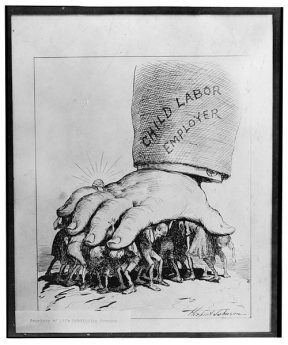
Please note: this resource pre-dates the 2014 National Curriculum. This unit centres on the portrayal of poor, Victorian children. While factual knowledge about conditions in workhouses is an essential component of the unit, the main focus is on contrasting portrayals of one fictional Victorian child, Charles Dicken's Oliver Twist. The...
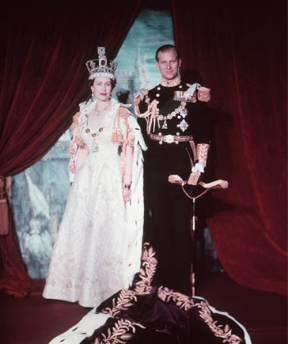
Please note: this resource pre-dates the 2014 National Curriculum. This unit centres on life in Britain at the 1953 coronation and how people at the time looked back to the reign of Elizabeth I. This is one a set of Year 6 schemes of work arising from the 2005 KS2-KS3...