
Historian articles
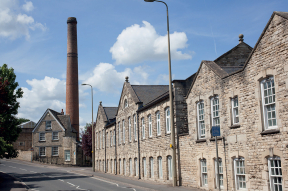
In this account of the history of blanket weaving in Witney (West Oxfordshire), Young Historian essay prize-winner Isabella Duncan reflects on the importance of local history for better understanding our place in the present...
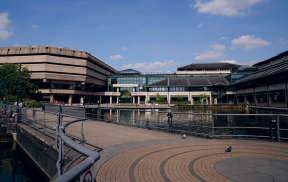
As the official repository for records of government of England, Wales and the UK, The National Archives at Kew offers so many opportunities for revelationary research. In this article, Steve Illingworth shows how documents in this treasure trove provide new insights on activities and debates behind closed doors...
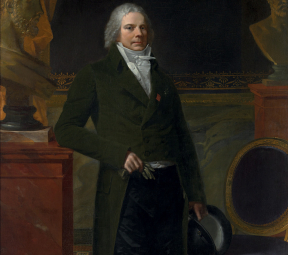
In France during the turbulent decades of revolution, republic and empire around the turn of the nineteenth century, political leaders were fortunate if they kept their heads; forging any kind of lasting legacy was out of the question for most. Bucking the trend was Talleyrand, lesser-known as a revolutionary, but...
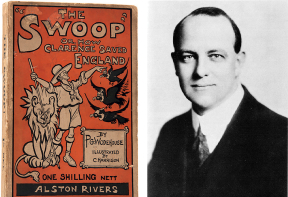
The writer P.G. Wodehouse is best remembered for his comic portrayals of the exploits of wealthy, young ‘men about town’ during the interwar years, but his writing often contained a multi-layered commentary on British society and politics, the extent of which has not yet been fully appreciated. In this article,...
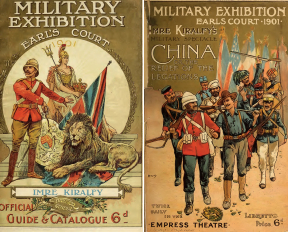
In 1901, at the height of empire, public shock at the vulnerability of British colonial interests was accompanied by public appetite for spectacular re-enactments of British battlefield victories. Robert Brown shows how one performance of the ‘Relief of the Legations’ at the Military Exhibition in Earl’s Court, London, was reshaped...
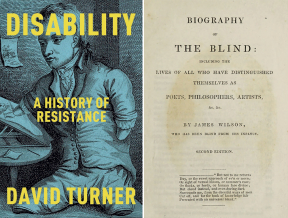
Disabled people have always been present in Britain’s past. Yet they have often appeared only at the edge of historical narratives: as recipients of charity, as objects of medical attention, as casualties of war or work, or as figures in stories told by institutions rather than by themselves. In Disability:...
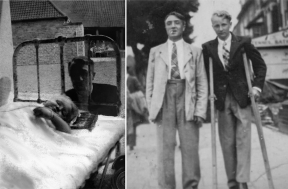
Helen Parker-Drabble shows how the experiences of her father, Harry Drabble, who was hospitalised for bovine tuberculosis as a child, remain fiercely relevant for families, medical practitioners and policymakers in twenty-first century Britain...
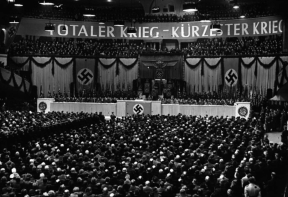
Throughout history, war has been one of the great producers of disability, and the disabled veteran has often provoked feelings of pride and pity. In this article, Christopher Thomas Goodwin explores the multiple meanings of the disabled soldier in Nazi Germany...
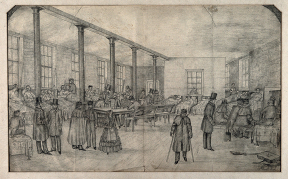
In nineteenth-century England and Wales, the New Poor Law was the state’s solution for those who wouldn’t – as well as those who couldn’t – work. Even for disabled paupers, the line between the two wasn’t always clear cut. In this article, Carol Beardmore shows how those with physical disabilities...
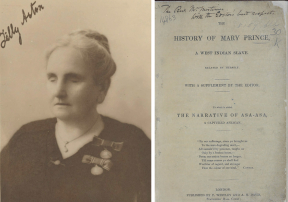
Disabled peoples could be found across the British Empire; at the same time, the process of colonisation could create forms of disability, while the concept of ‘disability’ became embedded in discourses of race and gender. In this article, Esme Cleall demonstrates how thinking about disability is essential to understanding the...
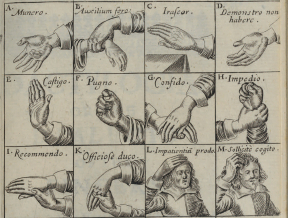
In the pre-modern world, the ability to speak and to hear were fundamental to participation in civil society. How, then, could prelingual deaf people survive and thrive? Rosamund Oates, author of the recently published Silent Histories: Deafness in Early Modern England, charts the long struggle for the recognition of sign...
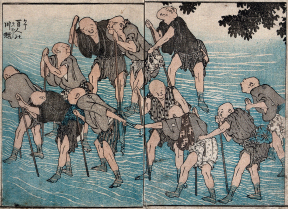
Expansion into new periods and places, new revelations of human diversity and difference, and a rethink of the tools we use to recover the past – disability history is not just thriving but is also exciting, as Daniel Blackie and Alexia Moncrieff demonstrate in their update on the state of...
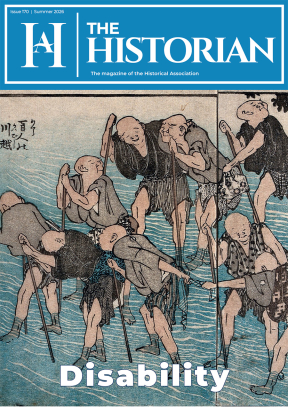
Read The Historian 170: Disability One of the core aims of historical study is the recovery of the full diversity of the human experience. Since the 1960s, which saw the rise of ‘history from below’, our understanding of past societies has become ever richer through studies of ordinary and often...
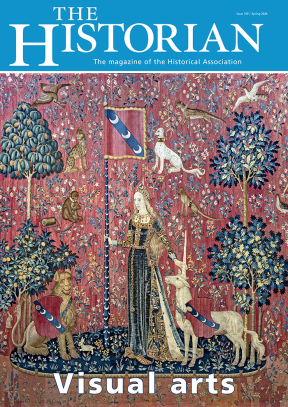
Read The Historian 169: Visual Arts Long before the development of written language, human societies communicated through images. From prehistoric cave paintings to medieval manuscripts, political cartoons and modern film. The visual arts have long provided a powerful means of recording, interpreting, and sharing human experience. For historians, such material...
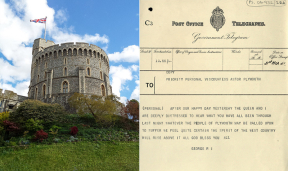
In this article Michael McLaughlin explains how he felt quite intimidated initially at the prospect of visiting the Royal Archives in the ‘fortress’ of Windsor Castle. However his research there proved to be both enjoyable and productive, as he discovered fascinating insights into the royal visit to Plymouth at the...
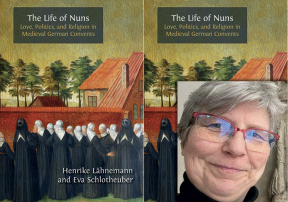
In The Life of Nuns: love, politics, and religion in medieval German convents (Open Book Publishers, 2024), Henrike Lähnemann and Eva Schlotheuber explore female religious communities from the late medieval and early Reformation-era in northern Germany, revealing them to be vibrant centres of learning, administration, devotion, friendship, and negotiation. The...
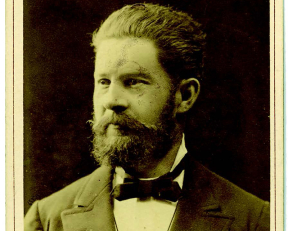
In this article, Alex van der Ham and Ling-Hua Huang explain how a casual browse through a nineteenth century journal led to an intriguing research journey into the author of a scientific dissertation. Here they discovered interesting insights into Prussian society in the years leading to the Unification of Germany,...
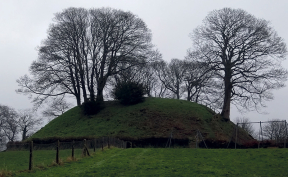
In this article, Chris Culpin explores the surprising story behind Castle Cary’s long-vanished castles. Through conquest, rebellion, siege, and demolition, Castle Cary’s forgotten castles reveal a dramatic chapter of local and national history...
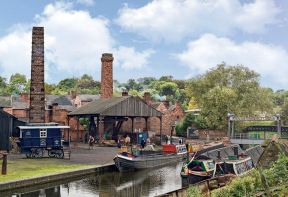
In this article, Rob Pritchard reflects on his long-standing engagement with the Black Country Living Museum, exploring how visits to this ‘living history’ site transformed his approach to teaching history...
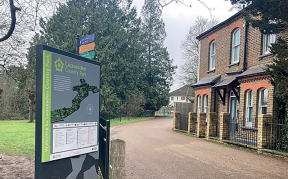
Concerns about demobilised soldiers after the Second World War were widespread, reflecting both the practical challenges faced by returning servicemen and broader anxieties about their reintegration into civilian life. In this article, Helen George explores how a temporary education facility in Hertfordshire helped prepare demobilised Canadian soldiers for higher education...