
Historian articles
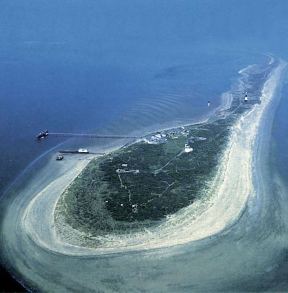
East of Hull lies Holderness, a twohundred square mile portion of the former East Riding of Yorkshire, extending from Hornsea in the north to Spurn Head and flanked by the river Humber and the North Sea. It is a very fertile tract of rich agricultural countryside but it is particularly...

It can have escaped the attention of very few people in the United Kingdom that 2007 marks the 200th anniversary of the abolition of the slave trade in British ships. Slavery itself continued to be legal in Britain and its colonies until the 1830s, while other nations continued both to...
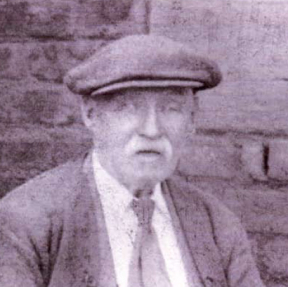
More people than ever are seeking to trace their family histories. People can now sit at home and tap out in seconds from the internet many of their family's previously unknown genealogical details. But what if a century or more ago one of your family had tried to cover his...
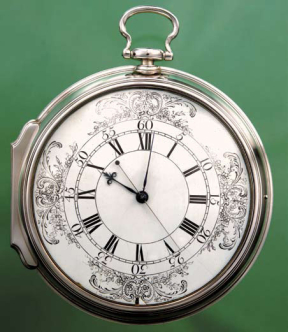
‘Poor England has lost so many men' On 22 October 2007 an unlikely group of people were to be seen casting wreaths upon the sea off the Scilly Isles. They comprised a Chief Executive, a Naval Commander, a Science journalist and the Fourteenth Astronomer Royal (this writer). A clue which...
‘It is often said on the other side of the water that none of the exhibitions which we send to England are purely and distinctively American', exhorted Mark Twain (Samuel Clemens) in an unsolicited letter of September 1884 to ‘Colonel' William Frederick Cody (1846-1917). ‘If you will take the Wild...
125 years after his death, Benjamin Disraeli, Earl of Beaconsfield, still provides the political lode-star for generations of Conservatives. Lately, for the first time in 30 years, Disraeli's name and example has been enthusiastically evoked by the party leadership and David Cameron has projected himself as a Disraeli for the...

I need to start by introducing myself. Most of the previous winners of the distinguished Norton Medlicott Medal have been household names, historians who have moved beyond the library shelves to reach wider audiences through the popularity of their books or television programmes. If you looked through the Radio Times...
Refer nowadays to Phineas Taylor Barnum (1810-91)—once among the most recognisable and talked about of all nineteenth century Americans— only to conjure up visions of Barnum & Bailey’s three-ring circuses, menageries, acrobats, and Jumbo the elephant. Such images tend to obscure that in 1880, on creation of the famous travelling...
Following the successful filming of his book ‘Charlie and the Chocolate Factory’, Roald Dahl has an international reputation as a children’s writer. There is, however, a macabre dimension to his writing underlined by his successful TV series ‘Tales of the Unexpected’. Dark episodes in Dahl’s highly successful career touched his...
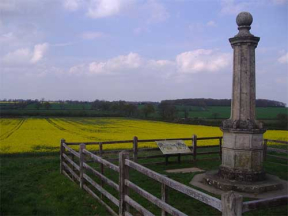
The summer of 2007 saw the completion of new visitor facilities on and near the battlefield of Naseby. The two locations are the first to be created since the Cromwell Monument was finished in 1936 and they stand more than 5km (3 miles) apart, one of them 2km south-east of...
In 1984 Jimmy Carter reflected on growing up in the segregated South. He recalled that, as a young child, he, like many white children, had had an African American child as his closest friend. The two children spent all their play time together. One day they travelled on the train...

Why did both the parliaments of Scotland and England vote themselves out of existence in 1707 in order to create a new ‘United Kingdom of Great Britain’? From an English perspective, there was always a strong feeling that this union did not create a new kingdom and that it certainly...
The author of this article approached the Editor to give him a flavour of what might be found in The National Archives relating to political, secret service and civil service ‘interest’ in the views and activities of historians over the last century. It is certainly very significant that some of...
With almost monotonous regularity the official release in Japan of new or revised secondary school history textbook editions, as well as primeministerial annual visits to the Yasukuni Shrine to commemorate the 2.5 million Japanese war dead (including 14 Class-A war criminals), unleash a wave of international protest concerning Japan’s official...
The Cornish religious landscape shares one particularly significant feature with its Welsh neighbour to the north. The Celtic tendency to dedicate churches to very local saints is very strong in both Cornwall and Wales, with the church dedications frequently being mirrored by the place name. This similarity is, to an...
In the 1780’s the British slave trade thrived. In that decade alone more than one thousand British and British colonial slave ships sailed for the slave coasts of Africa and transported more than 300,000 Africans. There was little evidence that here was a system uncertain about its economic future. If...
Prior to abolition in 1807, Britain was the world’s leading slave trading nation. Of an estimated six million individuals forcibly transported from Africa in the transatlantic slave trade in the eighteenth century, almost 2.5 million (40 per cent) were carried in British vessels.2 The contemporary attitudes and assumptions which underpinned...
There is a view that the poetry of the eighteenth century began with moralising neo-classical satire, that this was followed by insipid pastoral, and that the century closed with the advent of the Romantic. This view is simplistic. While at particular times particular types of poetry might have predominated (and...
Isabel Jones from Thomas Mills High School at Framlingham was the winner of the Young Historian Award for Local History [16-19] in 2006. The Director of the Young Historian Project, Trevor James, has edited her winning essay. It has been shortened and the footnotes removed, to enable it to fit...
The recent photographs taken of US troops apparently abusing Iraqi prisoners-of-war in Abu Ghraib Jail have attracted attention across the world. Although it is too early to say whether these images will come to represent the essential character of the current Iraq conflict, they have altered public perceptions, producing doubt...