
Historian articles

The popular image of Cheshire is of a flat green landscape dotted with cows, of black and white houses, a county remote from the great events that have shaped the nation's history. This reflects the endurance of the old manorial class that maintained its hold on the land and ensured...
Lloyd George, who died sixty years ago on 26 March 1945, grew up and began his Parliamentary career in Queen Victoria's reign. In taking up a major Welsh issue, disestablishment of the Church of Wales, he memorably clashed with William Ewart Gladstone, perhaps the greatest of all Liberal Prime Ministers....
As Northern Ireland begins to hope for a long and hot summer, there is one famous landmark in Belfast that can be guaranteed to be ready for a six month summer, regardless of rain or shine. Reg Maxwell, veteran of over thirty years in Belfast City Council Parks Department and...
Nothing on earth would have persuaded me to enter the place… it was the house of the dead. Paul Henry, artist (1876-1958) The Friar's Bush cemetery on the Stranmillis Road in Belfast may only be two acres in size, but its history is far bloodier and grislier than you would...
George III has had no reason to complain of modern historians. He has been cleared of the 'taint' of madness (though I had never realised it was a taint) and instead suffered from porphyria, arsenic poisoning or both. Romney Sedgwick cleared him of the charge of being backward and Namier...
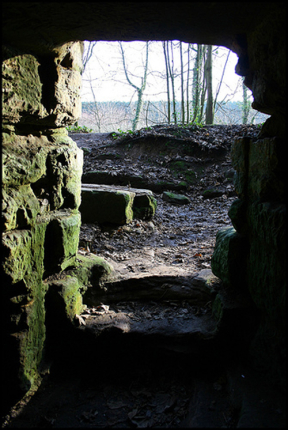
It is almost a commonplace that there is an affinity between a holy man and the creatures of the wild. The archetype is St. Francis of Assisi but the phenomenon was well marked both before and after his time. I would like to consider briefly an episode in the life...
Early on the morning of 8 June 1758, British frigates unleashed their broadsides upon French shore defences at Gabarus Bay, on the foggy and surf-lashed island of Cape Breton. Under cover of the warships' guns, a motley flotilla of craft headed towards the land. Propelled by straining Royal Navy oarsmen,...
Brazil and the outbreak of the First World War At the beginning of the twentieth century Brazil was on the periphery of a world order that revolved around decisions made by the great European powers. Although it was the largest and most populated nation in South America, Brazil possessed an...
2004 marks the centenary of the death of Sir William Vernon Harcourt, on 30 September 1904, and this provides an opportunity to consider the extent to which Harcourt's beliefs and political attitudes are still relevant today. Although he is now almost forgotten Harcourt was regarded as a major figure in...
Although he was not born in Kent, Charles Dickens spent the happiest and most settled part of his childhood in Chatham and chose to return to the same area when, as an established author, he could afford to buy the house1 he had admired as a boy. It is said...
What role do individuals wielding great power play in determining significant historical change? And how do historians locate human agency in historical change, and explain it? These are the issues I would like to reflect a little upon here. They are not new problems. But they are inescapable ones for...
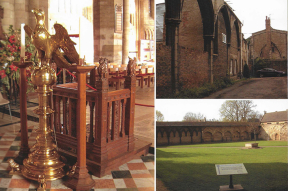
Although the reasons for and the process of dissolution in Peterborough Abbey compare closely to all other religious houses, the consequences were unique. Peterborough received favourable treatment and so emerged from the dissolution as one of six abbeys to be transformed into new cathedrals. The changes imposed on Peterborough were...
In 1857 the Builder enthusiastically described the thriving state of architecture on the banks of the Mersey: 'The impression from a walk through the principal quarters of the town, after visiting other towns, is that more [building of a superior kind] must be doing in Liverpool than at any other...
There should be no hesitancy doubting his existence R. G. Collingwood is remembered today as a philosopher, a man with a wide range of interests, the core of whose work is in the Idealist tradition. He died in 1943 and although his work has subsequently not been widely celebrated the...
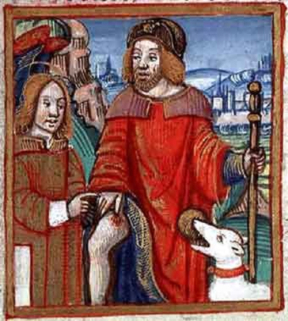
For the art historian, a thorough study of works of art, their creators and the environment in which they were produced, as well as their significance then and now, is a specialised endeavour. This, nevertheless, does not exhaust the presentation of art to contemporaries, least of all in the context...
‘Of all the decades to be young in, a wise man would choose the 1850s’ concludes G.M. Young in his Portrait of An Age. His choice is understandable. Historians and contemporaries have long viewed the middle years of the century as a ‘plateau of peace and prosperity’, an ‘age of...
Falsification of history is normally associated with dictatorships rather than liberal democracies. Yet tendentious accounts of the recent past are part of the armoury of all types of political debate. Such manipulation usually has only a limited and short-term influence, because it is neutralised by different political parties offering contending...
On 14 February 1868, the Carlisle Journal reported as follows: … two meetings were held in the Athenaeum in this city , “for the purpose of forming an auxiliary to co-operate with the Church Association in London, to uphold the principles and order of the United Church of England and...
In Nuneaton’s St. Nicolas Churchyard lies a sizeable, though not elaborate, flat gravestone. It commemorates Canon Robert Savage, Vicar of the parish 1845-71, his wife Emma and many of their children. This tombstone, like so many in our graveyards, reveals a wide range of historical information, recording significant detail about...
When the Bolsheviks seized power in what was essentially a carefully organised coup d’état in October 1917, they seized control only of the levers of central power in the then capital, Petrograd, which had already become the centre of working-class discontent. What they most emphatically did not do was to...