
Historian articles

The following is an extract from A Manchester Boyhood, the recently-published autobiography of Professor Donald Read, a past-president of the Historical Association. His book seeks to set his personal experience during the nineteen-thirties and forties within the troubled history of the time. His opinions, some of which may be found...
In February, 1907, the Canadian government’s most northerly regional emigration office in the British Isles opened for business in Aberdeen. Located near the city centre, only a stone’s throw from the docks and the railway station, it soon fulfilled the expectation that it would capture the attention of a large...
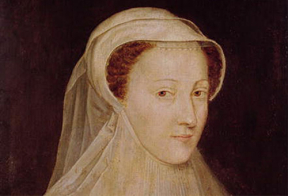
In May 1568 Mary Queen of Scots was riding in fear for her life to the wilds of Galloway. She crossed the Solway confident that she would receive the help which her cousin Queen Elizabeth had promised her, but instead found herself a prisoner. In the subsequent months a series...
Many surnames have a straightforward meaning. It is obvious that names such as Smith, Wright and Turner come from occupations; that names such as Pickering or York are from the names of places; and that Roberts, Robertson, Robson and Robinson are derived from the same personal name. It is not...
Adams’ Grammar School, Newport, Shropshire, was founded during the Commonwealth in 1656 towards the end of the great impetus of founding such schools in the sixteenth and seventeenth centuries. Despite many setbacks and threats to its existence it continues in the twenty first century as one of the 164 surviving...
Even had Queen Victoria not presided over the achievements of the age which bears her name, her career would still hold a fascination for the historian. She was, for one thing, the solitary woman in a male political world. She was possessed of a personality at once perceptive and simple,...
Fascism failed in Britain in the 1930s – Europe’s decade of the ‘Brown plague’. Unlike in many European countries, fascists in Britain were never a serious threat to the democratic order. This was not for want of trying, especially on the part of Sir Oswald Mosley and his British Union...
Blair the war leader provided historians with countless opportunities to get their names in the newspapers, let alone voice their opinions across the airwaves. The usual suspects were lined up (Eric Hobsbawm and Ben Pimlott in the Guardian, Andrew Roberts and John Keegan in the Telegraph, Niall Ferguson in The...
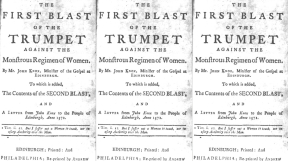
"To promote a woman to bear rule, superiority, dominion or empire above any realm, nation, or city is repugnant to nature, contumely to God, a thing most contrarious to his revealed will and approved ordinance, and finally it is the subversion of good order, and all equity and justice." John...
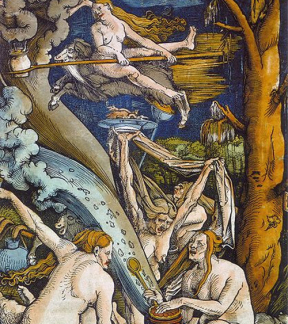
Regional variations in the intensity of European witchhunting existed because the necessary preconditions for panic chain-reaction hunts were only constantly in place in a very small number of regions. More than 35,000 witchcraft executions took place in the Holy Roman Empire where there was a wide acceptance of the cumulative...
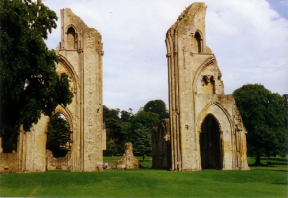
The dissolution of the monasteries was one of the most dramatic developments in English History. In 1536, the religious orders had owned about a fifth of the lands of England. Within four years the monasteries had been abolished and their possessions nationalised by Henry VIII. Within another ten years, most...
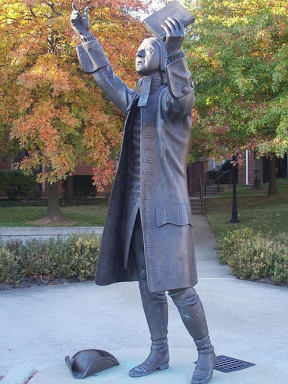
The tercentenary of John Wesley’s birth has been celebrated not just in his native country, but round the world – as widely, in fact, as the Methodism associated with him has spread. Over the years, in addition to innumerable biographies there have been many studies of particular aspects of his...
“I am greatly honoured to receive the Medlicott medal and I thank the President for his much-too-kind remarks. It is fifty years since I attended my first meeting of the Historical Association and heard a lecture by Professor Medlicott himself, no less. The Association does a wonderful job in encouraging...
To blame the failure of the denazification process in postwar Germany entirely on a vague and generalised concept such as apathy is simplistic and does not stand up to serious scrutiny. Denazification was one of the most ambitious attempts ever at provoking an artificial revolution; it is reasonable to assume...
Few Conservative institutions appealed to the Tory rank-and-file activist like the Tariff Reform League did in the opening two decades of the Twentieth Century. From its foundation in 1903, the League spearheaded Joseph Chamberlain’s crusade to grant tariffs on imported goods, acting as his grassroots organisation. This article attempts to...
During the early years of the twentieth century, the New Liberals spread a political ideology which was much closer to socialism than to Victorian liberalism. Indeed, they preached State intervention in favour of social welfare, national prosperity and imperialistic strength; that social policy which logically required extra care and increased...
Despite Britain’s longstanding membership of the European Union, the question of ‘Europe’ continues to loom large in the nation’s politics. Whilst the economic pros and cons of Britain ‘joining’ the euro might be understood by only a select few, that issue provides for the many an opportunity to debate Britain’s...
All aspects of Hungarian nationalism – with one exception, which I shall consider later – had more or less similar counterparts elsewhere in Europe; but the blending of those elements yielded a unique constellation. Moreover, the ingredients of this mixture proved highly disruptive for central Europe, indeed at times for...
Much has been said about the clash between religion and science in Victorian times but there has been less research into the relationship between them in the eighteenth century. This article considers three Georgian clergymen who were also notable scientists – the Reverend William Stukeley, the pioneer of scientific field...
Over a century after his death, interest in Oscar Wilde and his work is at flood tide, with unprecedented levels of publication and research about Wilde and his work. Wildean studies proliferate, much in languages other than English. Recent translations of Wilde’s work have included Romanian, Hebrew, Swedish and Catalan,...