
Historian articles

There will be many readers of The Historian whose knowledge of the 16th Century is wide and deep. This article is designed to fill in some of the corners to the map of that warravaged century, and to focus on a man, William of Nassau, who fought the battle of...
The Medlicott Lecture delivered at the Historical Association Annual General Meeting on 27th April 2002, transcribed and featured in The Historian 76.
The debate on the nation and its history is new to England; and there is, perhaps, a tendency to assume that what is new in England is new everywhere. In Ireland, the debate has been going on since the 1970s, fuelled by what is called ‘revisionism’; or rather, by a...
On 29 January 1949 there was a debate in the British House of Commons. When Winston Churchill, the leader of the opposition, interrupted Ernest Bevin’s history of the Palestine problem he was told by the Foreign Secretary: ‘over half a million Arabs have been turned by the Jewish immigrants into...
Lord Palmerston (1784-1865) has long interested (and confused) historians. A man of contradictions and paradoxes, he seemed both to embody modern Victorian Britain, and yet at the same time stand as a potent symbol of what had been lost.
During the last century or so there has developed a new ‘public role’ for history: the past as personal history, a vital element in the nourishing of people in society. During the past decades a new perception of what history is has manifested itself on two levels: first a shift...
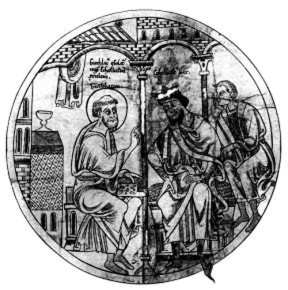
About the year 1430 the citizens of Thirsk decided that their ancient parish church of St. Mary was old-fashioned and unworthy of the developing town, so they decided to build a new one. As a result, over the next eighty years or so, they produced what Pevsner described as ‘without...
On reading the title of this article, any reader at all familiar with the social history of late Victorian and Edwardian England is likely to think of the revelations at the time of the extent of urban poverty. Two major enquiries, one into London poverty, and the other into poverty...
'An attack on the United States with 10,000 megatons would lead to the death of essentially all of the American people and to the destruction of the nation.’ ‘In 1960 President Kennedy mentioned 30,000 megatons as the size of the world’s stockpile of nuclear weapons.’ In the autumn of 1962...
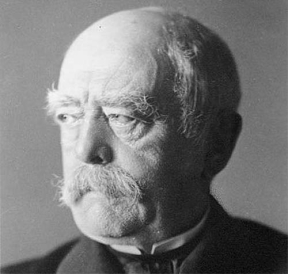
Readers of this journal will need no introduction to Otto von Bismarck. There are almost as many English-language biographies of him as those written in German. The four short studies by Lynn Abrams, Bismarck and the German Empire, 1871-1918 (1995); Andrina Stiles, The Unification of Germany, 1815-1890 (1986); D. G....
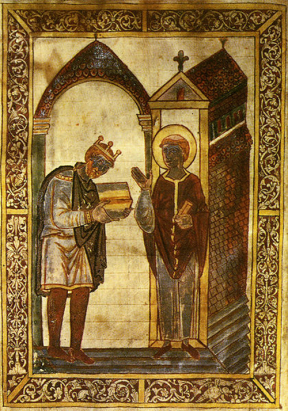
Much research has been devoted in recent years to Bede’s Ecclesiastical History of the English People (EH), completed in 731 at the joint monastery of Monkwearmouth-Jarrow; but in one crucial respect little progress has been made: the editing of the text. The excellent edition published by Charles Plummer in 1896...
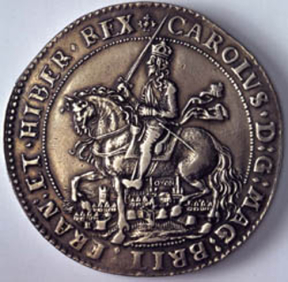
There are more than 23,000 medieval taxation records from England and Wales in the Public Record Office alone. For many years the vast majority of them have lain undisturbed in their archive boxes, but recent work is showing the true value of some of these as historical sources and making...
Joseph Priestley ended his days in Northumberland, Pennsylvania. This is one of the most delightful spots in the eastern United States. It is situated at the confluence of the North Western and North Eastern branches of the Susquehanna, one of the great rivers of North America, which winds its way...
A journalistic coup broke over Germany on 2 January 1978. The West German news magazine, Der Spiegel, published the first part of a longer piece in which an association calling itself the ‘Alliance of German Democratic Communists’ seriously criticized the policies of the East German Communist Party, the SED, and...
Henry Unwin Addington, a nephew of the former British prime minister, Henry Addington, had joined the Foreign Office at the age of 16 in 1806. After serving in various junior diplomatic posts in Europe he learnt in 1822 that he was to be promoted to secretary of legation in Washington....
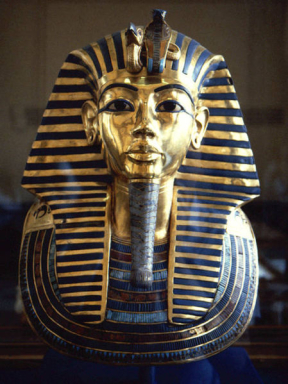
'At last have made wonderful discovery in Valley; a magnificent tomb with seals intact; re-covered same for your arrival. Congratulations.’ This telegram was sent from Luxor on the 6th November 1922 by Howard Carter to his coarchaeologist Lord Carnarvon in Britain. It started the Tut·ankh·Amen story which led to a...
The concept ‘local government’ dates only from the middle of the nineteenth century. ‘Local government service’ emerged later still. In 1903 Redlich and Hirst1 wrote of ‘municipal officers’, while in 1922 Robson2 preferred ‘the municipal civil service’. ‘Local government service’ perhaps derives its pedigree from its use in the final...
The decade and a half prior to the First World War saw Britain experience a virulent, some might say sordid phenomenon that has been referred to as ‘spy fever.’ This article traces the roots of spy fever, and examines its nature, before assessing its effects on Britain between 1900 and...
History gives us a basis for understanding the groups which people belong to, the countries people live in and the institutions which govern them. It provides a sense of continuity and identity. However, on 31 December 1999 the Queen and Prime Minister opened an exhibition which made no reference to...
The publication of the first volume of Paddy Ashdown’s Diaries in 2000 has focused renewed attention on the relationship between the Liberal Democrats and the Labour Party. From the first meeting between Ashdown and Tony Blair at the latter’s house on 4 September 1994, less than seven weeks after his...