Britain & Ireland 1901-present

War and conflict, technology, illness and medicine and the battle for civil and national rights have all been key elements of the 20th century through to today, thus, all of those themes and many more are explored in this section. Underpinning many of these articles and included here are articles exploring pedagogical issues, managing knowledge and transferring knowledge. Read more

Sort by: Date (Newest first) | Title A-Z
  • What’s The Wisdom On… teaching local history

    Article

    What's the Wisdom On... is a short guide providing new history teachers with an overview of the ‘story so far’ of practice-based professional thinking about a particular aspect of history teaching. It draws on tried and tested approaches arising from teachers with years of experimenting, researching, practising, writing and debating their...

    Click to view
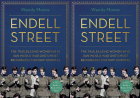
  • Finding fragments of change on Endell Street: an interdisciplinary approach

    Article

    Gemma Hargraves saw a history book recommended on social media and looked it up. Within the first pages she realised this was a book she needed to share with her students due to the positive female role models and other resonant themes. This article outlines a short sequence of lessons...

    Click to view
  • To historicise is to exercise: going back to the past to interpret the present

    Article

    Mila Bammens and Bjorn Wansink were concerned about young people’s reactions to recent nuclear threats. In the second part of this article they set out a series of approaches and resources, used with young people in the Netherlands, to teach about nuclear weapons. The first part of the article sets...

    Click to view
  • Doing a Gombrich: Year 9 make connections by shaping big narratives

    Article

    Oliver Scott explains how he fused two goals: planning a new Year 9 history curriculum and finding a way to help Year 9 connect it all together. Inspired by the distinctive style of E.H. Gombrich, Scott decided to have his pupils write a grand narrative at mid- and end-year points. The narrative...

    Click to view
  • Webinar series: The Forgotten Generations – Black British experience in the RAF from 1918

    30th June 2026

    What does this series cover? This series covers the sometimes hidden and controversial history of how the RAF has recruited and treated its black service personnel over time, particularly from the British Caribbean from 1918 onwards. Using newly researched evidence from surviving black RAF veterans of the West Midlands it...

    Click to view
  • Establishing a dialogue with Year 9 about why environmental history matters

    Article

    The enquiry sequence on which Alex Benger reports in this article was inspired by two specific concerns: a sense that history education must have more to contribute to young people’s understanding of and ability to confront the climate crisis; and a desire to help pupils to engage more broadly with...

    Click to view
  • What Have Historians Been Arguing About... Modern British LGBTQ+ history

    Article

    While academic historians began to make important contributions to our understanding of British LGBTQ+ history in the 1970s (and, indeed, this built on historical scholarship from as early as the 1880s), the field of British queer history became properly established within university history departments and mainstream academic scholarship from the...

    Click to view
  • Shaping what matters: Year 9 decide why we should care about the Windrush scandal

    Article

    Mark Fowle began work on an enquiry to contextualise the Windrush scandal for his pupils in south London, in response to the first national Stephen Lawrence Day, in 2018. He went on to work with his colleagues in a new school to broaden pupils’ historical perspective through stories of migration...

    Click to view
  • Come together: putting popular music at the heart of historical enquiry

    Article

    Drawing on a wide range of history teachers’ existing published work and presenting diverse examples of his own practice, David Ingledew builds a thorough curricular and pedagogic rationale for using popular music in history teaching. He shows how lyrics and music can be used as stimulus for various kinds of analysis and...

    Click to view
  • How visual evidence reflects change and continuity in attitudes to the police in the 19th and early 20th centuries

    Article

    While history teachers (and examiners) regularly invite students to consider what cartoons or paintings reveal about contemporary attitudes to particular social or political developments, such sources are often difficult to interpret and to use appropriately. Drawing on a wealth of detailed research and a passion to support teachers and students with...

    Click to view
  • The Battle of Monte Cassino and the D-Day Landings

    Article

    The Second World War is no longer a recent war. Very soon, there will be no veterans left to tell us how they saw things and what it was really like for them. While some eyewitnesses who were children at the time might be with us to see the centenary...

    Click to view
  • New approaches to teaching the History of Appeasement in the classroom

    Multipage Article

    This project has been created on the initiative of Professor Julie. V. Gottlieb, Dept. of History, University of Sheffield. British political history, political conflict, appeasement and the Munich Crisis (1938) itself is the focus of her research and publications. Rather than approach these topics from ‘traditional’, elite and history from...

    Click to view
  • Triumphs Show 193: Year 8 imagine the First World War trenches

    Article

    Deep into my PGCE year, I found myself discussing with my mentor how to pre-empt the barriers to understanding the past that students may face. One barrier we discussed was presentism: the tendency of students to interpret the past in light of their own modern knowledge, values and experiences. In particular, we considered...

    Click to view
  • Studying our own school’s archives to promote historical understanding in Year 7

    Article

    Helen Southwood here sets out an example of a hyperlocal history study the focus of which is her own school. She presents a rationale both for the study of hyperlocal history as a means of engaging students and developing their skills, and for the pedagogical use of previously uncatalogued school archives....

    Click to view
  • What Have Historians Been Arguing About... youth culture?

    Article

    For such a boldly iconoclastic work, the Key Stage 3 textbook A New Focus on ... British Social History, c.1920–2000 (2023) provides a disarmingly conventional account of youth in the 1960s as ‘mostly better educated and informed than their parents had been at their age [and able] … to find...

    Click to view
  • Fifties Britain through the senses: ‘never had it so good’?

    Article

    Maya Stiasny was faced with difficulties familiar to many of us. Her new Year 12 students were struggling to get to grips with a new period of history. They were not interrogating primary sources with sufficient vigour. Her solution, detailed here, was novel. Working on the rich social history of post-war...

    Click to view
  • Recorded Webinar: Nineteenth-century crime and punishment

    Article

    This webinar with Dr Emma D Watkins explores the changing understanding of crime and responses to it in the nineteenth-century. It provides a brief overview on the general shift from punishment of the body, to banishment, all the way through to imprisonment. With a particular emphasis on the use of...

    Click to view
  • The Coronation of King Charles III

    Article

    2023 will see the first coronation of a British monarch for 70 years. Only those now in their 70s or above will remember the last one. The UK is the only country in Europe still to carry out a coronation, a ceremony that has its roots in traditions over a...

    Click to view
  • Recorded webinar: Queer beyond London

    Article

    London has tended to dominate accounts of LGBTQ Britain… but how did local contexts beyond the capital affect queer identities and communities? This talk by Professor Matt Cook looks at Brighton, Plymouth, Manchester and Leeds to illustrate the difference locality makes to queer lives. * Please note: while this webinar...

    Click to view
  • Using Lesson Study to make microimprovements in teaching Year 8 how to use sources

    Article

    A highly distinctive and structured approach to teacher development, Lesson Study emerged in Japan but has since been adopted much more widely and now sees growing interest in the UK. Tony McConnell, Davinia Daley, Rebecca Levy, Lisa Waddell and Richard Waddington describe the process by which their school first investigated...

    Click to view