
Europe 1901-present
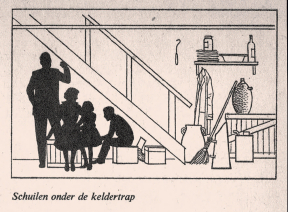
Mila Bammens and Bjorn Wansink were concerned about young people’s reactions to recent nuclear threats. In the second part of this article they set out a series of approaches and resources, used with young people in the Netherlands, to teach about nuclear weapons. The first part of the article sets...
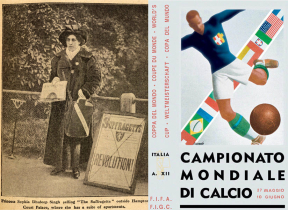
Oliver Scott explains how he fused two goals: planning a new Year 9 history curriculum and finding a way to help Year 9 connect it all together. Inspired by the distinctive style of E.H. Gombrich, Scott decided to have his pupils write a grand narrative at mid- and end-year points....
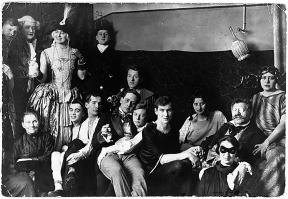
In this article, Jacob Thorpe relates his attempts to humanise the teaching of Nazi persecutions by focusing on individuals’ experiences and identity. Deep immersion in the sources enabled him to find the stories fitting his key themes of love, community, identity and culture. Thorpe built on the work of other...
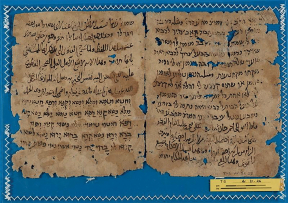
A conversation with some undergraduate students prompted Rob Kanter to explore how his own historical research on Jewish–Muslim relations could be integrated into the history curriculum in secondary schools. Kanter identified two stories of Muslim rescue during the Holocaust which he shares here to empower teachers to challenge misconceptions and...
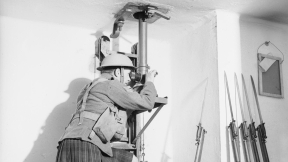
Why did the the Maginot Line – that marvel of 1930s engineering with its miles of fortifications and bunkers to deter German invasion – fail so spectacularly in 1940? Its vast underground forts were designed to withstand artillery and chemical attack, yet France fell in just six weeks, leaving the...
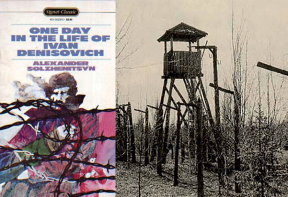
Peter Turner, along with his colleagues, wished to design a cross-curricular activity for post-16 students in history and English. The enquiry they devised addressed the issue of the changing reception of the classic novel One Day in the Life of Ivan Denisovich in the immediate aftermath of its publication, and...
When Alistair Dickins came to teach A-level Russian and Soviet history (1855–1964) he was rather surprised by the very limited references to Jewish history within the exam board specification. His own detailed knowledge in this area (a ‘little side-project’ from his doctorate on the Russian Revolution), led to a revision...
Educators at Imperial War Museums (IWM) have been leading voices in Holocaust education since the Holocaust Exhibition opened at IWM London in June 2000. In this article, Clare Lawlor shares the design of IWM’s new Holocaust Learning Programme for schools, and the pedagogic research that underpinned the design process. The...
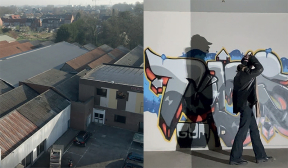
As a busy teacher of history and part-time doctoral student exploring history, heritage and identity, Joris thought a lot about heritage, students’ understanding of heritage and how such ideas could best be brought into the history classroom. Meanwhile, he discovered that the buildings next to his school were about to...
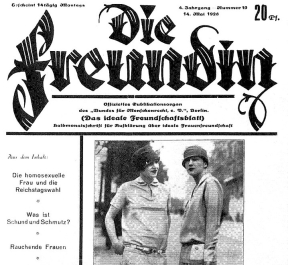
Berlin staged its first Christopher Street Day celebration in 1979. This queer pride event commemorated the Stonewall riots that took place a decade earlier in New York City, and it has continued to be a popular annual event in Germany. Its celebration of a landmark moment in American history, however,...
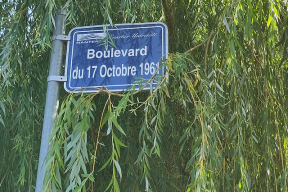
3 July 2024 marks the 50th anniversary of a significant, yet little known, event in French history: the declaration of an end to the recruitment of economic migrants. Over the previous decades, some three million migrant workers had arrived to surprisingly little fanfare, building the economic growth later mythologized by...
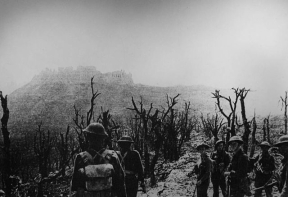
The Second World War is no longer a recent war. Very soon, there will be no veterans left to tell us how they saw things and what it was really like for them. While some eyewitnesses who were children at the time might be with us to see the centenary...
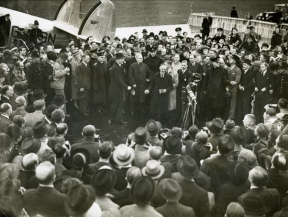
This project has been created on the initiative of Professor Julie. V. Gottlieb, Dept. of History, University of Sheffield. British political history, political conflict, appeasement and the Munich Crisis (1938) itself is the focus of her research and publications. Rather than approach these topics from ‘traditional’, elite and history from...
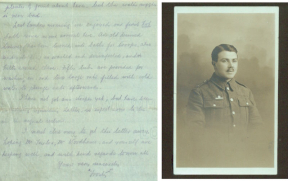
Deep into my PGCE year, I found myself discussing with my mentor how to pre-empt the barriers to understanding the past that students may face. One barrier we discussed was presentism: the tendency of students to interpret the past in light of their own modern knowledge, values and experiences. In...
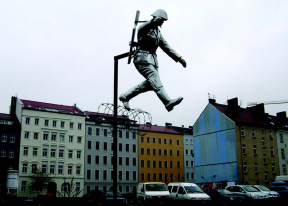
The principles and approaches outlined in our article on Pages 59 to 64 of this edition can be applied to any site, although not necessarily all on the same trip! If you are visiting Berlin, and you want to examine it as a contested space, in what order might you...
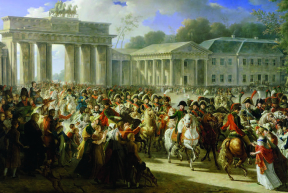
Geraint Brown and Matt Stanford share the daunting challenge and intriguing opportunities that are presented by leading a school history trip to a site as complex as Berlin. That the city is a palimpsest, layered with stories and tissued with conflicting identities, experiences and meanings, makes planning a trip extremely...
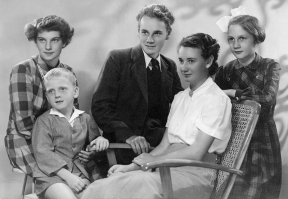
Lien de Jong celebrates her 90th birthday in September 2023. In lots of ways, her biography is similar to many Europeans of her generation. She was born, grew up and went to school in The Hague during the 1930s. She trained to work in a nursery. In the 1950s, she...
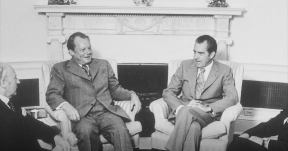
Germany as a divided and defeated nation is explored through the lens of how the two new Germanys rebuilt their States politically and culturally. Professor Anna Saunders reflects on the different inequalities that existed between the two states and how stability was established between political leaders, even when political dissent...
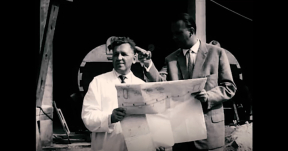
The speed at which both sides in Germany recovered economically is re-examined in this film. Professor Matthew Stibbe describes how the West Germany economy recovered and became a magnet for migrants as well as East Germans. However, he also examines how East Germany’s economy compared more successfully to some of...
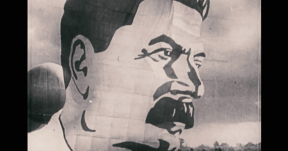
Professor Matthew Stibbe assesses some of the contradictory factors at play in East Germany and how that related to the wider Soviet system. He contrasts this with the development of the capitalist system that was being developed in West Germany.