

From gardens to coasts – a summer immersed in history
Journeying the British Isles
Summer holidays often tempt us to look further afield. Yet some of the most fascinating stories are hiding in plain sight: beneath our feet, behind garden walls, along harbour fronts and on windswept headlands. This year, why not slow down, look a little closer, and discover the history woven through the landscapes around us?
Following the coastline
As public historian Sally Coulthard reminds us in A Brief History of the Coast in 100 Objects, Britain's coastline has always been more than a place of leisure. It has been a frontier, a trading route, a line of defence, and a meeting point between cultures. Our coasts and landscapes are packed with traces of the people who shaped them, if we know how to read the clues.
One place where history seems to unfold at every turn is Lyme Regis on Dorset's Jurassic Coast. A stroll along the Cobb takes visitors through stories spanning centuries: Civil War defences, the voyages of Sir George Somers, literary connections to Jane Austen and The French Lieutenant's Woman, and, of course, the remarkable life of fossil collector Mary Anning. Look out for ammonite-inspired lamp posts and the bronze statue of Anning gazing towards the cliffs where her discoveries transformed our understanding of the prehistoric world.
Austen's connection to places such as Lyme Regis also offers a reminder of how landscapes can illuminate literature. Our recent Q&A with Professor John Mullan, one of the world's leading Jane Austen experts, explores what her novels reveal about Georgian society and why her writing continues to resonate with readers more than two centuries later.
Further north, the dramatic ruins of Tynemouth Priory occupy a headland that has witnessed over a thousand years of change. The site was both a place of worship and a strategic military stronghold, vulnerable to Viking attack, Civil War conflict and twentieth-century warfare. Today, visitors can stand among the priory ruins and look out across the mouth of the River Tyne, appreciating how geography shaped the site's history.
On Wales' south coast, the remains of Swansea Castle sit unexpectedly among modern shops and streets. Look carefully and you'll find a building that has served as Norman stronghold, prison, workhouse, glassworks and post office. Its survival is a reminder that even familiar urban landscapes often contain layers of overlooked history.
Elsewhere, quieter coastal communities reveal equally compelling stories. Silloth, on the Solway Firth, preserves the distinctive layout of a Victorian seaside resort, complete with surviving traces of the vision that transformed it from a small port into a holiday destination for the workers of Carlisle. Meanwhile, in Ardmore, County Waterford, the landscape is shaped by centuries of devotion to St Declan, whose legacy can still be traced in the striking round tower, ancient oratory, holy well and even a remarkable stone balanced on the shoreline.
Gardens with stories to tell
But history isn't confined to coastal walks and castle ruins. Gardens can be equally revealing, particularly during spells of hot weather, when traces of long-forgotten historic landscapes begin to emerge at sites across the UK, from Chatsworth and Knebworth to Blenheim and Hardwick Hall.
In Chelsea, veteran mulberry trees act as living signposts to lost landscapes. Hidden among streets and houses are survivors connected to the gardens of Henry VIII, the estate of Thomas More, an eighteenth-century silk farm and a Moravian burial ground. These gnarled trees have outlasted the buildings around them, preserving stories that might otherwise have been forgotten.
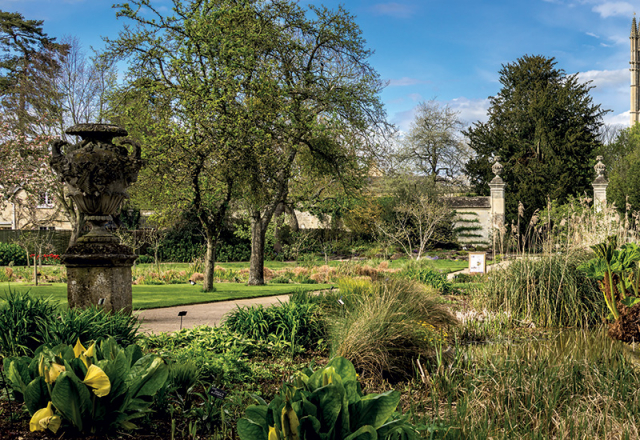
Oxford's Botanic Garden offers a different perspective on the past. Established in 1621 as Britain's first botanic garden, it reflects four centuries of scientific discovery, medicine, global exchange and changing ideas about the natural world. The garden's plants tell stories that stretch far beyond Oxford, connecting visitors to wider histories of exploration, empire and knowledge.
Learning to read the landscape
Whether you're exploring a famous landmark or an overlooked corner of the countryside, landscape historian Mary-Ann Ochota encourages us to become "landscape detectives". A curious field boundary, an old trackway, an unusual tree, a ruined wall or a place name can all provide clues to the lives of the people who came before us. Looking for patterns, asking questions and noticing what doesn't quite fit can transform an ordinary walk into a journey through time.
In Hidden Histories of the Viking Age, Eleanor Barraclough explores how traces left behind by ordinary people can reveal a richer and more complex story of the Viking world than the familiar myths of raids and warriors. Whether it's a surviving settlement pattern or an overlooked feature in the landscape, the past often survives in unexpected places if we're prepared to look closely.
So wherever your travels take you this summer, consider taking a historian's approach. Read the landscape. Follow the clues. Explore the layers of history living within coasts, gardens, villages and towns.
Looking for inspiration? Browse our growing collection of Out and About features and discover new places to explore. And if you uncover a fascinating story, hidden detail or favourite historical spot during your travels, whether they be in the UK or further afield, we'd love to hear about it. Share your discoveries by tagging us on social media using #OutandAboutHA and help inspire future explorers.