
World
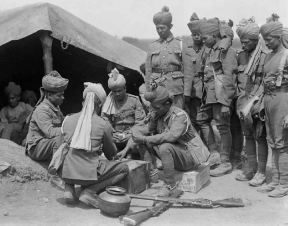
Rather as Queen Victoria was never as ‘Victorian' as we tend to assume, so British India in the years leading up to 1914 does not present the cliched spectacle of colonists in pith helmets and shorts lording it over subservient natives that we might assume. Certainly that sort of relationship...
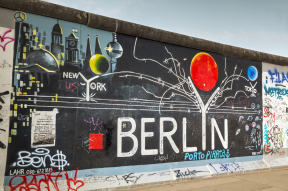
An HA Podcasted History of the Cold War featuring Dr Elena Hore of the University of Essex, Dr Matthew Grant of Teeside University, Dr Holger Nehring of the University of Sheffield, Dr Michael Shin of the University of Cambridge, Professor Mark White of Queen Mary University of London, Professor Charles...
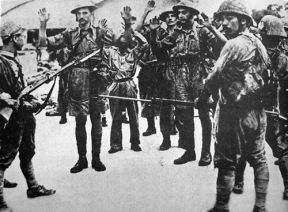
Churchill called it "the worst disaster and the largest capitulation in British history" and the Fall of Singapore on 15 February 1942 has certainly gathered its own mythology in the past 70 years. Was it all the fault of General Percival; were the guns pointing the wrong way; did the...
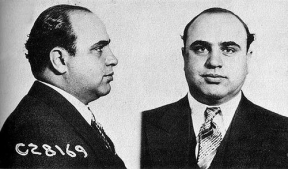
Alphonse Gabriel Capone's bequest to history is a well-known catalogue of brutal racketeering, bootlegging, gangland murders (most infamously the St Valentine's Day Massacre of 14 February 1929) and the corruption of both American public morals and her elected officials, including the US Judiciary, Chicago mayoralty and city police force. Born...
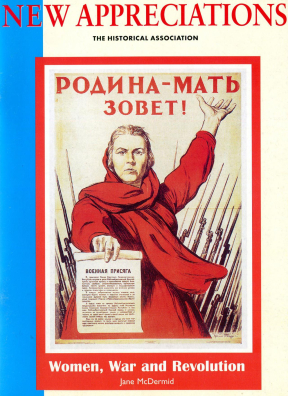
On the surface, the period 1914 to 1945 seems to have encompassed massive changes in the position of women in Europe, in response to the demands of war and revolution. Yet historians have questioned the extent of the transformation, since the acquisition of the vote, as well as improvements in...
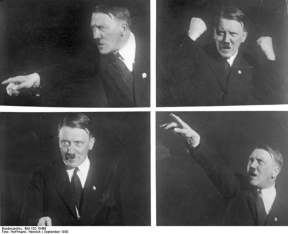
This pamphlet provides a detailed account of the events leading up to the outbreak of war in 1939, covering the various factors that played a role in the outbreak of war such as tension over Poland and the Spanish Civil War, as well as the nature and effect of diplomatic...
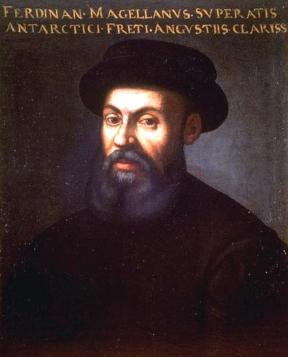
This pamphlet covers a very large period of history in a very important region with great detail and focus. Themes that are covered include the transition of power and dominance in the pacific region, the conflicts that frequently arose in the struggle for pacific dominance throughout the centuries, as well...
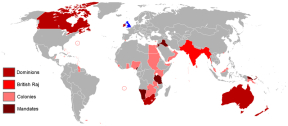
In January 1852, under the command of Captain Robert Salmond, HMS Birkenhead left Portsmouth carrying troops and officers' wives and families from ten different regiments. Most were from the 73rd Regiment of Foot, and were on their way to South Africa to fight the Xhosa in the 8th Kaffir War...
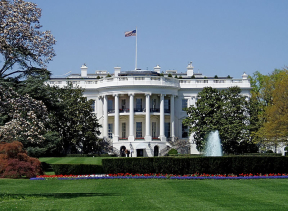
The Long Winding Road to the White House: caucuses, primaries and national party conventions in the history of American presidential elections Almost the Last Hurrah At last we know officially. In late August at their 40th national convention in Tampa, Florida, the Republican party formally nominated its candidates to run...
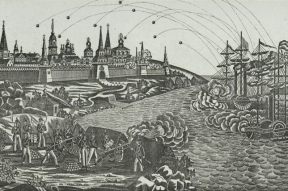
This is a new feature summarising an event or person using ten statements of only 140 characters (including spaces!). Compiled by Paula Kitching.The Crimean WarThe Crimean War exposed the power games amongst European powers & the declining Ottoman Empire using religious upset for political advanceAfter much posturing Russia attacked Turkey...
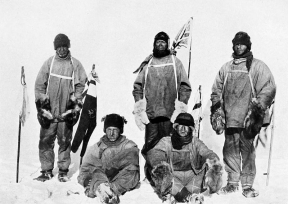
No longer "A Pole Apart": Antarctica 100 years on from Captain Scott At last on 12 November 1912 the search party found the tent almost totally buried in snow. According to Thomas Williamson: ‘Mr Wright came towards us, and said it was the Polar Party ... it was a great...

Bettany Hughes Norton Medlicott Medal Winner Lecture In 1991 I travelled to the BBC for a meeting with a senior television producer. It seemed to me that history just wasn't getting a fair crack of the whip. I talked animatedly about the on-screen discoveries that could be made and the...
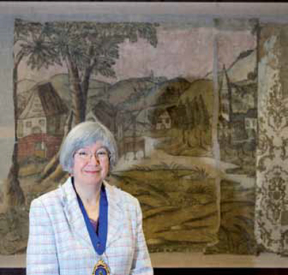
In early November I was delighted to attend the HA Branch Officers' Meeting in London. Many branches were present and I enjoyed talking to people from across the country. It also gave me the chance to hear more about the activities of our local members and I left with a...
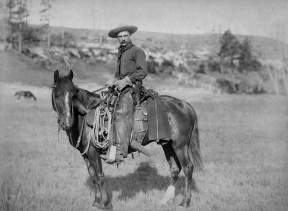
The Western movies that from around 1910 until the 1960s made up at least a fifth of all the American film titles on general release signified escapist entertainment for British audiences: an alluring vision of vast open spaces, of cowboys on horseback outlined against an imposing landscape. For Americans themselves,...
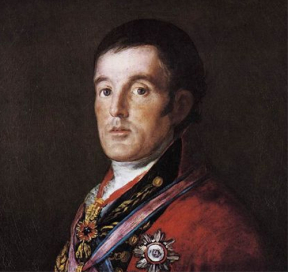
We can do all kinds of things with the past - examine it analytically, or question whether it ever existed, or churn it up inside ourselves until it turns into personal experience. We can dream it as we lounge amidst a heap of ruins, or petrify it into a museum;...
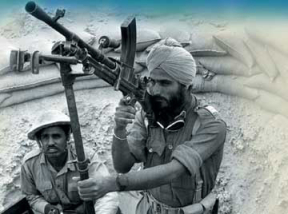
India was vital as a source of men and material for the British in the Second World War, despite the constitutional, social and economic issues which posed threats to its contribution. Leo Amery, Secretary of State for India 1940-5, wrote to Churchill, 8 April 1941: ‘My prime care had naturally...
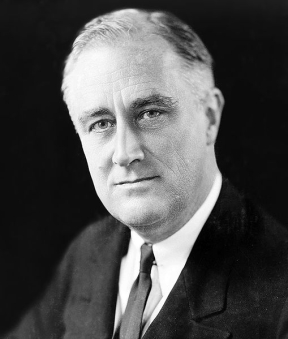
New Deal is the name given to the policies of the American president Franklin D. Roosevelt during the 1930s. Elected in 1932, at a time of great economic depression, he sought to alleviate distress by using the inherent powers of government, and the New Deal era come to be seen...
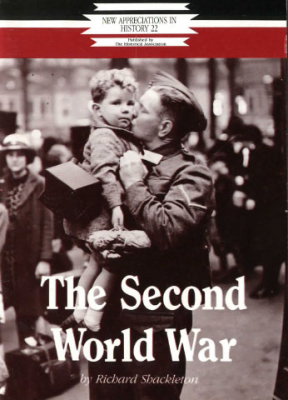
On 5 September 1939 the German Führer, Adolf Hitler, paid a surprise visit to the corps which was in the forefront of his army's ferocious assault upon Poland. As they passed the remains of a smashed Polish artillery regiment, the corps commander, General Guderian, astonished Hitler by telling him that...
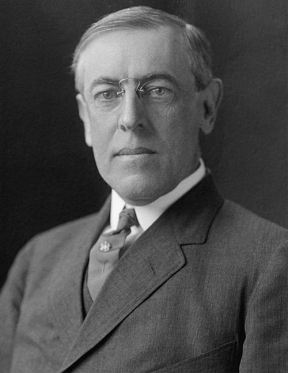
Unpublished papers in Britain's National Archives at Kew reveal curious undercurrents in Anglo-American relations. After the conclusion of the Boer War, for example, the British Army supposed that the next major conflict would be not with Germany but with the U.S. A memo printed for circulation in July 1904 entitled...
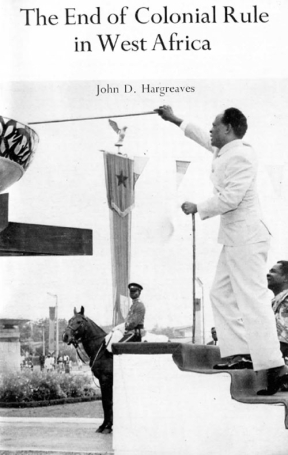
The dissolution of colonial empires since the Second World War is a major theme of contemporary history, and one which will challenge historians for many years to come. There are still sharp disagreements as to how this change should be described. European scholars tend to use the term ‘decolonization' (at...