
World
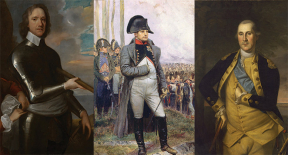
This article examines the aftermath of three epoch-making periods of change – the English, American, and French Revolutions. A comparison of the trio of military commanders who gained power as a direct consequence of these upheavals reveals how the very political radicalism which brought them to power also threatened to...
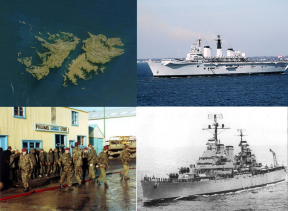
This month (April 2022) is the 40th anniversary of the start of the Falklands Conflict. On 2 April 1982 an Argentinian Force of 3,000 men invaded the Falkland Islands taking the Islanders and the 80 Royal Marines stationed there by surprise. Despite pressure from the United Nations to withdraw the...
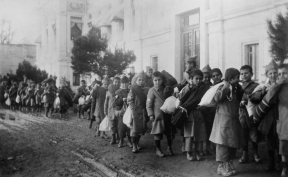
Why is the term 'Armenian Genocide' controversial, with many countries still not acknowledging a genocide at all? What do we know about the event of 1915 and the plight of the Armenian community in Turkey? How can we grapple with a history that many people want to forget? In this...
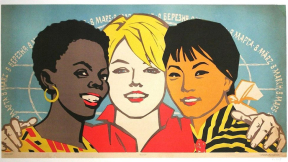
History, politics and journalism are intertwined. In this webinar (filmed in December 2021) Professor Anna Whitelock and members of her department from City, University of London explore the inter-related history, politics and journalism of Russia and the Cold War. First, Dina Fainberg explores Soviet relations with the world under Nikita...
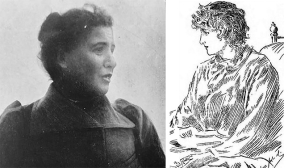
Our series ‘Real Lives’ seeks to put the story of the ordinary person into our great historical narrative. We are all part of the rich fabric of the communities in which we live and we are affected to greater and lesser degrees by the big events that happen on a...
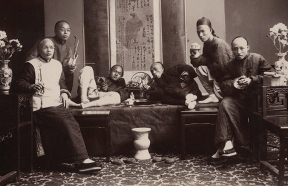
Zheng Yangwen shows that despite its association with trade, war and politics, opium was first of all a history of consumption. Opium has fascinated generations of scholars and generated excellent scholarship on the opium trade, Anglo-Chinese relations, the two opium wars, and Commissioner Lin. The field has diversified in the...
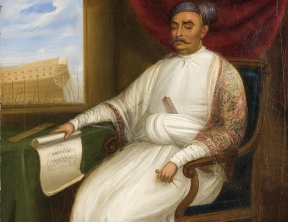
The historiography of the British Empire has taken a long course since the era of decolonisation. Political histories of the late twentieth century considered the mechanisms connecting crises at the ‘periphery’ with metropolitan decision-making. One rather overused stereotype was the so-called ‘man on the spot’ pushing empire forward, be they...
The 2021 Medlicott Medal recipient was Professor Rana Mitter, expert on Modern Chinese history and politics. Professor Mitter's Medlicott lecture was on the subject of ‘How New is Asia’s “new era”?’.
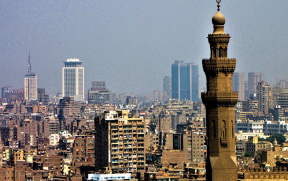
Nicolas Kinloch guides us round the fascinating city of Cairo. Cairo has always been a traveller’s destination. That indefatigable explorer, ibn Battuta, arrived there in 1326, and declared that it was ‘boundless in its multitude of buildings, peerless in beauty and splendour...extending a friendly welcome to strangers’. Most of this...
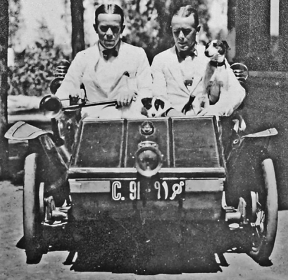
Wendy Barnes describes the real lives of identical twins, Robert and Thomas Gayer-Anderson, who collected a vast quantity of paintings and art objects, much of which was donated to museums around the world. The twins’ final home, Little Hall, Lavenham is now a museum and the headquarters of The Suffolk...
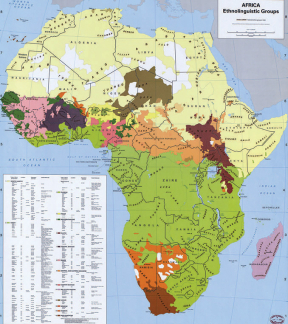
History Abridged: This feature seeks to take a person, event or period and abridge, or focus on, an important event or detail that can get lost in the big picture. Think Horrible Histories for grownups (without the songs and music). See all History Abridged articles Africa is a huge continent...
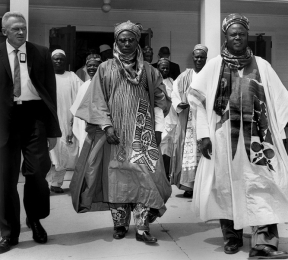
Steven Pierce writes about Nigeria, long known for its flamboyant corruption, some of which stems from accidents of history. Its true international notoriety emerged in 1974–75, when half the world’s concrete supply was mysteriously diverted to the port of Lagos, paralysing it for a year. This article examines how the...
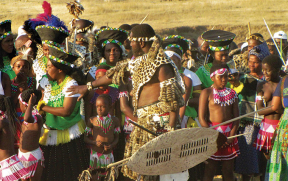
In this article, Nicolas Kinloch examines the 1964 film Zulu. He suggests what it might tell us about the reality of the British Empire and asks if it has anything to say about the era in which the film was made. One of the most successful British films of 1964...
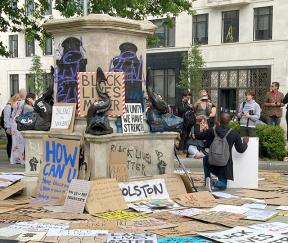
In the light of present-day concerns about the place, in a modern world, of statues commemorating figures whose roles in history are of debatable merit, Dr Gregory Gifford puts the British Empire on trial, presenting a balanced case both for and against. In June 2020 when the statue of slave-trader...
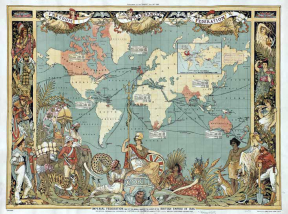
The murder of George Floyd during the summer of 2020 and the ongoing ‘culture war’ in Britain over the legacy of the British Empire have reignited interest in imperial history. This focuses, in particular, on the question of the empire’s impact on Britain itself: on how the act of conquering...
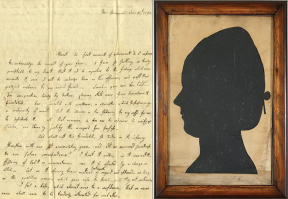
Rowan Cookson offers us the opportunity to compare our contemporary anxieties with a stressful era in American history. Eighteenth-century women’s friendship is worth considering at this time. In my undergraduate dissertation, I concluded that white wealthy women’s friendship in eighteenth-century America equired long distance communication, involved labour and perpetuated race...
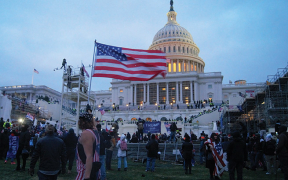
Michael Dunne reveals the complex background to the modern elaborate constitutional process of electing a United States President. On Wednesday, 20 January 2021, Joseph R. Biden, Jr., was inaugurated as the 46th President of the United States of America. In years to come these simple words may seem prosaic and...
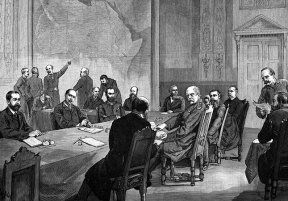
History Abridged: This feature seeks to take a person, event or period and abridge, or focus on, an important event or detail that can get lost in the big picture. Think Horrible Histories for grownups (without the songs and music). See all History Abridged articles In 2020 there was lots...
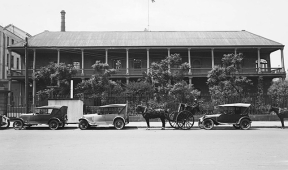
In this article Edward Washington explores how the Royal Mint in Sydney, Australia was affected by the First World War, through the loss of professional staff and the legacy of experiencing conflict. The Royal Mint, Sydney, which opened in 1855 in response to the Australian gold rushes, was the first...
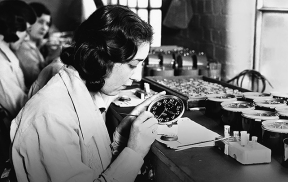
The twentieth century celebrated many new technologies and just like many of those from the industrial revolution we now know them to be edged with danger and potential long-term damage. Here we learn about the effects that radium, bolstered by its advantages in war time, had on the civilian factory...