
World
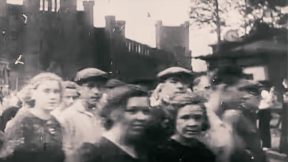
In this film, Dr Edwin Bacon (University of Lincoln) introduces us to the young Boris Yeltsin, a true product of the Stalinist years. He explores how a young Yeltsin caught the eye of the Communist officials, allowing him to work his way up from a civil engineer to the politburo....
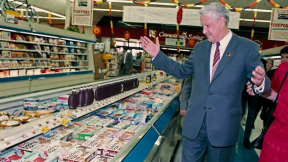
In this film, Dr Edwin Bacon (University of Lincoln), examines the political and economic repercussions of Gorbachev’s reforms. Dr Bacon reflects upon the dire state of the Soviet economy in the late 1980s/early 1990s and how that led to change but also unrest. In particular he addresses the way that...
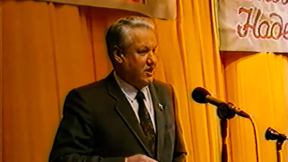
In this film, Dr Edwin Bacon (University of Lincoln), explores the role Yeltsin played in the dissolution of the Soviet Union. Dr Bacon takes us from the fall of the Berlin Wall, the rise of nationalism in the new republics, and how Yeltsin became Russia’s first elected head of state....
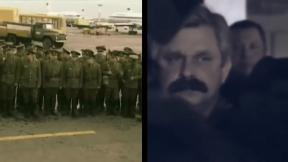
In this film, Dr Edwin Bacon (University of Lincoln), discusses the emergence of Russia as a democratic country and its nascent capitalist economy. He outlines how the issues Yeltsin faced in government such as the 1993 constitutional crisis, followed by the shelling by tanks in Moscow led to Yeltsin rewriting...
How did Russia's experiment with capitalism and privatisation lead to the emergence of powerful oligarchs? What did this oligarchy mean for Russia's nascent democracy?
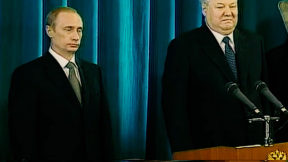
In this final film on Yeltsin, Dr Edwin Bacon (University of Lincoln), discusses Yeltin’s second term and how his public profile went from hero to growing embarrassment. Importantly he examines how Yeltin’s search for a successor that would secure his family’s security led to rapid changes in Prime Ministers in...
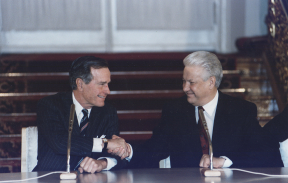
In this film, Dr Edwin Bacon (University of Lincoln), looks how the positive relationship established between Mikhail Gorbachev and President Reagan and his successor President Bush continued with the ascension of Yeltsin to the presidency of Russia. Dr Bacon discusses how Russian perceptions of the West changed with the expansion...
Joseph Stalin was born Joseph Besarionis dze Jughashvili in 1878 into a poor family in Gori, Georgia, part of the then Russian Empire. Stalin attended the Tbilisi Spiritual Seminary while his own radicalism grew, before joining the Marxist Russian Social Democratic Labour Party. He edited the party's newspaper, Pravda, and...
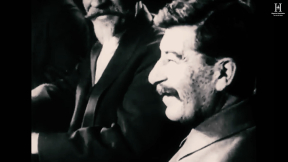
In this film, Professor James Harris (University of Leeds) discusses how interpretations have changed over the years regarding Stalin’s rise to power, and his transformation from rural Georgian to the ‘Man of Steel’ – Stalin. For many years, western interpretations were strongly influenced by his rival Trotsky, who defined Stalin...
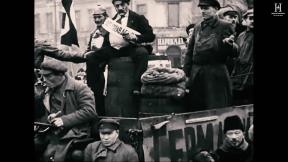
In this film, Professor James Harris (University of Leeds) examines how the New Economic Policy transformed the Soviet economy after the civil war, and looks at Stalin’s central role in that recovery. Key during that period was Stalin’s dispute with Nikolai Bukharin and the Great Break, and the drive to...
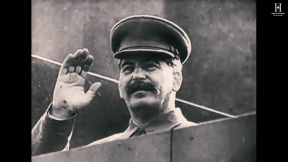
Why was the Soviet Union so violent in the 1930s? In this film, Professor James Harris (University of Leeds) looks at differing interpretations of the origins of the Great Terror; was it the story of one man trying to obtain total control, was it a result of collective frustration against...
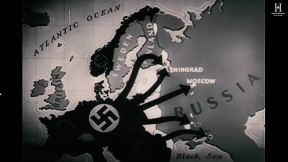
In this film, Professor James Harris (University of Leeds) examines Stalin and the Soviet preparations for global war. The reasons why Stalin agreed the Nazi-Soviet pact are explored as are Stalin’s response to invasion in 1941. Professor Harris addresses the impact the war had on the USSR and how that...
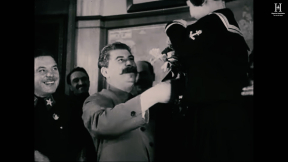
In this film, Professor James Harris (University of Leeds) reflects upon how historical interpretations of Stalin have changed over time. Stalin’s legacy and influence continues to materialise in all subsequent Soviet and Russian administrations. The Man of Steel is used by politicians when they are looking for arguments to open...
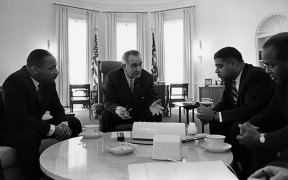
Paula Kitching interview with Professor Anthony J. Badger about his latest book. 2024 is an election year in the United States. For many in the UK and around the world the US political system can be confusing, with simple processes seemingly more complex than you would expect. It is not...
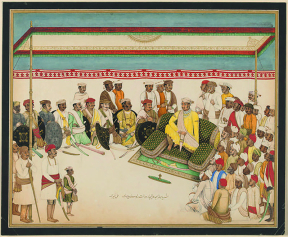
Our series ‘Real Lives’ seeks to put the story of the ordinary person into our great historical narrative. We are all part of the rich fabric of the communities in which we live and we are affected to greater and lesser degrees by the big events that happen on a...
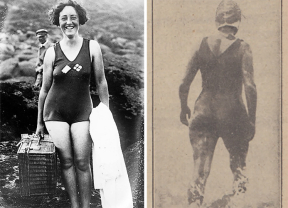
In this article Matthew Brown and Pablo Scharagrodsky introduce us to the little-known story of Anglo-Argentinian swimmer Lilian Harrison, who in 1923 became the first person to swim the 42km from Uruguay to Argentina at the estuary of the Rio de la Plata. Her story shows how she had to...
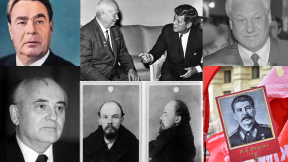
How much of what Russia is today, how its people behave, and how they are perceived is dependent on its history and those that have led it? Was it the first melting pot of the world? Do its broad range of cultural traditions and diversity play a part in its...
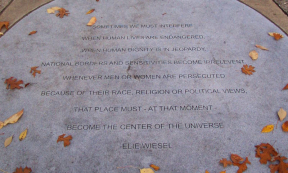
9 December 2023 was the 75th anniversary of the passing of the United Nations Convention on the Prevention and Punishment of the Crime of Genocide (known as the UN Convention on Genocide). The convention was a clear statement by the international community that crimes of that nature should never happen...
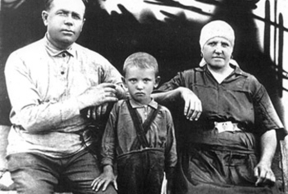
Emeritus Professor Archie Brown of the University of Oxford discusses Mikhail Gorbachev's early life and the influence it had on his later life and thinking. Mikhail Gorbachev was born to a poor peasant family of Russian and Ukrainian heritage in 1931. Badly affected by both the famine of 1930-33 and...
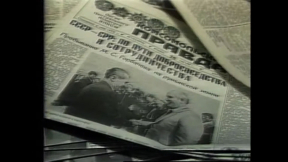
Emeritus Professor Archie Brown explains how Mikhail Gorbachev became the leader of the Soviet Union in 1985 and describes the domestic and international situation the USSR found itself in at this point of the Cold War. He discusses Gorbachev's political and economic agenda and priorities, looks at the support and...