
World
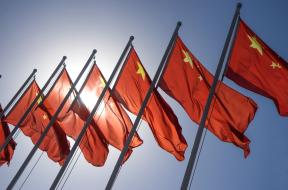
In this lecture Professor Mitter uses film and other propaganda works to explore how key events of global history are being represented in China to develop a different understanding of its own past. The talk addresses a number of the factors for this change in how China is reflecting on...
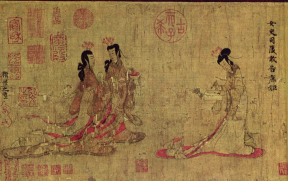
Waqās Ahmed broadens our perspective on where in history we might find polymaths, those who embody versatility of thought and action. While Western scholars might identify the likes of Leonardo da Vinci or Benjamin Franklin as the archetype of the polymath, they have in reality existed throughout history and across...
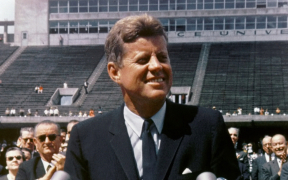
David Smith investigates how the USA made such a big mistake in the Bay of Pigs. In his inaugural address, President Kennedy attempted to balance the demands of Cold War rhetoric with setting out a vision of a post-Cold War world. Praise for the speech came across the political divide,...
History Abridged: This feature seeks to take a person, event or period and abridge, or focus on, an important event or detail that can get lost in the big picture. Think Horrible Histories for grownups (without the songs and music). See all History Abridged articles Described as the most powerfully...
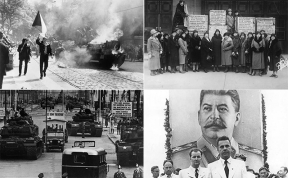
For a long time, history curricula on the 20th century prioritised the narrative of a slide from World War I to World War II and fascism above many other topics. But the history of the 20th century is both far more complicated and far more interesting than that. For the...
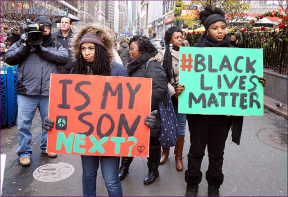
2020 has been an interesting year in many ways – both as a year to make history and one that has sought to tackle many representations of the past. The Black Lives Matter campaign that has taken on new energy across the globe in response to the killing of a...
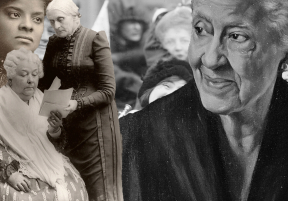
When the Founding Fathers of the US created their Constitution in 1787 (formally starting in 1789) they were keen to make the US a modern and fair place to live, a new start away from the restrictions of the Old World and its antiquated forms of rule. However, they also...
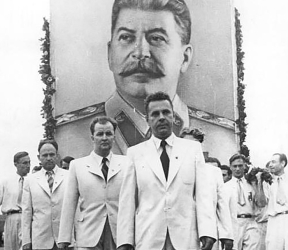
Prior to the East European revolutions of 1989, and the collapse of the Soviet Union in 1991, commentators outside the region were largely reliant on printed material collected by specialist research libraries, informal rrangements with contacts ‘behind the iron curtain’, information that could be gleaned from visits to the region,...
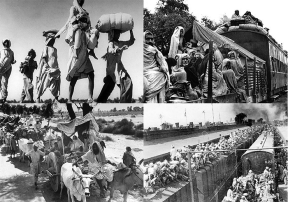
Historians often debate when, exactly, the twentieth century began; that is, when the themes and trends that we have come to understand as defining this tumultuous, rapidly changing period first started, and when they ended. One place we can look to answer this question is the available primary resources that...
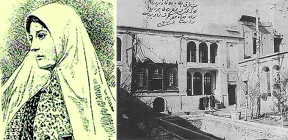
Paula Kitching tells us of the incredible courage shown by Fatima Baraghani while campaigning for human rights, especially women’s rights in nineteenth century Persia. Fatima Baraghani lived in nineteenth century Persia and was a poet, a religious leader and a campaigner for women’s rights. She was born sometime between 1814...
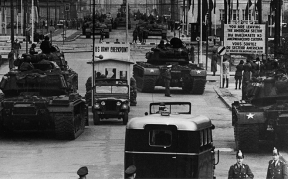
Almost 30 years after the end of the Cold War, diversity is suddenly galvanising the field of scholarly research into the Cold War. As the historian Federico Romero has argued, older, simpler interpretations ‘seem to be giving way to a looser understanding of the Cold War as an era that...
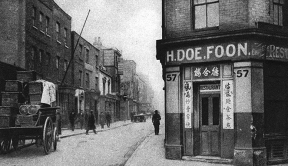
Panikos Panayi explores the way in which immigration has transformed British eating habits over the last two centuries, whether through the rise of the restaurant and the development of eating out, or the culinary revolution at home. Those people who voted to leave the European Union in 2016 because of...
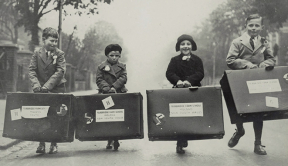
Murray Watson uses oral history interviews to try to explain the many and varied reasaons people had for emigrating from Britain after World War II. When I was invited to write this article about postwar emigration from the UK my first action was to Google the search term ‘postwar emigration...
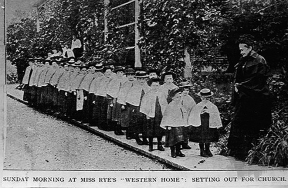
Alf Wilkinson explores the controversial story of Maria Rye, who founded the Female Emigration Society in 1861 in order to take ‘surplus’ young ladies to Australia and New Zealand to work as teachers and governesses. As there was insufficient demand for these, she refocused her work on taking pauper children...
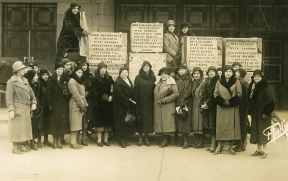
The years between the Armistice of November 1918 and the German attack on Poland in September 1939 were undoubtedly a period of massive transformations. Public appetite to learn about specific aspects of this era remains strong. The making of communist rule in revolutionary Russia, the tribulations of Weimar Germany, the...
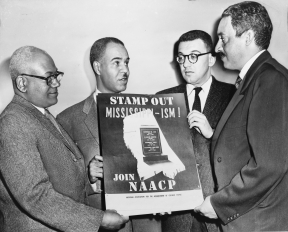
In this film, Professor Brian Ward and Professor Joe Street of Northumbria University look at two of the key groups that played a significant role in the development of the Civil Rights Movement: the NAACP (The National Association for the Development of Coloured People) and the Black Panthers.
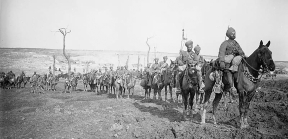
In the past, the two world wars have been mainly studied as military history, focused on armies, campaigns and battles. Historians have concentrated on wars in Europe and in particular on the Western Front in 1914–18 and on the war with Nazi Germany in the west. This has given rise...

History Abridged: This feature seeks to take a person, event or period and abridge, or focus on, an important event or detail that can get lost in the big picture. See all History Abridged articles Just as the Naval Task Force had been dispatched in April 1982, days after the...
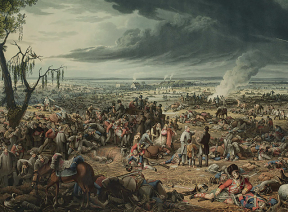
Michael Crumplin traces developments in surgery that can be directly attributed to changes in the conduct of war. Little doubt exists that war accelerates and innovates medical care. Today, our armed services can rely upon sound medical treatment if they are sick or wounded, with survival rates of above 90%....
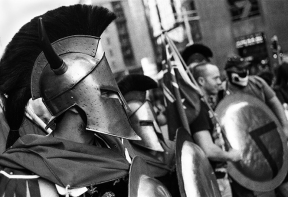
Stephen Hodkinson explains how images of ancient Sparta have been distorted and misused. On 15 April 2017, at a violent right-wing rally in Berkeley, California, some striking ancient Greek symbols were visible amidst the swastikas and ‘Make America Great Again’ hats. Several demonstrators wore replica ‘Corinthian’ helmets, as worn by...