
World
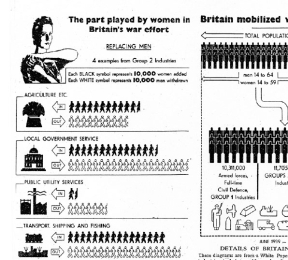
One of the gifts of the social sciences to history is the use of expository diagrams; but attention is rarely given to the history of diagrams. Maps - schematized representations of locations in spatial relation to one another - can be dated back to Babylonia in the late third millennium...
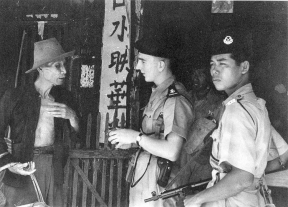
‘To think that the people of Indochina would be content to settle for less [from the French] than Indonesia has gained from the Dutch or India from the British is to underestimate the power of the forces that are sweeping Asia today'. An American adviser in 1949 cited: Robin Jeffrey...

Introduction Shortly after noon on 20 January 2009 Barack Obama began his historic Inaugural Address as 44th President of the United States of America. On the west porch of the Capitol, home to the US Congress, and under propitiously blue skies, the first African American president spoke before more than...

The viewer of the internationally popular television show Dallas was routinely treated to an aerial tour that skimmed across the open prairie over the distinctive skyscrapers across the fifty-yard line of Texas Stadium and up the manicured pastures of South Fork. This façade of larger-than-life Texana reflects an urban reality...

Historical diaries written by children are rare and only seven from England and the United States written before 1800 are known to have survived. One of these, found tucked away in the London Metropolitan Archive, is the diary of William Hugh Burgess, a fifteen year-old boy who grew up in...
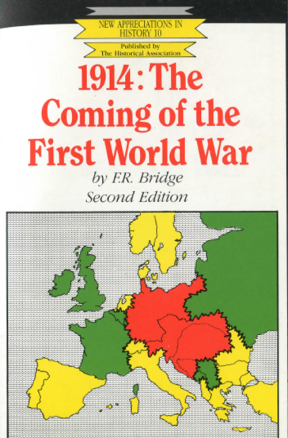
This pamphlet argues that the outbreak of the First World War represented not so much the culmination of a long process started by Bismarck and his successors, as the relatively sudden breakdown of a system that had in fact preserved the peace and contained the dangerous Eastern Question for over...
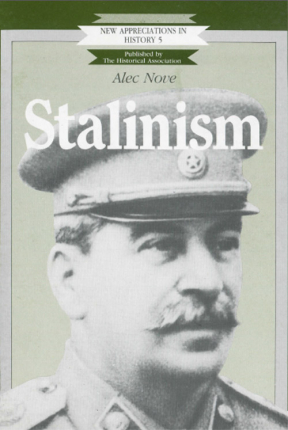
Stalin's remarkable career raises quite fundamental questions for anyone interested in history. Marxists, whose philosophy should cause them to downgrade the role of ‘great men' as an explanation of great events, have problems in fitting Stalin into the materialist interpretation of history: did not this man ride rough-shod over the...
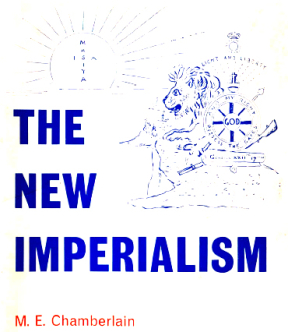
This Classic Pamphlet first published in 1970 comes with a new introduction written by the author M. E. Chamberlain.The New Imperialism - Introduction by M. E. Chamberlain Professor Emeritus at Swansea University. May 2010.When this pamphlet was first published imperialism was a hot political topic and battle raged between Marxist...
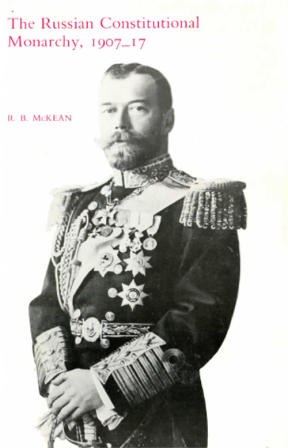
The defeat of the revolution of 1905 afforded the absolutist Tsarist monarchy an opportunity to reform the administration and to seek a new basis of support in place of the declining gentry class. Historians have been divided ever since over the constitutional system's chances of success. Had Tsardom advanced far...
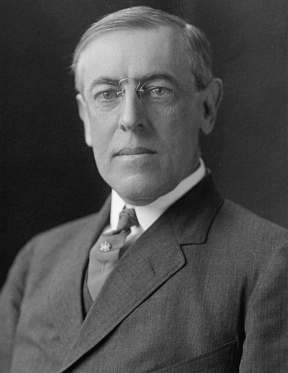
It is common to see the failure of the League of Nations in its inability to stand up to the crises of the inter-war years.Peter Raffo shows that the League was flawed from the start. Never more than a voluntary association of sovereign states hoping to create ‘an atmosphere capable...
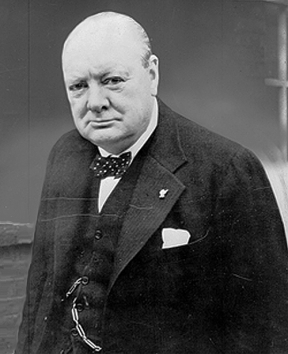
Winston Churchill had a major impact on British and world history in the twentieth century. A great deal has been written on his roles in the two world wars and on many aspects of his career. Yet relatively little attention has been paid to his relations with the Islamic world....
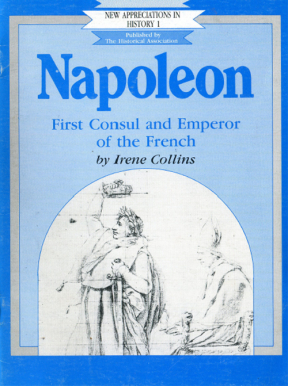
Four years after the battle of Waterloo, Richard Whately publicised a philosophical essay in which he argued that there was no real proof of Napoleon's existence. The deeds attributed to him were either so wondrously good or so amazingly bad that they far outran the evidence available to support them:...
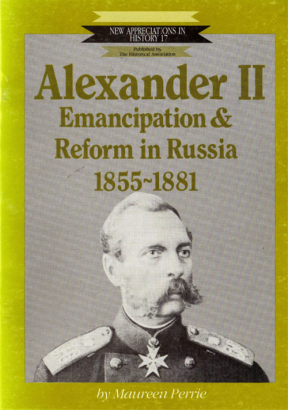
The ‘great reforms' of Tsar Alexander II (1855-81) are generally recognised as the most significant events in modern Russian history between the reign of Peter the Great and the revolutions of 1905 and 1917. The most important of Alexander's reforms, the emancipation of he serfs in 1861, has been described...
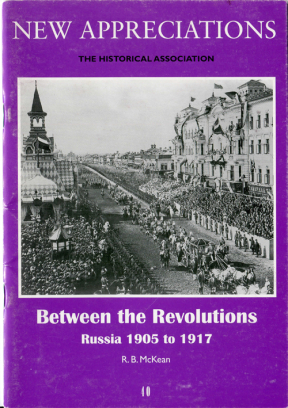
"The key question is this - is the peaceful renovation of the country possible? Or is it possible only by internal revolution?"This quotation succintly expresses the problem that faced both contemporaries and subsequant generations of historians confronting the development of Russia between the revolutions of 1905 and 1917. The upheavals...
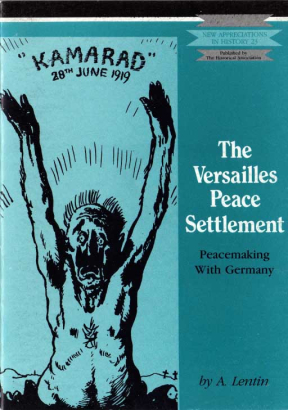
This classic pamphlet takes you through the Paris Peace Conference and the 'German Question', Peacemaking and the Treaty of Versailles, Europe and the German question after Versailles.
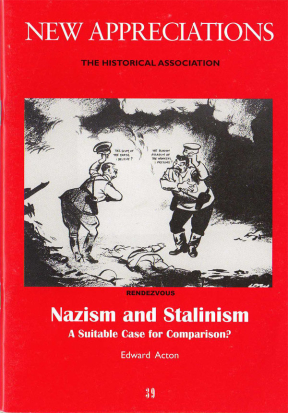
Is it legitimate to compare the Nazi and Stalinist regimes? There might seem little room for doubt. It is often taken as self-evident that the two regimes were variations of a common type. They are bracketed together in school and university courses, as well as text books, under labels such...
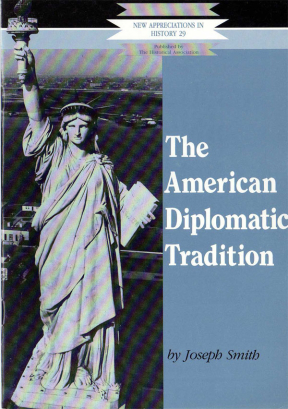
Indisputably, the United States of America has been and continues to be the leading power of the twentieth century. No country or people, however large or small, has been immune from American influence. A succession of American presidents have become international celebrities whose personal strengths and weaknesses are discussed and...
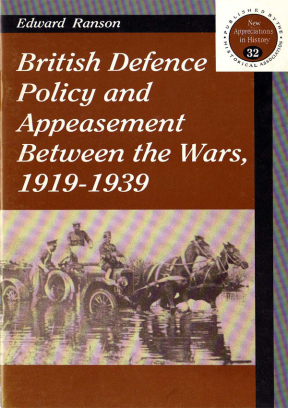
Armed forces never exist in isolation, but always operate against a background of political, economic, social, cultural, intellectual and ideological conditions and attitudes, as well as in relation to diplomatic and strategic factors. Some governments regards their military forces especially their armies, more as instruments for maintaining internal order than...
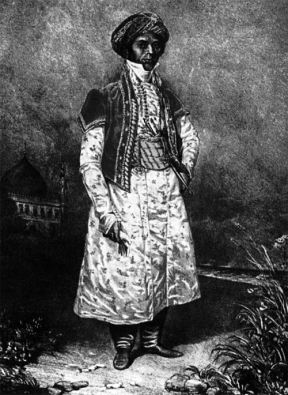
The National Portrait Gallery in London is home to many thousands of portraits, photographs and sculptures of the great and the good, as well as those who travelled on the darker side of history. In 2007 it hosted a small exhibition in the Porter Gallery entitled Between Worlds: Voyagers to...
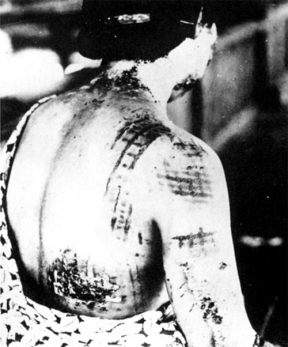
High school history teacher Brent Dyck is one of our Canadian readers. He has offered this item to The Historian as a contribution to our commitment to explore the historical approaches and values that we are seeking to convey to young people and the wider public. We hope that you...