
Historian articles
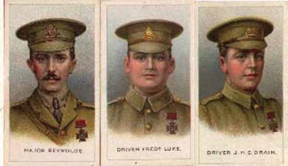
Alf Wilkinson asks why three men were awarded the Victoria Cross during the retreat from Mons in August 1914 and the fourth involved in the action wasn’t. What does that tell us about Britain during the arly days of the Great War? In August 1914, when war broke out, the...
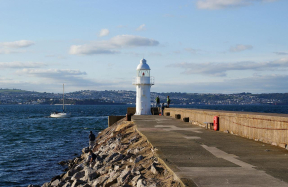
Paul Brunyee writes about a surprising link between Brixham in Devon, and Napoleon, and the impact the arrival of Napoleon in 1815 had on the townspeople. The waters and cliffs of Brixham, on the south coast of England, have played small but significant parts in the long wars against France....
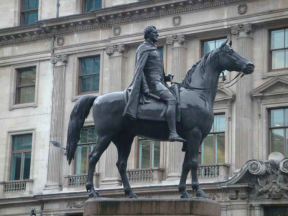
Dave Martin, recently the author of a book on the French Revolution, takes us on a journey to discover some of the memorials to the Duke of Wellington, and asks what they tell us about the great man. The Duke of Wellington is so clearly a national hero that it...
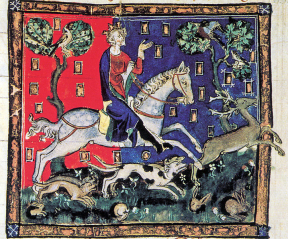
Magna Carta provided a commentary on the ills of the realm in the time of King John. Sophie Ambler looks at what grievances were addressed in the Charter, how the Charter was made, and what the Charter tells us about King John himself. The world from which Magna Carta came...
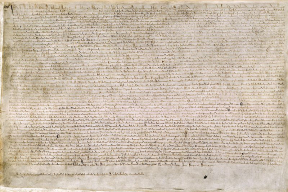
Magna Carta was to go through a number of revisions before it finally took its place on the statute book. Nicholas Vincent takes us through the twists and turns of the tale of the Charter's death and revival after June 1215. The Charter issued by King John at Runnymede is...
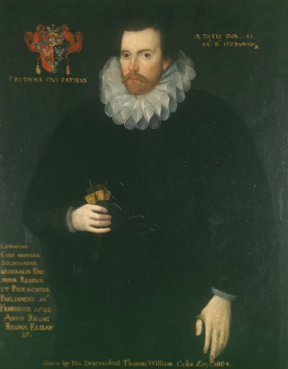
When was Magna Carta launched on its modern career as a symbol of freedom and liberty? Justin Champion looks at the role of the sixteenth- and seventeenth-century lawyers and politicians in shaping how we see the Charter today. ‘For every person who knows what the contents of Magna Carta actually...
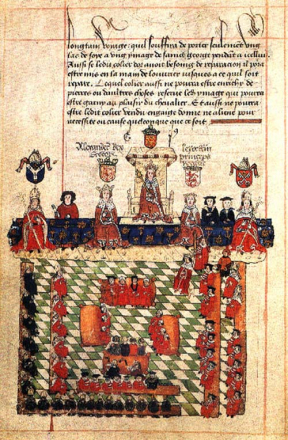
In February this year the four surviving originals of Magna Carta were briefly brought together in the Houses of Parliament. John Maddicott, examining the Charter's role in the early development of Parliament, shows that the setting was well chosen. What did Magna Carta contribute to the origins of parliament? If...
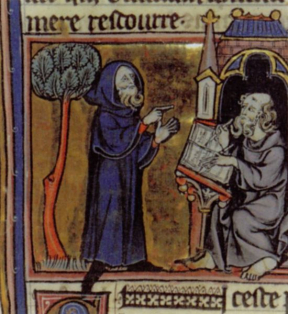
Robert Blackburn explains why, 800 years on, Magna Carta still has relevance and meaning to us in Britain today. Magna Carta established the crucial idea that our rulers may not do whatever they like, but are subject to the law as agreed with the society over which they govern. In...
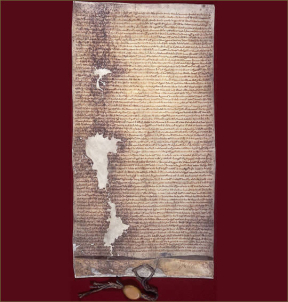
Magna Carta is a document not only of national but of international importance. Alexander Lock shows how its name still has power all over the world, especially in the United States. Although today only three of its clauses remain on the statute book, Magna Carta still flourishes as a potent...

Carl Bridge gives us an unexpected Australian perspective on the unsuccessful landings at Gallipoli in 1915...
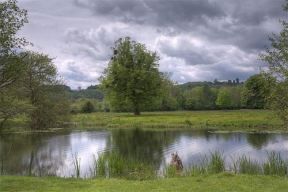
The Runnymede area is rich in historical associations. Nigel Saul looks at other places of interest near where King John gave his assent to the Charter in 1215. The birthplace of our democratic heritage is a broad meadow on the banks of the lower Thames near the meeting-point between Surrey...
The Commonwealth War Graves Commission maintains memorials to our war dead in large and small numbers in cemeteries across the world, and here Glenn Hearnden presents us with a detailed and informative case-study of Cambridge City Cemetery. Like many large towns and cities across the UK, there is a cemetery...
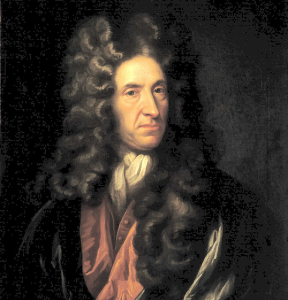
There is a tendency to represent Daniel Defoe as a novelist and satirical journalist who was at one point placed in the London stocks as a punishment. Ted Vallance's article broadens our perspective to appreciate Defoe's activities as a propagandist in both England and Scotland... The September 2014 referendum on...

Michael T. Davis compares the parallels between the democratic expectations, or possibilities, of modern-day China with Britain's democratic evolution from the eighteenth century to the emerging democracy of the nineteenth century. The future is an unfamiliar place for historians. Yet we stand on the edge of an historic shift away...
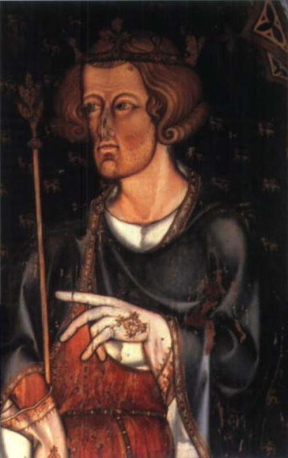
In an era when there are great debates about immigration and what constitutes nationality, Mark Ormrod introduces us to a new research database which reveals that immigration was an important feature of economic, cultural and political debate in the period 1330-1550... In the Middle Ages, the political configuration of the...
Our World War I commemorative series continues with Robert Hopkinson's introduction to what the Imperial War Museum believes is the oldest war memorial in Britain. Wolsingham School and Community College, in Weardale, County Durham, celebrated its 400th anniversary in 2014. As part of the celebrations, there was an exhibition, a...
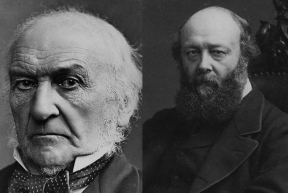
At a time when the United Kingdom continues to review its internal constitutional arrangements, Matthew Kelly explores how this constitutional debate can be traced back to Gladstone's decision to promote Home Rule for Ireland and how these proposals evolved over time and were challenged. Irish political history decisively entered a...
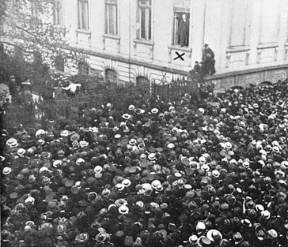
Neil Taylor explores the changing face and mixed fortunes of Weimar in the twentieth century. Weimar is a town to which many famous people came, but from which few then left. It is not hard to see why. The locals summarise its appeal in one sentence Weimar ist nur eine...
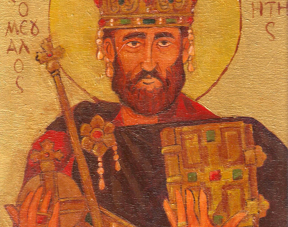
Alfred in Wantage - Dave Martin takes to his bike to explore statues of Alfred the Great. Alfred the Great, the name speaks for itself, was a hero to the Victorians so it is no surprise to find that there are three statues commemorating him. The earliest one was erected...
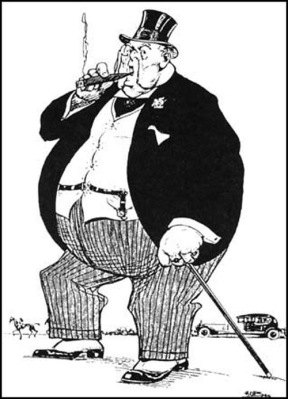
The nine-day General Strike of May 1926 retains a totemic place in the nation's history nearly 100 years later. The Chancellor of the Exchequer Winston Churchill was among those who attempted to characterise it as anarchy and revolution, but this was hyperbole and largely inaccurate for, as Ellen Wilkinson (then...