
Britain & Ireland 1066-1509
What's the Wisdom On... is a short guide providing new history teachers with an overview of the ‘story so far’ of practice-based professional thinking about a particular aspect of history teaching. It draws on tried and tested approaches arising from teachers with years of experimenting, researching, practising, writing and debating...
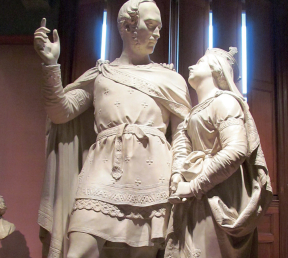
In this article Jane Card outlines the changing popular interpretations of one of the most familiar events in British history, the Norman Conquest. She makes the case for using visual and literary interpretations of the Conquest to engage pupils with thinking about the eleventh century, the subsequent centuries in which...
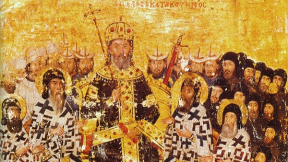
Medieval history is often a story of kings and their dates, primarily of England or, at best, western Europe. This funded webinar series aimed at secondary history teachers will introduce teachers to educational approaches to the Middle Ages that go beyond both kings and this narrow geographical range. It takes...
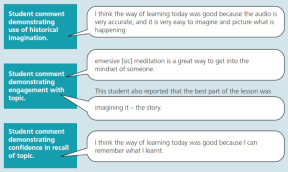
James Hopkins’s Year 10 class had been excited by their course on medicine through time, but were less enthused about their new study of Norman England. They told him that the topic felt ‘distant’ and ‘not real’. Recalling his own experience as a student, Hopkins was interested in the ways...
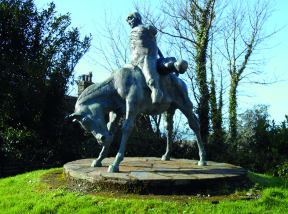
Hiscox wanted to broaden her students’ understanding of the complexity of the British past, and developed an enquiry into the Norman Conquest of Wales to help achieve that aim. Hiscox reports her enquiry design and its outcomes, sharing how she broadened both content and the types of sources that students...
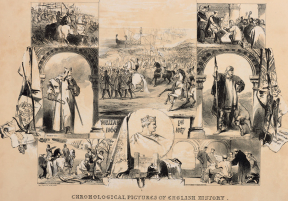
Jane Card’s previous work on the power of images in conveying particular interpretations and her advice about how to use visual material effectively in classrooms will be familiar to readers of Teaching History. In this article she focuses specifically on the capacity of visual representations to convey a compelling message...
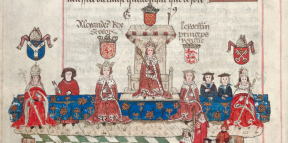
In this article, Jessica Phillips returns to a theme explored in the Historical Association’s publication Exploring and Teaching Medieval History in Schools – the challenge of teaching about the medieval past in ways that acknowledge its vibrant complexity and create a genuine sense of resonance rather than condescension or blank...
This lecture with Adrian Bell, Helen Lacey and Helen Killick introduces key findings of the AHRC-funded project The People of 1381. Which people and social groups were involved in England’s biggest pre-civil war revolt? How much can we find out about their lives: where did they come from, what actions...
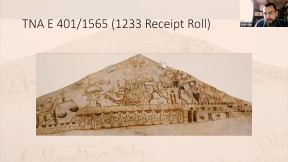
In 1242, the prominent thirteenth-century Jewish financier David of Oxford attempted to divorce his wife, Muriel. In the process, he met with a number of obstacles which seriously hampered his efforts and had far-reaching implications for the Jewish community as a whole. In the end, David had to appeal directly...
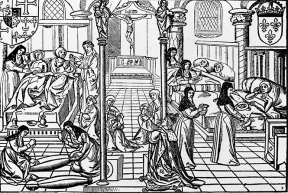
In her lecture to the General Strand of the HA Conference, Christine Fox describes the successes and failures of London institutions in dealing with the sixteenth-century crisis of poverty and elderly care. In late medieval and early modern thinking, human life was divided into three stages; youth, maturity, and old...
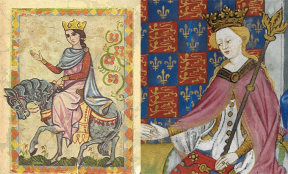
Dissatisfied by her previous enquiries on medieval kingship and inspired by Helen Castor’s 'She-Wolves', Elizabeth Carr sought to incorporate the stories of powerful medieval women such as Empress Matilda and Eleanor of Aquitaine into her Key Stage 3 curriculum. Carr used these stories to highlight to her pupils the crucial...
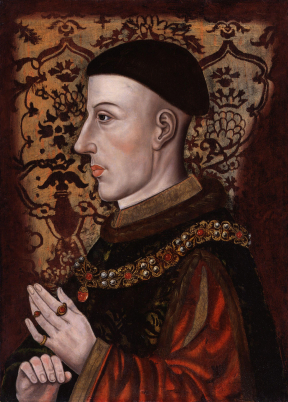
Henry V - Henry the Conqueror? In this lecture former HA President Anne Curry Emeritus Professor of Medieval History Southampton addresses the question Henry V - Henry the Conqueror?'. She explores the relationship between Henry V, his court and those in France. (Please note: if you have HA Membership and...
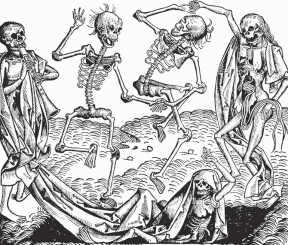
In the summer of 1348, the Chronicle of the Grey Friars at Lynn described how sailors had arrived in Melcombe (now Weymouth) bringing from Gascony ‘the seeds of the terrible pestilence’. The Black Death spread rapidly throughout England, killing approximately half the population. While the cause of the disease, the...

Cunning Plan for using the metaphor of a tree to help students characterise the process of change and engage with a historian’s argument. In this Cunning Plan, Eve Hackett sets out how she used a recent work of history about the Norman Conquest as inspiration for her teaching of Year...
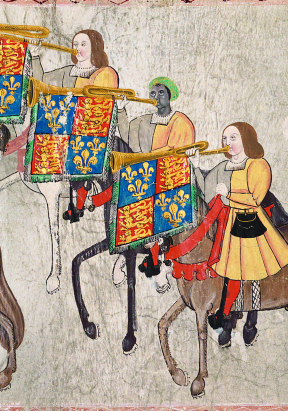
Readers of this journal will be familiar with a number of ways of approaching the Tudors. Kerry Apps provides here an article detailing her concerns about the differences between what she had been delivering at Key Stage 3 and the broader, connected experience she had as an undergraduate historian. How...
Popular perceptions of life, politics and morality in the Middle Ages are overwhelmingly negative, a far cry from images being developed by historians through their research. This workshop explores how to tweak and change familiar topics (including the reign of Richard III) to create a more historically accurate, positive and...
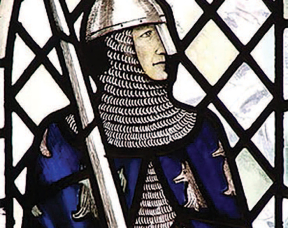
Michael Bird and Thomas Wilson focus their attention directly on the voices of pupils, in dialogue with their teacher and with each other, as they draw inferences from differing sources about the Norman legacy in Chester. By carefully examining dialogue stimulated by these sources, Bird and Wilson demonstrate not only...
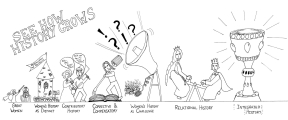
Susanna Boyd ‘discovered’ women’s history while studying for her own history degree, and laments women’s continued absence from the school history curriculum. She issues a call-to-arms to make the curriculum more inclusive both by re-evaluating the criteria for curricular selection and by challenging established disciplinary conventions. She also weighs up...
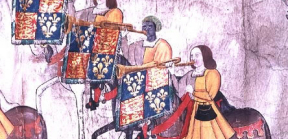
On 29 September 2018 I was fortunate enough to get involved with a collaborative project with Dr Miranda Kaufmann, the Historical Association, Schools History Project, and a brilliant group of people from different backgrounds all committed to teaching about black Tudors. In this short piece, I will share how I...
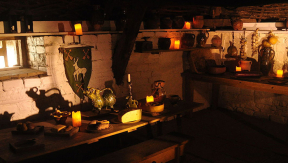
Chloe Bateman recognised the value to her Key Stage 3 pupils of developing rich subject knowledge, but wanted to find a way of encouraging them to value that knowledge for themselves. In this article she explains how she provided that inspiration by setting her Year 7 class the challenge of...