
Britain & Ireland 1066-1509
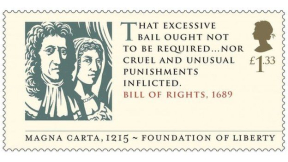
The following sequence of lessons is designed to build on pupils' existing knowledge and understanding of the medieval period. In particular it is assumed that pupils will already have an outline knowledge of the main features of medieval kingship and how monarchs exercised their power. In determining the focus for...
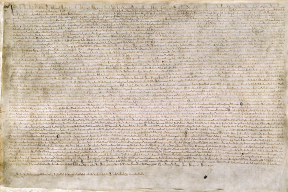
What precedents were there to Magna Carta? Why was the charter originally drawn up and signed in 1215? Why was it reissued during the thirteenth century? Would “ordinary” people have been aware of Magna Carta? How effective was Magna Carta as means to controlling medieval kings? Why was it resurrected...
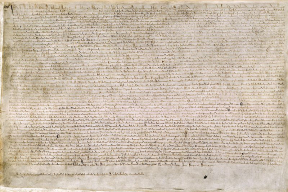
Setting out to teach Magna Carta to the full attainment range in Year 7, Mark King decided to choose a question that reflected real scholarly debates and also to ensure that pupils held enough knowledge in long-term memory to be able to think about that question meaningfully. As he gradually...
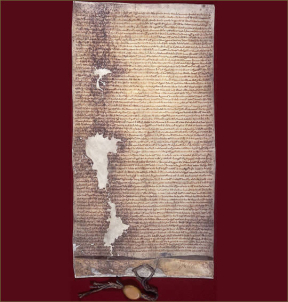
Does your heart skip with excitement at the prospect of a Year 7 lesson on Magna Carta? No? Magna Carta may be an important part of the long-term story of royal power and individual liberties but it is not a topic that excites many teachers. If it were, teachers would...
First some history: the question of how historiographic and public historical representations of Magna Carta have changed over the last 800 years is an important one. The ‘myth' of Magna Carta as a foundational document for modern democracy is still very powerful. That tradition of understanding the legacy and history...
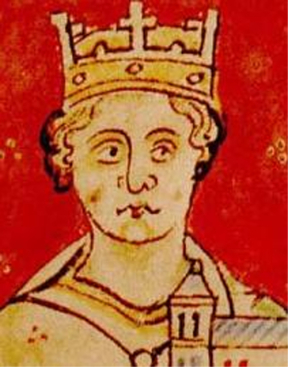
Typical teaching of King John and Magna Carta focuses either on the weakness of John or the importance (as Whig historians would see it) of Magna Carta. The first question is a bit boring and the second discussion unhistorical. This enquiry sequence is designed for students aged 11 to 13....
(Historical Association Pamphlet, No. 124, 1942) Dunlop's research into the occupations and attitudes of Scots abroad during the 15th century uncovers some surprising revelations about all members of the Scottish ex-pat society. She particularly notes the ‘scurrilous' opinions of the French regarding Scotsmen's behaviour. While Scottish diplomatists and envoys tended...
‘When Kings and chief officers suffer their under rulers to misuse their subjects and will not hear nor remedy their people's wrongs when they complain, then suffereth God the rebel to rage and to execute that part of His justice which the partial prince will not.' Thus did the Tudor...
Magna Carta was to go through a number of revisions before it finally took its place on the statute book. Nicholas Vincent takes us through the twists and turns of the tale of the Charter's death and revival after June 1215. The Charter issued by King John at Runnymede is...
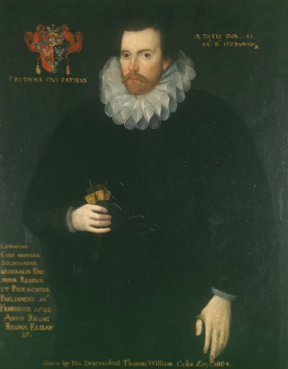
When was Magna Carta launched on its modern career as a symbol of freedom and liberty? Justin Champion looks at the role of the sixteenth- and seventeenth-century lawyers and politicians in shaping how we see the Charter today. ‘For every person who knows what the contents of Magna Carta actually...
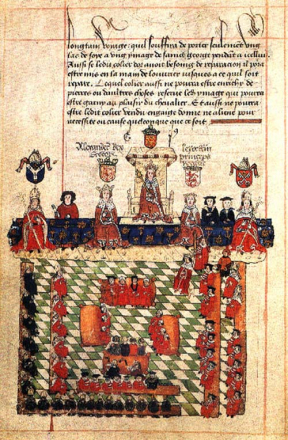
In February this year the four surviving originals of Magna Carta were briefly brought together in the Houses of Parliament. John Maddicott, examining the Charter's role in the early development of Parliament, shows that the setting was well chosen. What did Magna Carta contribute to the origins of parliament? If...
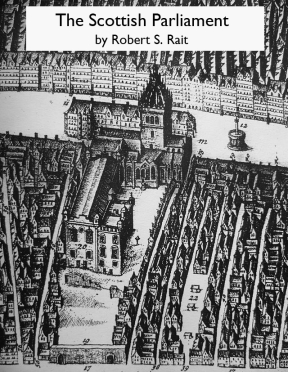
This short pamphlet by the former Historiographer Royal for Scotland, Robert S. Rait, provides an introduction to the Scottish Parliament from its early origins to the Acts of Union of 1707.
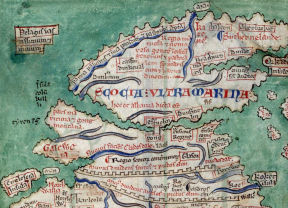
In this set of podcasts Professor Mark Ormrod of the University of York, Dr Alex Woolf, Dr Katie Stevenson & Professor Michael Brown of the University of St Andrews look at some key aspects of medieval Scottish history.
What do 14 Year 7 students, an art teacher, a history teacher and the Victoria and Albert Museum have in common? They are all part of the ‘Stronger Together' Museum Champion project run by The Langley Academy and the River & Rowing Museum and supported by Arts Council England, designed...
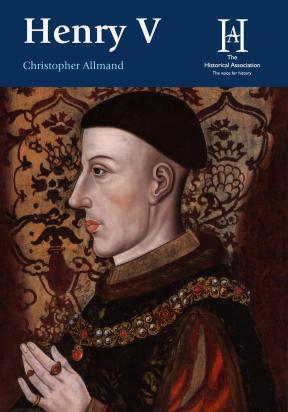
Christopher Allmand updates his earlier pamphlet on Henry V, taking into account research and ideas explored by historians over the last 50 years, to produce a much more rounded view of Henry V. The book is split into three parts - Henry V in history; Henry as he is viewed...
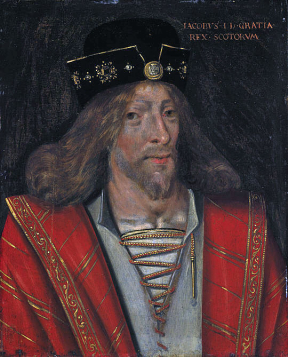
This booklet tells the story of James the first, with the events leading up to his capture and detailing the eighteen years spent in it. Balfour-Melville puts into writing the colourful, if not tragic, life of the capture and mere 13 year reign James. Brought alive in words, a King...
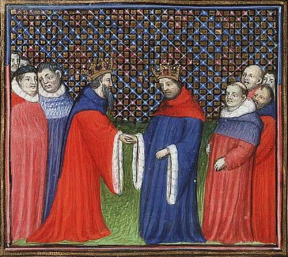
When Alexander II met his tragic death at Kinghorn in 1286, the event was speedily to put an end to the cordial relations which had prevailed for a hundred years between England and Scotland and to substitute chronic hostility for two and half centuries. Edward I, fresh from the conquest...
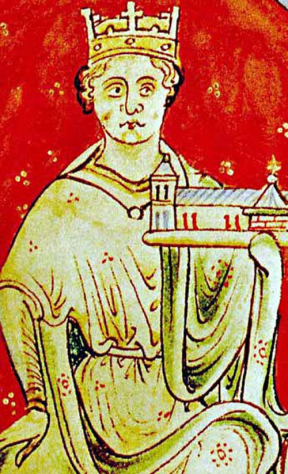
The development of Church, state and society in Medieval Britain 1066-1509While the 2014 Curriculum sets out the broad focus of each particular content area, considerable choice has been left to history departments in determining which particular events or developments to include and how they can best 'combine overview and depth...
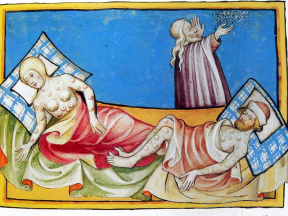
Period, place and mental space: using historical scholarship to develop Year 7 pupils' sense of period What is a sense of period? And how can pupils' sense of period be developed? Questions such as these have troubled history teachers for many years, often revolving around debates over the role played...
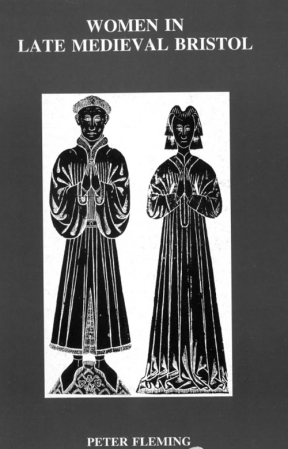
During the fourteenth and fifteenth centuries Bristol was one of England's greatest towns, with a population of perhaps 100,000 after the Black Death of 1348. Its status was recognised in 1373, with its creation as the realm's first provincial urban county, but only in 1542, with the creation of the...