
Britain & Ireland 1066-1509
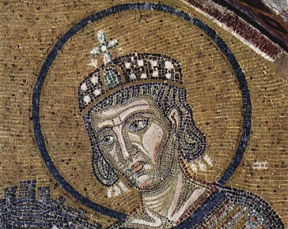
Please note: this article pre-dates the 2014 National Curriculum and some content may be outdated. A great deal has been written about causation in the pages of Teaching History. From camels to linguistics, this is a second-order concept that teachers and pupils frequently deliberate. Departments balance the need for substantive...
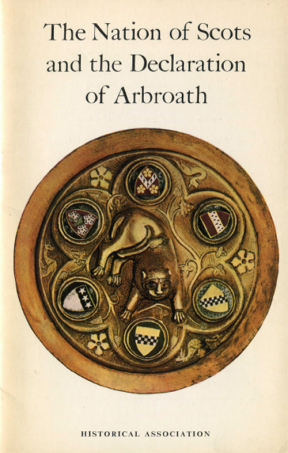
This pamphlet seeks to chart the progress of the Scottish struggle for independence after 1291 by considering the changing nature of the Scottish resistance. The primary sources are exiguous when compared to those bearing upon the English attempt at subjugation, and the interpretation offered is at best tentative: that initially...
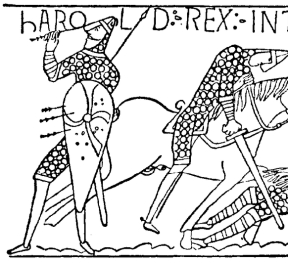
How did King Harold II die at the Battle of Hastings? The question is simple enough and the answer is apparently well known. Harold was killed by an arrow which struck him in the eye. His death is depicted clearly on the Bayeux Tapestry in one of its most famous...
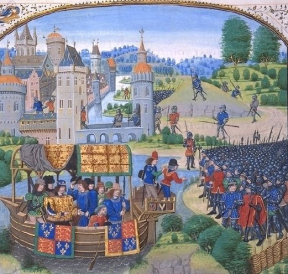
The Great Revolt of 1381 began in South-West Essex sometime between late May and 2 June: contemporary narratives and record sources differ irreconcilably about the dates. It all started with the arrival of a royal tax commissioner, John Bampton, at Brentwood inBarnstable Hundred. He came to inquire into the evasion...
Why Medieval History Matters, Professor Anne Curry, President of the HA ‘I don't mind there being some medievalists around for ornamental purposes, but there is no reason for the state to pay for them'. So, allegedly, said Charles Clarke when Education Secretary in 2003. In fact, medieval history has never...
The project: A three-year research project started in December 2007 with the aim of investigating the credit arrangements of a succession of English monarchs with a number of Italian merchant societies. The study, based at the ICMA Centre, University of Reading, is funded by the Economic and Social Research Council...

Please note: this article pre-dates the 2014 National Curriculum and some content may be outdated. As an enthusiastic musician, Alison Meikle is always looking for ways to use music in the history classroom. While Teaching History has seen plenty of articles on using musical sources as evidence (e.g. Mastin in...
Traditionally, the Middle Ages have been portrayed as the ‘Feudal Age', when men were given land in return for performance of unpaid military service. Whilst this may have formed the basis of the English military system in the eleventh and twelfth centuries, it was most certainly not the way armies...
Over dinner on 14 October a friend challenged me: ‘You’re a history teacher. How come everyone knows about the Battle of Hastings? There must have been loads of battles. Why that one?’ The year 1066 had an iconic role in English historical thought long before Sellar and Yeatman immortalised it...
In the 1960s and 1970s, historians and sociologists who were not specialists in the Middle Ages constructed models of pre-industrial crowds and revolt to understand the distinctiveness of modern, post-French Revolutionary, Europe. Foremost among these scholars were George Rudé, a historian of eighteenth century England and France, and Charles Tilly,...
Polychronicon was a fourteenth-century chronicle that brought together much of the knowledge of its own age. Our Polychronicon in Teaching History is a regular feature helping school history teachers to update their subject knowledge, with special emphasis on recent historiography and changing interpretation. This edition of 'Polychronicon' explores the historical...
Professor Henry Loyn provides an update on recent studies of the Viking Age. Interest in the activities of the Scandinavian people in Britain during the Viking Age, c 800-1100 A.D., has been strong in the last half-century or so, and it is good to pause and assess contributions to the...
Ian Arthurson reasseses the Cornish rising of 1497 on its 500th anniversary. On the 400th anniversary of this rebellion there was a good deal of agreement about the Wars of the Roses: ‘The slaughter of people was greater than in any former war on English soil ... The standard of...