Britain & Ireland 1745-1901

The relationship between Britain and Ireland is explored here across a number of articles. Particular themes assessing and exploring social reform on matters such as housing, industrial change and emerging civil rights are included here. Key individuals from the world of politics, science and women’s rights are also examined in detail.

Sort by: Date (Newest first) | Title A-Z
  • Film: Proto-feminism in Britain and Ireland – 1714 to 1785

    Article

    In Episode 11, Dr Mary Jo MacDonald of the University of Jyväskylä explores how the end of the Licensing Act, sweeping political change, and a revolution in intellectual culture opened unprecedented opportunities for women to shape political, social, and intellectual life in Britain and Ireland. The film highlights major proto‑feminist thinkers...

    Click to view
  • Film: Queer British History – 1714 to 1785

    Article

    In episode 10, Dr Declan Kavanagh (University of Kent), reflects on Queer British history 1714-1785. Dr Kavanagh looks at the history of the language of LGBTQ+, in particular the term ‘queer’ in its very recent usage and how the language of descriptors for these communities has been influenced. Dr Kavanagh draws...

    Click to view
  • From Sail to Steam

    Article

    From the time when primitive man first went adrift on a bundle of reeds or learnt to balance himself on a floating log, to the days where his descendants, no more than a few generations ago, raced scrambling aloft to trim the towering sails of a full-rigged ship, the skill...

    Click to view
  • Gladstone and the London May Day Demonstrators, 1890

    Article

    One hundred and twenty years ago the advent of the first red May Days caused major concern across Europe. To general surprise, in 1890 and the next few years some of the largest rallies occurred in London. In Britain the main demonstration on the nearest Sunday to May Day passed...

    Click to view
  • Gladstone spiritual or Gladstone material? A rationale for using documents at AS and A2

    Article

    Rather than taking a sledgehammer approach to planning for the new AS and A2 courses Gary Howells has used the opportunity to reflect on characteristics of students' historical learning in the post-16 phase. He argues for a much fuller rationale for using documents than mere preparation for exams or coursework....

    Click to view
  • Gypsy, Roma and Traveller History Month

    30th June 2021

    In 1993 the writer, former dissident and first President of the Czech Republic Vaclav Havel described the situation of the Roma ‘as a litmus test for Europe’s civil society’. Nearly 30 years later the social questions of how the prejudice against the Gypsy, Roma and Traveller communities across Europe is...

    Click to view
  • Helping Year 8 to understand historians’ narrative decision-making

    Article

    While previous work on historical interpretations has focused students’ attention on the particular questions that historians have been asking or the context in which they have been posing those questions, less attention has been paid to the process of historical narration itself – the decisions that are made in telling...

    Click to view
  • Helping Year 9s explore multiple narratives through the history of a house

    Article

    A host of histories: helping Year 9s explore multiple narratives through the history of a house Described by the author Monica Ali as a building that ‘sparks the imagination and sparks conversations', 19 Princelet Street, now a Museum of Diversity and Immigration, captivated the imagination of teacher David Waters. He...

    Click to view
  • How Nelson Became a Hero

    Article

    The fittest man in the world for the command' of the Mediterranean, Lord Minto declared of Horatio Nelson on 24 April 1798, following Nelson's inventive assault on Spanish ships off Cape St. Vincent. 'Admiral Nelson's victory [at the Nile]… is one of the most glorious and comprehensive victories ever achieved...

    Click to view
  • How visual evidence reflects change and continuity in attitudes to the police in the 19th and early 20th centuries

    Article

    While history teachers (and examiners) regularly invite students to consider what cartoons or paintings reveal about contemporary attitudes to particular social or political developments, such sources are often difficult to interpret and to use appropriately. Drawing on a wealth of detailed research and a passion to support teachers and students with...

    Click to view
  • Investigating ‘sense of place’ with Year 9 pupils

    Article

    Confined to his home during lockdown in 2020, teacher Josh Mellor became eager to explore the history of the physical environment on his doorstep. After reading about different approaches to using environmental history in the classroom, Mellor decided to design an enquiry to explore the changing landscape of the Fens in...

    Click to view
  • Irish Unionism 1885-1922

    Article

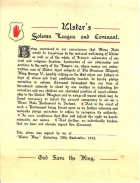
    It is difficult to exaggerate the importance of Irish unionism for British and Irish politics in the late nineteenth and early twentieth centuries. The movement was supported almost exclusively by Irish Protestants who were of Anglo-Irish or Scotch-Irish descent and who comprised roughly one-quarter of the population of Ireland. Its...

    Click to view
  • John Wilkes 1725-1797: A Man of Principle

    Article

    For Lord North in 1775, one John Wilkes was enough, ‘though ... to do him justice, it was not easy to find many such'. The impact of Wilkes between 1760 and 1780 was profound, a cause as much as a person. For Philip Francis, thought to be the satirist ‘Junius',...

    Click to view
  • Lloyd George & Gladstone

    Article

    Lloyd George, who died sixty years ago on 26 March 1945, grew up and began his Parliamentary career in Queen Victoria's reign. In taking up a major Welsh issue, disestablishment of the Church of Wales, he memorably clashed with William Ewart Gladstone, perhaps the greatest of all Liberal Prime Ministers....

    Click to view
  • Local Authority Housing

    Article

    Local authority housing has been a distinctive feature of the British housing system throughout the twentieth century. This pamphlet outlines the development of local authority housing in Britain from its origins in the late nineteenth century to the present day, focusing on the ways in which policy changes have affected...

    Click to view
  • Lord North: The Noble Lord in the Blue Ribbon

    Article

    In the last weeks of his life Lord North, we are told, expressed anxiety about his place in history - ‘how he stood and would stand in the world'. This, he owned, ‘might be a weakness, but he could not help it'. It was a weakness one suspects that he...

    Click to view
  • Lord Palmerston

    Article

    Lord Palmerston (1784-1865) has long interested (and confused) historians. A man of contradictions and paradoxes, he seemed both to embody modern Victorian Britain, and yet at the same time stand as a potent symbol of what had been lost.

    Click to view
  • Making sense of the eighteenth century

    Article

    Making sense of the eighteenth century Pressures on curriculum time force us all to make difficult choices about curriculum content, but the eighteenth century seems to have suffered particular neglect. Inspired by the tercentenary of the accession of the first Georgian king and the interest in the Acts of Union prompted...

    Click to view
  • Navigating the ‘imperial history wars’

    Article

    Concerned by the growing tendency of politicians and press to revive the moral balance-sheet approach to British imperial history and by some evidence of its resurgence in schools, Alex Benger set about devising a framework which would keep pupils’ analysis rigorously historical, rather than moral and politicised. In this article,...

    Click to view
  • Northamptonshire in a Global Context

    Article

    Produced by the Northamptonshire Black History Association and originally published in 2008, this is one of a set of resources for schools offering a more inclusive map of the past that includes an appreciation of Black History within the local, national and global context. The resources provide a range of opportunities to promote diversity within the curriculum....

    Click to view