Britain & Ireland 1745-1901

The relationship between Britain and Ireland is explored here across a number of articles. Particular themes assessing and exploring social reform on matters such as housing, industrial change and emerging civil rights are included here. Key individuals from the world of politics, science and women’s rights are also examined in detail.

Sort by: Date (Newest first) | Title A-Z
  • Film: Power and Protest in Ireland – 1714 to 1785

    Article

    In Episode 12, Professor Michael Brown of the University of Aberdeen discusses who held power in Ireland in 1714 and how the protestant ascendancy developed following the fall of James II and the rise of the Hanoverian dynasty. This is a period increasingly defined by the exclusion of Ireland’s Catholic and...

    Click to view
  • Film: Proto-feminism in Britain and Ireland – 1714 to 1785

    Article

    In Episode 11, Dr Mary Jo MacDonald of the University of Jyväskylä explores how the end of the Licensing Act, sweeping political change, and a revolution in intellectual culture opened unprecedented opportunities for women to shape political, social, and intellectual life in Britain and Ireland. The film highlights major proto‑feminist thinkers...

    Click to view
  • Film: Power and Protest in Wales – 1714 to 1785

    Article

    In Episode 9, Dr Eryn White (Aberystwyth University) discusses who had power in Wales in 1714, the changing relationship between Wales and the wider United Kingdom and the key developments that took place in Wales between 1714-1785. Dr White reflects upon the rapid expansion of print and literacy in Wales...

    Click to view
  • Film: Queer British History – 1714 to 1785

    Article

    In episode 10, Dr Declan Kavanagh (University of Kent), reflects on Queer British history 1714-1785. Dr Kavanagh looks at the history of the language of LGBTQ+, in particular the term ‘queer’ in its very recent usage and how the language of descriptors for these communities has been influenced. Dr Kavanagh draws...

    Click to view
  • Ffilm: Grym a Phrotest yng Nghymru – 1714 i 1785

    Article

    Ym Mhennod 9, mae Dr Eryn White (Prifysgol Aberystwyth) yn trafod pwy oedd mewn grym yng Nghymru ym 1714, y berthynas newidiol rhwng Cymru a'r Deyrnas Unedig ehangach a'r datblygiadau allweddol a ddigwyddodd yng Nghymru rhwng 1714-1785. Mae Dr White yn myfyrio ar ehangu cyflym print a llythrennedd yng Nghymru...

    Click to view
  • Film: Power and Protest in Scotland – 1714 to 1785

    Article

    In Episode 9, Professor Alison Cathcart (University of Stirling) discusses who held power in Scotland in 1714 and how the Union with England, together with the arrival of the Hanoverian dynasty, transformed the nation. She examines the central role of the Church of Scotland, the influence of the Royal Burghs,...

    Click to view
  • Film series: Power and Freedom in Britain and Ireland, 1714–2010

    30th October 2025

    From royal courts to radical protests, from industrial revolutions to global empires – this compelling new film series traces the dramatic evolution of power, rights, and freedom across three centuries of British and Irish history. We will trace Britain and Ireland’s transformation from 1714 to 2010, unpacking power struggles, social revolutions, and...

    Click to view
  • Film: Disability in Britain and Ireland – 1714 to 1785

    Article

    In Episode 6, Dr Declan Kavanagh (University of Kent) discusses the development of ideas around, and responses to, disability in Britain and Ireland in the 18th century. Dr Kavanagh examines the definition given in Samuel Johnson’s Dictionary in 1755 and looks at the medical and charity models of responding to disability...

    Click to view
  • Film: Power and Protest in England – 1714 to 1785

    Article

    In Episode 7, Professor Carl Griffin (University of Sussex) discusses the changing landscape of England as enclosure accelerates, transforming the social dynamics of the countryside as peasants become wage labourers and their rights to use the ‘common land’ is diminished. Professor Griffin reflects on this period of protest over enclosure,...

    Click to view
  • Film: Finance in Britain and Ireland: 1714 to 1785

    Article

    In Episode 5, Professor Anne Murphy (University of Portsmouth) examines the development of finance in Britain and Ireland, from the emergence of the Bank of England during the Nine Years’ War into a system that would facilitate the growth of the British Empire and Britain’s Industrial Revolution. During this period...

    Click to view
  • Film: Black British History – 1714 to 1785

    Article

    In Episode 4, Dr Montaz Marché (University College London) and Professor Ryan Hanley (University of Exeter), discuss the lives and experience of 18th century Black Britons. In this discussion they look at the lives of both the exceptional and the ordinary, and reflect upon the politics of race and gender in...

    Click to view
  • Film: Power and freedom: Introduction – 1714 to 1785

    Article

    In Episode 1, Dr Robin Eagles (History of Parliament), discusses the development of power and freedom in Britain and Ireland from the reign of Queen Anne to the beginning of the Georgian Age. This was a period of strict hierarchy where the monarchy and aristocracy retained significant control over both...

    Click to view
  • Film: Party Politics 1714-1785

    Article

    In Episode 2, Dr Robin Eagles (History of Parliament), examines the birth of Britain’s two party system in the form of the Whigs and the Tories; two parties, whose rivalry would define politics in Britain from the Restoration and Glorious Revolution to the middle of the Victorian Age. During this...

    Click to view
  • Film: Economic and social change – 1714 to 1785

    Article

    The 18th century represents a pivotal moment bridging early modern Britain with the social, economic and technological  transformations of the Industrial Revolution. In Episode 3, Professor Emma Griffin (Queen Mary University of London), explores this period of invention, innovation and entrepreneurialism, how it affected ordinary families, and its role in the...

    Click to view
  • What Have Historians Been Arguing About... schooling and the British Empire

    Article

    The history of schooling and the British Empire encompasses a complex body of literature.  Histories of formal education intersect with work on race, class and capitalism and link to adjacent fields such as histories of childhood. A basic contention shared throughout this field, however, is that there was a profound...

    Click to view
  • What Have Historians Been Arguing About... Modern British LGBTQ+ history

    Article

    While academic historians began to make important contributions to our understanding of British LGBTQ+ history in the 1970s (and, indeed, this built on historical scholarship from as early as the 1880s), the field of British queer history became properly established within university history departments and mainstream academic scholarship from the...

    Click to view
  • How visual evidence reflects change and continuity in attitudes to the police in the 19th and early 20th centuries

    Article

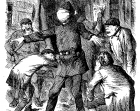
    While history teachers (and examiners) regularly invite students to consider what cartoons or paintings reveal about contemporary attitudes to particular social or political developments, such sources are often difficult to interpret and to use appropriately. Drawing on a wealth of detailed research and a passion to support teachers and students with...

    Click to view
  • Why history teachers should not be afraid to venture into the long eighteenth century

    Article

    As ardent advocates of eighteenth-century history, Rhian Fender and Stephen Ragdale were determined to ensure that the period found a secure place within their department’s Key Stage 3 curriculum. Given the extraordinary range of contrasts that epitomise the long eighteenth century, and only ten lessons within which to explore them,...

    Click to view
  • ‘But they just sit there’: using objects as material culture with Year 8

    Article

    Having specialised in the history of material culture during her degree, Gabriella West was struck by the dismissive attitude of her pupils towards the study of material objects from the past. She therefore set out to find the perfect object through which to induct her Year 8 pupils into the history...

    Click to view
  • Using eighteenth-century material culture to develop evidential thinking in Year 8

    Article

    It seems that teapots really can talk. Eleanor Dimond took her undergraduate experience of studying material culture into the classroom, with startling results. Historians of material culture have developed distinctive evidential methods which, in stark contrast to typical GCSE and A-Level approaches, see a strong interplay between analysis of the physical attributes...

    Click to view