Europe 1745-1901

In this period European nations transform themselves once more. Nationalism and republicanism take a foot hold as do influential political ideologies and discourses that will go on to have a huge impact on the 20th century.  The Leaders of France and Germany are examined for their huge impact on the Europe of that time.

Sort by: Date (Newest first) | Title A-Z
Show: All | Articles | Podcasts | Multipage Articles
  • Podcast Series: The French Revolution to the Fall of Napoleon

    Multipage Article

    In this set of podcasts we look at the origins and the development of the French Revolution, the rise and fall of Napoleon, the Peninsular War and the Battle of Waterloo. These podcasts feature: Professor David Andress, Emeritus Professor Malcom Crook, Emertius Professor William Doyle, Emeritus Professor Alan Forrest &...

    Click to view
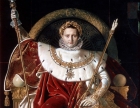
  • Polychronicon 158: Reinterpreting Napoleon

    Article

    On 18 June 2015, the two-hundredth anniversary of the great battle of Waterloo will be commemorated in Britain and on the continent (though not in France). It will represent the climax of the Napoleonic bicentenary, which has been in full flow since the turn of the twenty-first century. Fresh biographies...

    Click to view
  • Interpretations of the French Revolution

    Article

    The French Revolution raises many questions not least: What sort of Revolution was it - one of "poverty" or "prosperity" ? a bourgeois revolution that overthrew feudalism?  A national struggle for liberty, democracy, or "eternal Justice" ? or, again, a criminal conspiracy against the old social order? What did it...

    Click to view
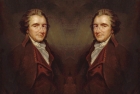
  • Podcast Series: Thomas Paine

    Multipage Article

    In this set of podcasts Emeritus Professor W. A. Speck of the University of Leeds looks at the life and ideas of Thomas Paine.

    Click to view
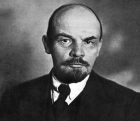
  • Podcast Series: Russia and the USSR

    Multipage Article

    An HA Podcasted History of Russia and the USSR featuring Dr Beryl Williams, Dr Jonathan Davis of Anglia Ruskin University, Dr Edwin Bacon of Birkbeck University of London and Professor Peter Waldron of the University of East Anglia.

    Click to view
  • Liberalism in Nineteenth-Century Europe

    Article

    Irene Collins explores the origins of Liberalism within a turbulent nineteenth century Europe. From the beginnings of its use for Spanish rebels in 1820 and the insult it became when used by French royalists, to the growth of political Liberalism in Marxism and Russia in the turn of the century....

    Click to view
  • Leopold von Ranke - Pamphlet

    Article

    Leopold von Ranke (21 December 1795 - 23 May 1886) was a German historian and a founder of modern source-based history. According to Caroline Hoefferle, "Ranke was probably the most important historian to shape historical profession as it emerged in Europe and the United States in the late 19th century." ...

    Click to view
  • Assessing the Battle of Waterloo in the classroom

    Article

    Defying the Iron Duke: assessing the Battle of Waterloo in the classroom The approaching bicentenary of the Battle of Waterloo has stimulated debate about how it should be commemorated. This article reports a collaboration between the Waterloo200 Committee and Tom Wheeley, history teacher, to create a lesson sequence analysing the...

    Click to view
  • Podcast Series: Origins of the European Financial Markets

    Multipage Article

    In this podcast Dr Anne Murphy of the University of Hertfordshire looks at the early origins of the European financial markets from the Italian Renaissance to the present day. Dr Murphy also provides a useful introduction to finance, the stock market and the bond market.

    Click to view
  • Napoleon and the creation of an imperial legend

    Article

    Lecture from the Historical Association 2013 Annual Conference - Podcast Professor Alan Forrest - University of York Napoleon would become a nineteenth-century hero, the stuff of legend in a romantic age. This lecture examines the genesis of the Napoleonic myth, and shows how throughout his career he consciously burnished his...

    Click to view
  • Polychronicon 150: Interpreting the French Revolution

    Article

    For most of the last two centuries, historical interpretations of the French Revolution have focused on its place in a grand narrative of modernity. For the most ‘counter-revolutionary' writers, the Revolution showed why modernity was to be resisted - destroying traditional institutions and disrupting all that was valuable in an...

    Click to view
  • Historical Events or People in 10 Tweets - The Crimean War

    Article

    This is a new feature summarising an event or person using ten statements of only 140 characters (including spaces!). Compiled by Paula Kitching.The Crimean WarThe Crimean War exposed the power games amongst European powers & the declining Ottoman Empire using religious upset for political advanceAfter much posturing Russia attacked Turkey...

    Click to view
  • French Revolution Podcasts

    Article

    A set of free online resources for students taking the French Revolution and Terror at A-level has been produced by the Society for the Study of French History. Authored by Professor David Andress, in collaboration with the staff and students of St. Catherine's School, Bramley, Guildford, the free revision-guide and...

    Click to view
  • How my interest in what I don't teach has informed my teaching and enriched my students' learning

    Article

    How my interest in what I don't teach has informed my teaching and  enriched my students' learning Flora Wilson argues here for the importance of maintaining a fascination with history as an academic subject for experienced, practising history teachers. Just as medical professionals keep their knowledge up to date by...

    Click to view
  • The Paris Commune of 1871

    Article

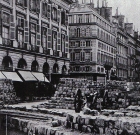
    Although a century has passed since the red flag flew for 72 days over the twenty town halls of Paris, the 1871 Commune de Paris cannot be said to belong primarily to historians. The picture of the Communards 'storming the gates of heaven' continues to serve both as a model...

    Click to view
  • Cavour and Italian Unification

    Article

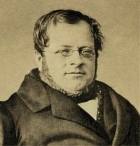
    It may seem a little perverse to write a pamphlet on Cavour in 1972, the centenary year of the death of Mazzini, but no doubt there will be more than one publication on Mazzini to mark the occasion. To pretend that the two men had much in common would be...

    Click to view
  • Using visual sources to understand the arguments for women's suffrage

    Article

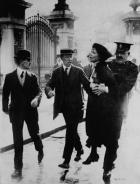
    Visual sources, Jane Card argues, are a powerful resource for historical learning but using them in the classroom requires careful thought and planning. Card here shares how she has used visual source material in order to teach her students about the women's suffrage movement. In particular, Card shows how a...

    Click to view
  • Counterfactual Reasoning: Comparing British and French History

    Article

    Year 8 use counterfactual reasoning to explore place and social upheaval in eighteenth-century France and Britain Two linked motivations inspired Ellen Buxton's research study: she wanted pupils to make connections between British and French history and she wanted to explore the potential of counter-factual reasoning within a causation enquiry. It...

    Click to view
  • The Terror in the French Revolution

    Article

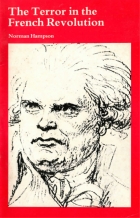
    A natural reaction to the history of the French Revolution is to see it as a glorious movement for liberty which somehow ‘went wrong', ending in a nightmare of blood and chaos. This pamphlet explains what really happened, and why. It shows how the apparent achievements of the first two...

    Click to view
  • Alexander II

    Article

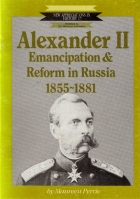
    The ‘great reforms' of Tsar Alexander II (1855-81) are generally recognised as the most significant events in modern Russian history between the reign of Peter the Great and the revolutions of 1905 and 1917. The most important of Alexander's reforms, the emancipation of he serfs in 1861, has been described...

    Click to view