
Search results
Found 143 results matching “holocaust”
Not found what you’re looking for? Try using double quote marks to search for a specific whole word or phrase, try different search filters, or see our search tips.

Working visits to historical sites for the purposes of developing pupils’ historical understanding can be extremely useful. As part of their training, student teachers need to acquire understanding and skills in the planning and management of worthwhile ‘fieldwork’. This work can be very powerful indeed if it emerges from co-operation...
S
Secondary Resource
In this detailed account of the first stages of a lesson sequence for Year 9 (13-14 year-olds), Kate Hammond sets out the tensions that must be examined and resolved when planning and teaching this most demanding of topics. How can young teenagers be helped to develop a mature response to...
S
Secondary Resource
Articles: 8 Always Historicise: Unintended Opportunities in National Curriculum History - Keith Jenkins and Peter Brickley 15 'From Little Acorns Grow...': A Liaison with Nursery, Infant and Junior Schools in the Framwellgate Moor Area of Durham City - D. R. Featonby 19 Standing the World on its Head: A Review...
S
Secondary Resource
Teaching History, February 1983 Number 35 In this issue: Editorial, 2 History in Danger - Margaret Parker, 3 Watching the Detectives: A Critique of the Schools Council's Analogy between the Historian and the Detective - John Plowright, 6 Teaching History Competition, 9 Microcomputers and Local History Work in a Primary...
S
Secondary Resource
Read Primary History 104 I think the autumn term is one of my favourite periods. It heralds the start of a new school year as we return, refreshed, to the learning journey. It is also the term of festivals and remembrance. We start with the festival of harvest. For many...
Read Teaching History 203: Connecting Pieces One of the immense privileges of editing Teaching History is the joy of learning so much from our authors’ work. We learn history we did not know. We learn from engaging deeply with history teachers’ projects – especially those of new authors – to...
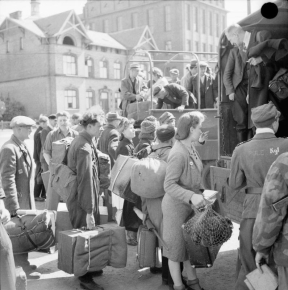
There are over 29 million refugees around the world, and more than 100 million people have been displaced. The majority are children. These are just some of the current facts about refugees. Yet historically, refugee movements are nothing new. In times of war, famine and climate crisis, people have long...
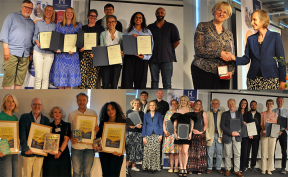
On a hot July evening a crowd gathered in central London for the HA awards evening. This annual event is a highlight of the HA calendar as it provides an opportunity to celebrate the strengths of the history community and to recognise individual contributions and achievements. The evening was well...
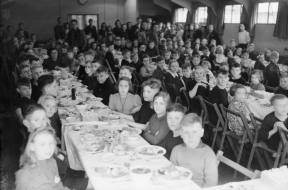
80 years ago, the Second World War came to a conclusion in Europe. While some may have been rejoicing in the streets, millions of others were on the move across Europe and around the world. These people were refugees of a global conflict, of genocide and a new developing Cold...
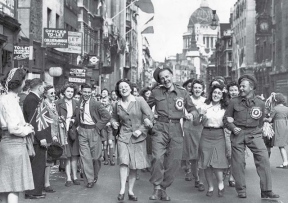
It is 80 years since the fighting in Europe finished in May 1945. For a short period, a sense of peace spread across most of the continent. For the previous month the fighting had swerved between periods of intensity, with street-to-street battles as the last remnants of the Third Reich...
It’s a new year and there’s lots to look forward to – new hopes and fortunes! Of course, we also like to look back (history being our business) and so we’re excited to see that 2025 is another year packed full of anniversaries. We will be commemorating several of these...
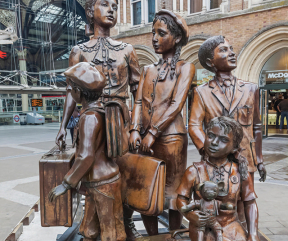
People become refugees all over the world for many different reasons, and they come from many different backgrounds. Refugees have been a continuous feature of human societies for thousands of years. How long people remain as a refugee can be days, weeks or a lifetime – what unites them is...
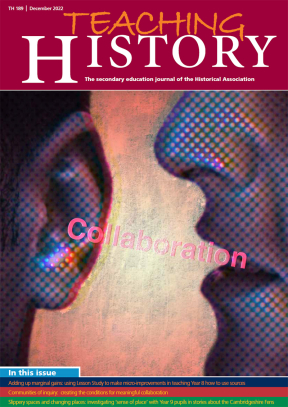
Read Teaching History 189: Collaboration Teaching requires many kinds of knowledge, which has many different sources. One of those sources of knowledge is other professionals. But history teachers are not simply passive receivers of settled bodies of knowledge produced by others. As the pages of Teaching History attest, there is...
These FAQs are designed to provide a starting point for people who are interested in what is taught in school history in England. Please note that education policy is devolved in the UK and so the situation differs in Scotland, Wales and Northern Ireland. These FAQs focus on state secondary...
Read Teaching History 188: Representing History History teachers are familiar with the challenges that arise as we try to help our students make historical sense of past worlds. Building historical representations of the past is imaginatively demanding – it requires ‘world-making’ and narrative expertise. The challenges are probative, not merely...
Read Teaching History 187: Widening the World lens Those who don’t teach history sometimes ask why it is that the work of history curriculum development is never finished. Why is it that just when a scheme of work seems to be working well, the history teacher starts to question it,...
Read Teaching History 184: Different lenses For millennia, human beings have used lenses as tools: to help them see further, to magnify or to correct defects of vision. Yet lenses can distort as well as illuminate the unseen. Robert Hooke, the seventeenth-century scientist who helped popularise the microscope through his...
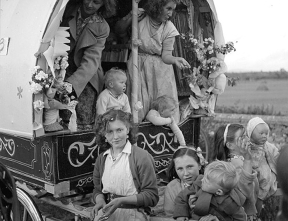
Gypsy, Roma and Traveller people are the largest minority ethnic group in some communities (and therefore in some schools) in the UK. Yet the past of Gypsy, Roma, Traveller people may rarely be part of history lessons. The result is that pupils of Gypsy, Roma and Traveller heritage may not...
This resource is free to everyone. For access to our library of high-quality secondary history materials along with free or discounted CPD and membership of a thriving community of history teachers and subject leaders, join the Historical Association today For a long time, history curricula on the 20th century prioritised...
Read Primary History 83 Editorial Once again we have a wide variety of articles to pique your interest and suggest new ideas or approaches that you might try out in school. I am constantly impressed by the sheer range of contributions that we receive for this journal. While you will...
International Journal of Historical Learning, Teaching and Research [IJHLTR], Volume 15, Number 1 – Autumn/Winter 2017ISSN: 14472-9474 Abstract The concept of critical thinking is pivotal in academia. Many see it as the very core of intellectual thought and the primary learning outcome of higher education. In addition to its universal...
‘Raindrops on roses and whiskers on kittens …’ so the familiar song goes when referring to a few of my favourite things. Hearing Michael Wood speaking at the HA Annual Conference at Manchester about the Anglo-Saxons as one of his own favourite things in history, he made reference to how...
Editorial and Editorial Review pp. 5–28 Editorial pp. 5–6 Editorial Review pp. 7–28 Jon Nichol, The Historical Association of Great Britain, United Kingdom – England Hilary Cooper, University of Cumbria, United Kingdom – England Austria pp. 29–39 Are Historical Thinking Skills Important To History Teachers? Some Findings From A Qualitative...
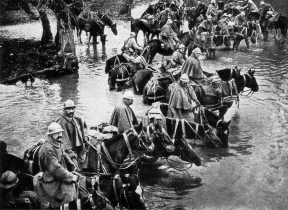
Most can agree that the battle of Verdun started 100 years ago, on 21 February 1916, when the Germans began attacking French positions north and east of the old fortress town on the Meuse river. Few can agree on when it ended. The Germans might draw a line under it...
Sc
Secondary Corporate Resource
St
Student Resource
H
Historian Resource
Please note: these links were compiled in 2009. For a more recent resource, please see: What's the Wisdom on: Interpretations of the past. A selection of useful Teaching History Articles on 'Interpretations' and are highly recommended reading to those who would like to get to grips with this key concept:...