
Britain & Ireland
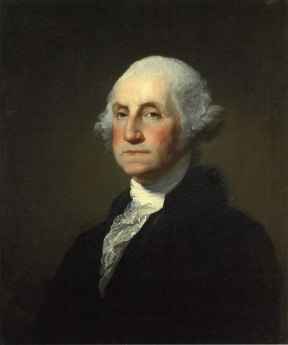
In the two-hundredth year of American Independence, it is proper to ask: why did it occur? It need not have happened; it was the act of men, not immutable forces. But once the tensions became acute, the three thousand miles of ocean were a difficult chasm to bridge. The War...
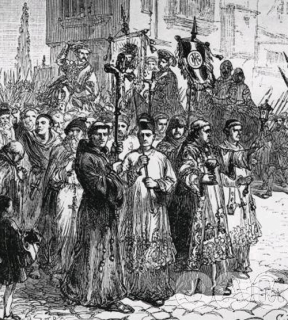
"The king, intending also the suppression of the greater Monasteries, which he effected in the 31st of his Reign for the preventing of future Dangers and keeping those Northern Counties in Quiet, raised a President and Council at York, and gave them his several Powers and Authorities, under one great...
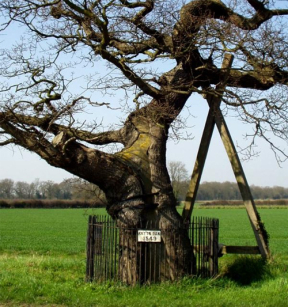
On 20 june, 1549, the men of the town of Attleborough and of the neighbouring hamlets of Eccles and Wilby, in South Norfolk, threw down the fences recently erected by John Green, lord of the manor of Beckhall in Wilby, round part of the common over which they all had...
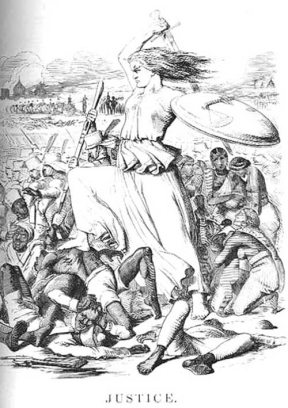
Many historical books contain cartoons, but in most cases these are little more than a relief from the text, and do not make any point of substance which is not made elsewhere. Political cartoons should be regarded as much more than that. They are an important historical source which often...
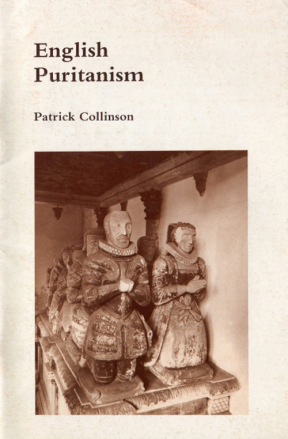
When the modern world was christened Puritanism appeared as a bad fairy and bestowed upon it certain dubious gifts: capitalism, democracy, America. This is a fairy story, but like all fairy stories it contains a small grain of truth. But what was Puritanism? Already in the seventeenth century a critic...
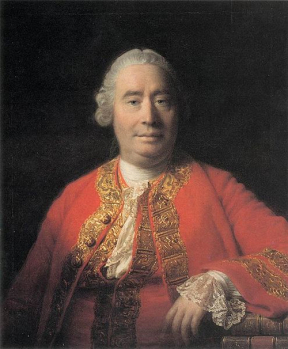
In recent decades, Scotland's distinctive contribution to the Enlightenment has been of increasing interest to scholars. Often very remarkable in an analytical view, such studies may nevertheless miss their sense of the story by treating Scottish insight in abstraction from Scottish life. Taking a more concrete approach, the present study...
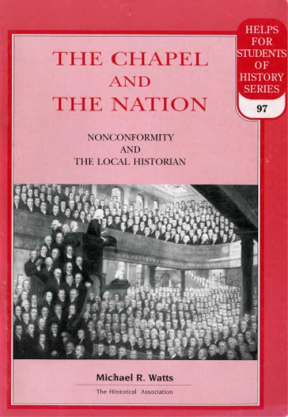
The Noncoformitst chapel has played a crucial role in the history of the English and Welsh nations. When the great French historian Elie Halevy sought to explain the contrast between the turbulent history of his own country and the peaceful evolution of England in the late eighteenth and nineteenth centuries...
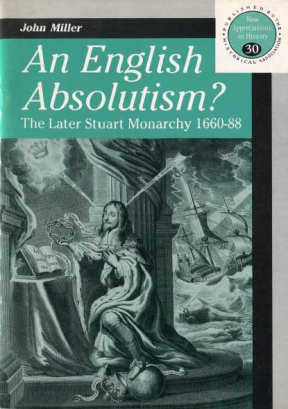
The term 'Absolutism' was coined in France in the 1790s, but the concept which described it was familiar to many Englishmen in the late seventeenth century. They talked of 'absolute monarchy', 'tyranny', 'despotism' and above all 'arbitrary government'. Their use of such terns were pejorative: they described political regimes of...
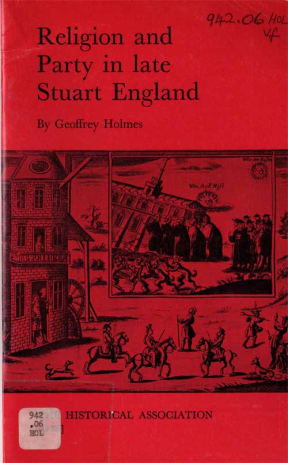
The second English Revolution of the seventeenth century, the Revolution of 1688, ushered in during the next twenty-five years a series of changes which were to be profoundly important to the ultimate development of the country. Most conspicuously, the reigns of William III and Anne released Englishmen - though not...
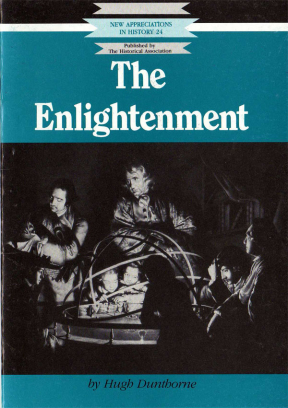
Can a movement as varied and diffuse as the Enlightenment of the eighteenth century be contained within the covers of a short pamphlet? The problem would certainly have appealed to the intellectuals of that time. Generalists rather than specialists, citizens of the whole world of knowledge, they relished the challenge...
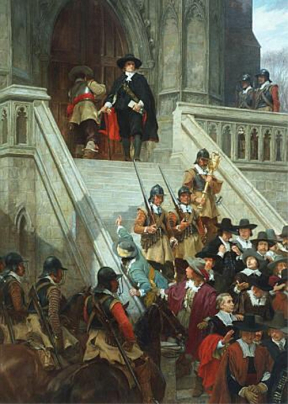
In the spring of 1643 William Lithgow, a Scot born in Lanark in 1582, who had spent most of his life travellingaround Europe, often on foot and having many fantastic adventures, decided to return to Britain. Having just turned sixty, he was obviously feeling pretty gloomy. ‘After long 40 years...
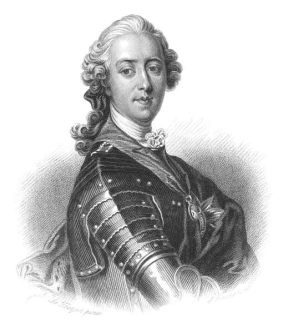
The harsh reality The 1745 Rebellion has become part of the romantic heritage in both British and Scottish history. At the time there was little romance to it. The many myths and misconceptions about Bonnie Prince Charlie and his followers need to be corrected and the glamorous image of the...
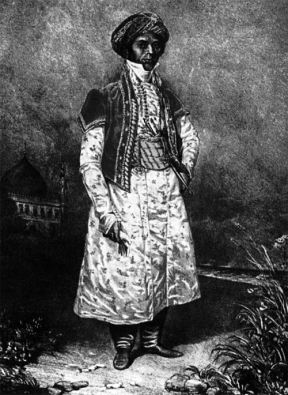
The National Portrait Gallery in London is home to many thousands of portraits, photographs and sculptures of the great and the good, as well as those who travelled on the darker side of history. In 2007 it hosted a small exhibition in the Porter Gallery entitled Between Worlds: Voyagers to...

Though people are still sometimes prosecuted for repeatedly marrying immigrants to rescue them from the attentions of the Home Office, while forgetting to get divorced between times, one uncovenanted result of the now common practice of living together without matrimony is the decline of that celebrated Victorian institution: bigamy. In...
Why is Henrietta Luxborough, who was born in 1699, of interest today? In the first place because of whom she was; in the second because of what happened to her; and in the third because of her courage which enabled her to overcome adversity and lead a life utterly different...
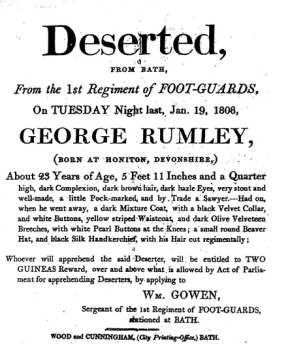
Wellington's Soldiers in the Napoleonic Wars The war with France, which began in 1793, had moved to the Iberian Peninsula by 1808. This year is therefore the two-hundredth anniversary of the commencement of the Peninsular War campaigns. War on the Peninsula demanded huge resources of manpower in order to defeat...
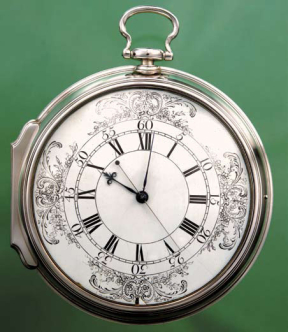
‘Poor England has lost so many men' On 22 October 2007 an unlikely group of people were to be seen casting wreaths upon the sea off the Scilly Isles. They comprised a Chief Executive, a Naval Commander, a Science journalist and the Fourteenth Astronomer Royal (this writer). A clue which...
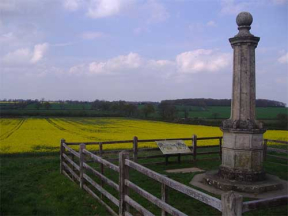
The summer of 2007 saw the completion of new visitor facilities on and near the battlefield of Naseby. The two locations are the first to be created since the Cromwell Monument was finished in 1936 and they stand more than 5km (3 miles) apart, one of them 2km south-east of...
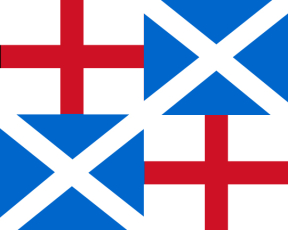
Why did both the parliaments of Scotland and England vote themselves out of existence in 1707 in order to create a new ‘United Kingdom of Great Britain’? From an English perspective, there was always a strong feeling that this union did not create a new kingdom and that it certainly...
In the 1780’s the British slave trade thrived. In that decade alone more than one thousand British and British colonial slave ships sailed for the slave coasts of Africa and transported more than 300,000 Africans. There was little evidence that here was a system uncertain about its economic future. If...