
Britain & Ireland
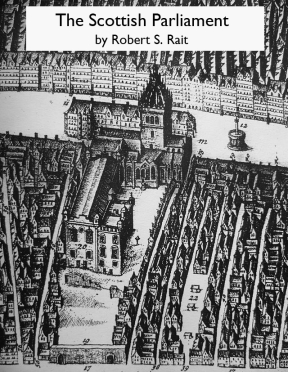
This short pamphlet by the former Historiographer Royal for Scotland, Robert S. Rait, provides an introduction to the Scottish Parliament from its early origins to the Acts of Union of 1707.
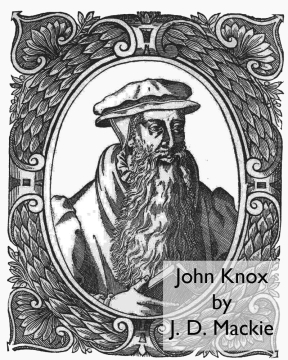
During his own lifetime John Knox was engaged in violent disputes, and throughout the succeeding ages his character has been the subject of acrimonious controversy. While there is an infinite variety of opinion as to his character, there is complete unanimity as to his importance. This pamphlet discusses the life,...
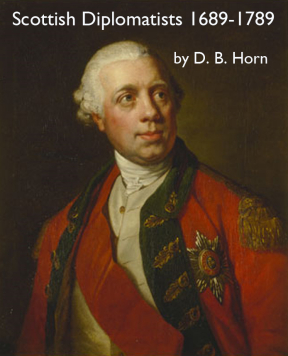
The object of this pamphlet is to show the gradual penetration of Scotsmen after the Union into a particular branch of the public service - what may be conveniently though not very accurately described as the diplomatic service. This essay makes a study of the actual negotiations conducted by Scottish...
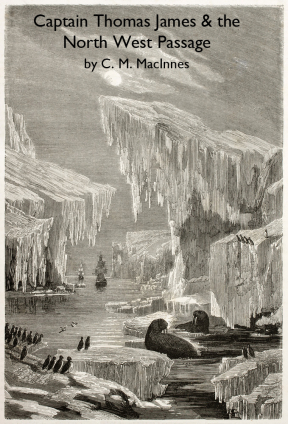
In the early years of the seventeenth century Englishmen vigorously prosecuted the search for a North West Passage to the Pacific. The fabled wealth of India and Cathay beckoned to them as enticingly as it had attracted their sixteenth century predecessors. The foundation of the English East India Company in...
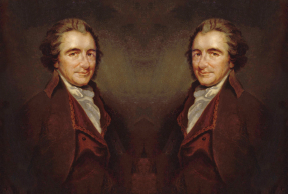
In this set of podcasts Emeritus Professor W. A. Speck of the University of Leeds looks at the life and ideas of Thomas Paine.
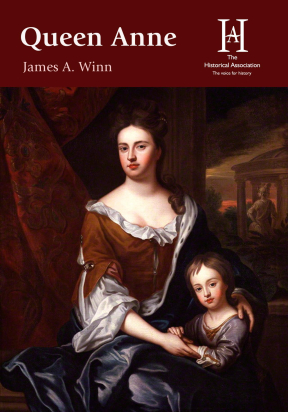
In this pamphlet, James Anderson Winn, author of a recent biography of Queen Anne, recommends a new approach to historians writing about this successful and popular queen. Female, overweight, and reticent, Anne has long been underestimated. Her letters, however, show how well she understood the motives of her ministers, and...
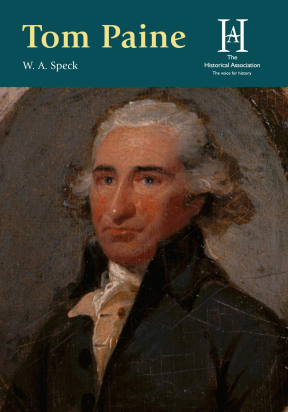
The radical writer Tom Paine (1737-1809) has become a neglected figure, but this work argues that he should be rightly regarded as an original thinker, whose publications contributed to revolutionary discourses in America, France and Britain in the late 18th Century. He deserves to be remembered in the United States...
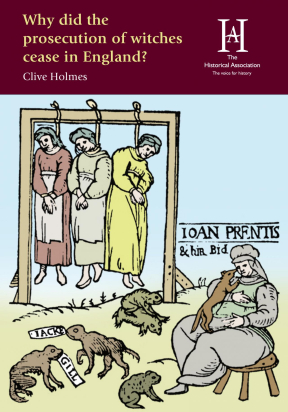
This lucid survey of the history of witch trials in England during the sixteenth and seventeenth century focuses on the question of ‘why did the formal prosecution of witches cease?' Accusations of witchcraft can be found throughout the nineteenth century yet the last conviction was in 1712. Clive Holmes explores...
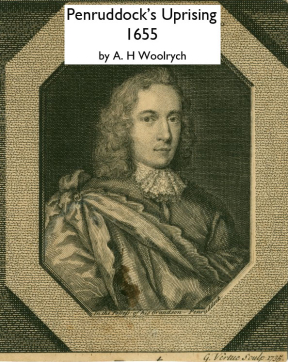
Three hundred years ago John Penruddock of Compton Chamberlayne and a dozen other brave men paid with their lives for their failure to raise the West Country in the name of King Charles II against the Protectorate of Oliver Cromwell. They had been in arms barely four days, and their...
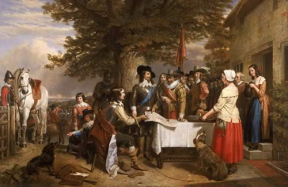
A.M. Everitt goes past a normal look at The English Civil War, and examines individual communities and resurgence in popular interest in it. More than that, how the Civil War has been documented and what the effect of this flawed teaching and writing on the subject has had on popular...
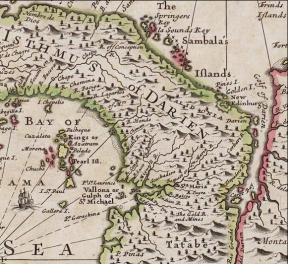
The colonisation project that became known as the Darien Scheme or Darien Disaster was an unsuccessful attempt by the Kingdom of Scotland to become a world trading nation by establishing a colony called "Caledonia" on the Isthmus of Panama on the Gulf of Darién in the late 1690s. This pamphlet...
In this series of podcasts we take a look at the history of the Royal Society and the influence it has had on the history and development of science. This series features: Keith Moore, Head of Libraries and Archives at the Royal Society, Dr Jordan Goodman, Dr Patricia Fara of...

The Weald & Downland Open Air Museum (WDOAM), which opened to the public in 1970, is one of the leading museums of historic buildings and rural life in the United Kingdom. It has a collection of nearly 50 historic buildings - domestic, agricultural and industrial - dating from the thirteenth...
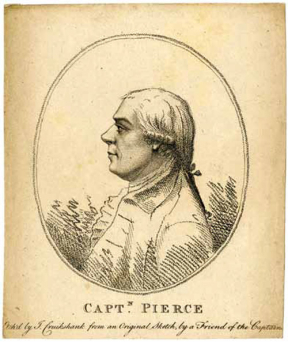
An apprentice biographer researches the career of an eighteenth-century sea captain On a cold January afternoon in 1986, my neighbour announced that he intended to go to Dorset's Purbeck coast that night. Puzzled, I asked why. He explained it was the 200th anniversary of the wreck of the East Indiaman,...
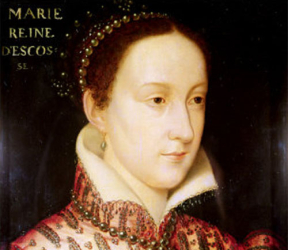
It has been well said that the last word will never be written on the tragedy of Mary Stuart, for her fate presents problems which invite solution from the historians of successive generations, and yet can never be wholly solved, If the charge brought against the Queen of complicity in...
Reformation Perspective In recent years studies of the Scottish Reformation have undergone a marked change. Religion is seldom advanced as the sole mainspring of the events of 1560 and explanations have been increasingly sought in political and economic terms. On the political side growing opposition to French influence within Scotland...
Adam Smith 1723-1790 Adam Smith was so pre-eminently one of the master minds of the eighteenth century and so obviously one of the dominating influences of the nineteenth, in his own country and in the world at large, that is somewhat surprising that we are so ill-informed regarding the details...
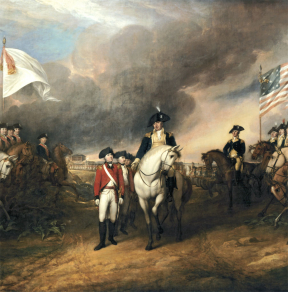
(1) Problems of an Empire in ruinsTwo weeks after Yorktown, but before the news of that disaster had reached England, George III wrote to Lord North that "The dye is now cast whether this shall be a great Empire or the least dignified of European states." England had not fought...
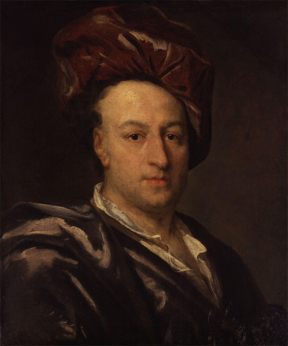
There were three Bolingbrokes: (1) The politician and minister of Queen Anne's reign, whose career ended with his flight to France in April 1715; (2) The exile, after his brief service under "The Old Pretender," who was permitted in 1723 to return to England, but not to his seat in...
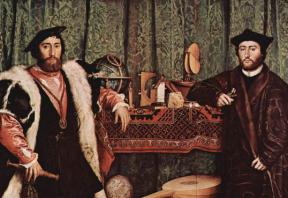
Before the development of paper money, which in England did not really occur until later in the seventeenth century, the circulating medium consisted of coins and tokens. The unit of account in which they were valued was the pound sterling; in which there were twenty shillings each of twelve pence,...