
Britain & Ireland
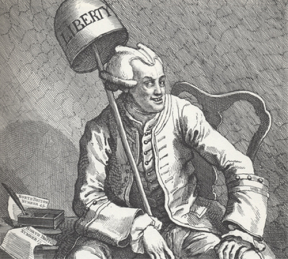
For Lord North in 1775, one John Wilkes was enough, ‘though ... to do him justice, it was not easy to find many such'. The impact of Wilkes between 1760 and 1780 was profound, a cause as much as a person. For Philip Francis, thought to be the satirist ‘Junius',...
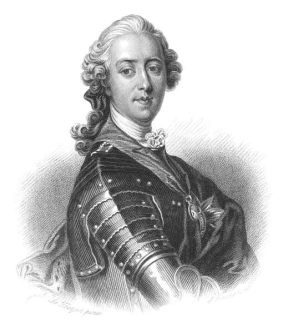
Thirty thousand pounds was an enormous sum of money in 1746. That was the reward offered by the British government for the capture of Prince Charles. Many Highlanders knew where he was at various times and places after Culloden, but they did not betray him. As one of his helpers...
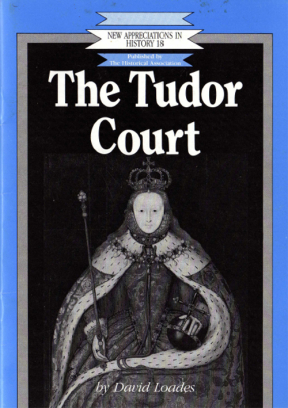
In 1976, in one of his challenging Presidential addresses to the Royal Historical Society, Professor Geoffrey Elton drew attention to the importance of the court as a ‘point of contact' between the Tudors and their subjects. It was, he suggested, a central and essential aspect of personal government, but in...
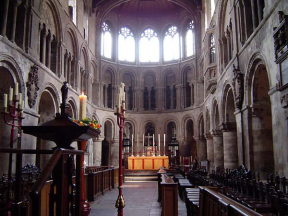
On the north-western side of the City of London, directly in front of St Bartholomew's Hospital near the ancient church of St Bartholomew the Great, there once lay a ‘smooth field', now known as Smithfield. This open space of around ten acres had a long and turbulent history. In medieval...
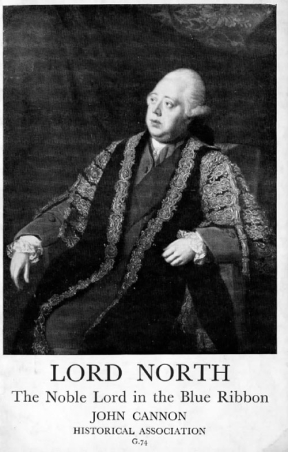
In the last weeks of his life Lord North, we are told, expressed anxiety about his place in history - ‘how he stood and would stand in the world'. This, he owned, ‘might be a weakness, but he could not help it'. It was a weakness one suspects that he...
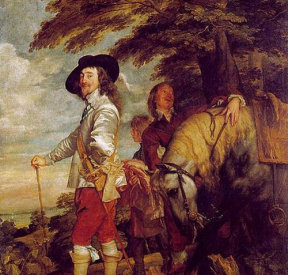
The principles involved in the great religious and constitutional conflicts of the seventeenth century are so important to us today, that it seems desirable on the occasion of the present tercentenary to lay before the members of the Historical Association some means of examining and re-examining their views on the...
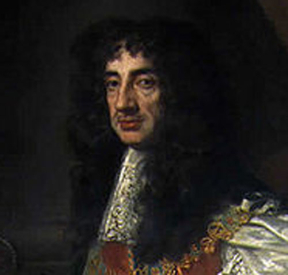
The conclusions of historians change over the years, not only as a result of the discovery of new evidence, but as a result of the changing times in which historians themselves live and work. We have become familiar with the notion that each generation of historians may have its own...
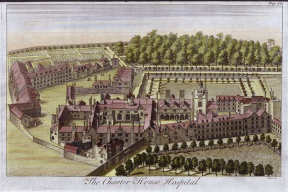
Four hundred years ago, in 1611, Thomas Sutton was reputed to be the wealthiest commoner in England but he was nearing the end of his life. He had been a financier and he was formerly the Master of Ordnance in the Northern Parts. He decided to take up good works...
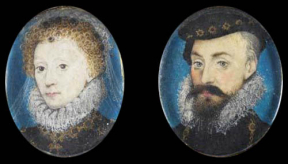
Books as evidence The study of books as objects can reveal a great deal about their owners and the society in which they lived. By examining why the books were printed in the first place, and by whom; why they were acquired and for what purpose; how they were bound;...
On 21 August 1485 Henry Tudor won the battle of Bosworth in Leicestershire and established himself as Henry VII, King of England. He had landed in Wales two weeks before, the Lancastrian claimant to the throne against the incumbent Yorkist, Richard III. He had received assistance from Charles VIII of...
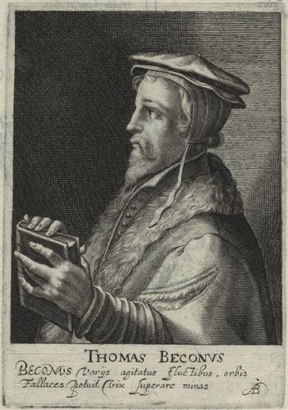
The Elizabethan Reformation in Staffordshire had a shallow seedbed. The radical reformers of the 1540s had greeted the conversion of the county with a mixture of high hopes and hyperbole. The East Anglian preacher and disciple of Latimer, Thomas Becon, wrote a treatise The Iewel of Ioye urging that itinerant...
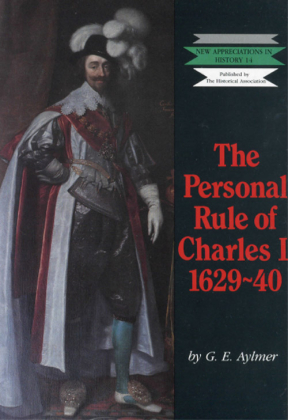
Historians are often accused of viewing the past with hindsight, or of being wise after the event. Not being prophets or soothsayers, we have to look backwards in time because we cannot look forwards. The real question is from what vantage point or perspective we view a particular part of...
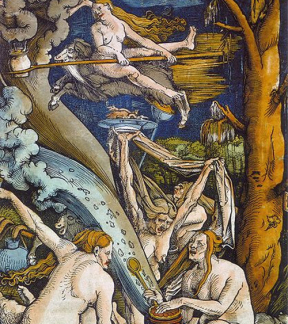
Occult and Witches: Some Dramatic and Real Practitioners of the Occult in the Elizabethan and Jacobean Periods One purpose of this paper is to show a correspondence between real-life Elizabethan and Jacobean practitioners of the occult and the depiction of their theatrical counterparts, with particular reference to perceived differences between,...

Memorandum that Edinburgh was won on 8th day of May in the 36th year of the reign of Henry VIII and year of God 1543 and this book was acquired and brought away by me Wm. Norris of Speke, Knight, on 11th day of May aforesaid and is now the...

The late Frank Ellis was working on a full biography of John Wilmot, earl of Rochester, at the time of his death in 2007. He had contributed a life of Wilmot to the Oxford Dictionary of National Biography which appeared in 2004. In it he wrote that ‘on 21 November...
Tudor enclosures hold the attention of historians because of the fundamental changes which they wrought in our system of farming, and in the appearance of the English countryside. At the same time, the subject is continually being re-investigated, and as a result it is no longer presented in the simple...
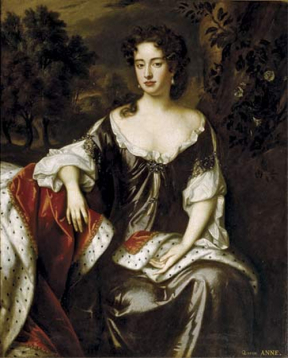
There was hardly anything in Great Britain which political thinkers on the continent of Europe in the eighteenth century admired more than its limited monarchy. But what were the limitations? Were they deliberate or not? Were they effected by acts of parliament or by the silent encroachments of usage? Did...
The pattern of overseas trade is always in movement: new commodities are constantly appearing, old ones fading into unimportance, different trading partners coming to the fore-front. But between the latter end of the sixteenth and the second half of the eighteenth century, change took specially far reaching forms. In 1570...
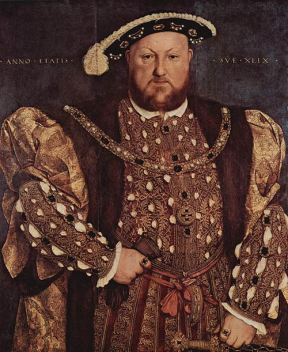
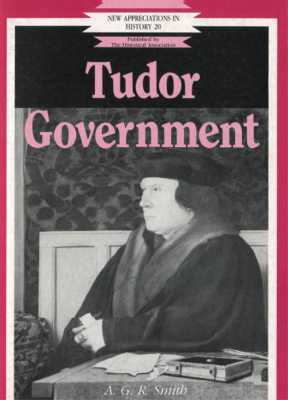
'This wicked Tower must be fed with blood' - W. S. Gilbert's dialogue sums up the popular myth of Tudor England. This pamphlet looks at the reality, a society and politics necessarily divided into rival factions by the pulls of patronage, local loyalty and the implications of personal monarchy, and...
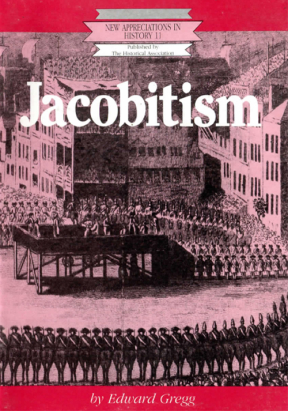
In recent years, the debate over the nature, extent, and influence of the Jacobite movement during the 70 years following the Glorious Revolution of 1688 has become one of the new growth industries among professional historians, spawning scholarly quarrels almost as ferocious as those which characterised ‘the Cause' itself.The term...