
Britain & Ireland 1745-1901
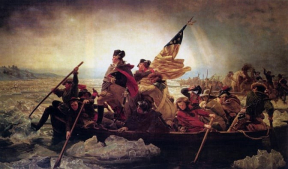
The political power of the press was one of the great new revolutionary forces of the 18th century. In his illustrated talk peppered with insightful examples based on detailed research and leavened with anecdote, George Goodwin, author of Propaganda Wars of the American Revolution, brings to the foreground the often...
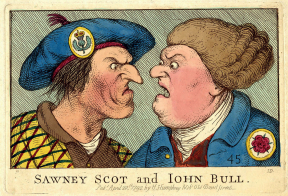
The simple answer is that historians are arguing about what it is that they are arguing about. Linda Colley’s profoundly influential Britons, 1707-1832: forging a nation, published in 1992, illustrates the point. Beginning with the parliamentary union of England and Scotland in 1707, the book links the emergence of British...
What's the Wisdom On... is a short guide providing new history teachers with an overview of the ‘story so far’ of practice-based professional thinking about a particular aspect of history teaching. It draws on tried and tested approaches arising from teachers with years of experimenting, researching, practising, writing and debating...
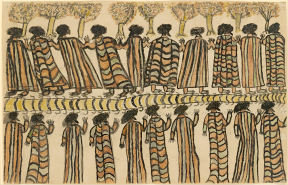
Migration and Empire 1830–1939 is the most popular topic studied for the Scottish Higher qualification. The course specification directs that students should be taught about the impact of Scots emigrants on the British Empire. Marking instructions and classroom practice, however, had historically emphasised the ‘contribution’ of Scots to the empire,...
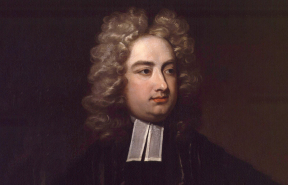
In Episode 12, Professor Michael Brown of the University of Aberdeen discusses who held power in Ireland in 1714 and how the protestant ascendancy developed following the fall of James II and the rise of the Hanoverian dynasty. This is a period increasingly defined by the exclusion of Ireland’s Catholic...
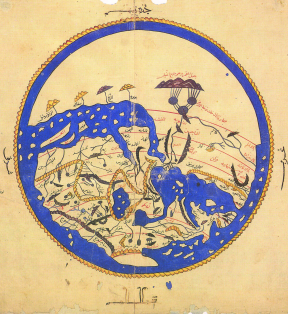
In interviews with GCSE students across a range of school contexts, Abigail Branford found that many young people regarded Africa as an economic ‘dead zone’ prior to colonial intervention. This conception, as Branford briefly illustrates, is at profound odds with current historical scholarship; yet it persists. In seeking to support...
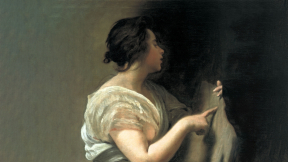
In Episode 11, Dr Mary Jo MacDonald of the University of Jyväskylä explores how the end of the Licensing Act, sweeping political change, and a revolution in intellectual culture opened unprecedented opportunities for women to shape political, social, and intellectual life in Britain and Ireland. The film highlights major proto‑feminist...
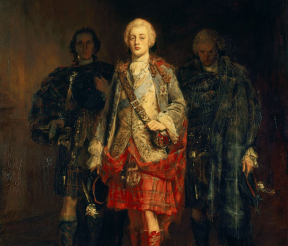
In Episode 9, Professor Alison Cathcart (University of Stirling) discusses who held power in Scotland in 1714 and how the Union with England, together with the arrival of the Hanoverian dynasty, transformed the nation. She examines the central role of the Church of Scotland, the influence of the Royal Burghs,...
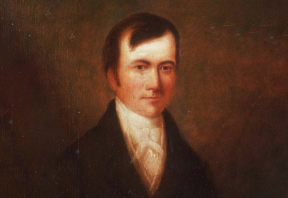
In Episode 9, Dr Eryn White (Aberystwyth University) discusses who had power in Wales in 1714, the changing relationship between Wales and the wider United Kingdom and the key developments that took place in Wales between 1714-1785. Dr White reflects upon the rapid expansion of print and literacy in Wales...
Ym Mhennod 9, mae Dr Eryn White (Prifysgol Aberystwyth) yn trafod pwy oedd mewn grym yng Nghymru ym 1714, y berthynas newidiol rhwng Cymru a'r Deyrnas Unedig ehangach a'r datblygiadau allweddol a ddigwyddodd yng Nghymru rhwng 1714-1785. Mae Dr White yn myfyrio ar ehangu cyflym print a llythrennedd yng Nghymru...
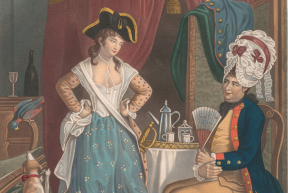
In episode 10, Dr Declan Kavanagh (University of Kent), reflects on Queer British history 1714-1785. Dr Kavanagh looks at the history of the language of LGBTQ+, in particular the term ‘queer’ in its very recent usage and how the language of descriptors for these communities has been influenced. Dr Kavanagh...
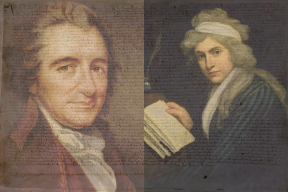
From royal courts to radical protests, from industrial revolutions to global empires – this compelling new film series traces the dramatic evolution of power, rights, and freedom across three centuries of British and Irish history. We will trace Britain and Ireland’s transformation from 1714 to 2010, unpacking power struggles, social...
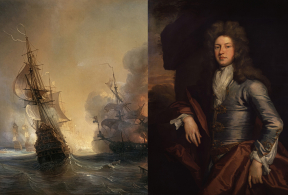
In Episode 5, Professor Anne Murphy (University of Portsmouth) examines the development of finance in Britain and Ireland, from the emergence of the Bank of England during the Nine Years’ War into a system that would facilitate the growth of the British Empire and Britain’s Industrial Revolution. During this period...
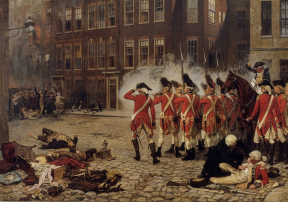
In Episode 7, Professor Carl Griffin (University of Sussex) discusses the changing landscape of England as enclosure accelerates, transforming the social dynamics of the countryside as peasants become wage labourers and their rights to use the ‘common land’ is diminished. Professor Griffin reflects on this period of protest over enclosure,...
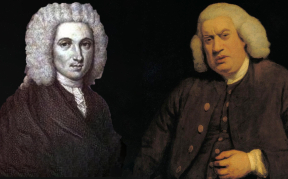
In Episode 6, Dr Declan Kavanagh (University of Kent) discusses the development of ideas around, and responses to, disability in Britain and Ireland in the 18th century. Dr Kavanagh examines the definition given in Samuel Johnson’s Dictionary in 1755 and looks at the medical and charity models of responding to...
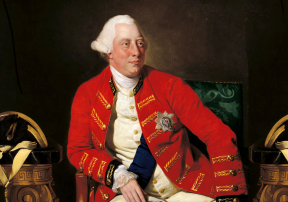
In Episode 1, Dr Robin Eagles (History of Parliament), discusses the development of power and freedom in Britain and Ireland from the reign of Queen Anne to the beginning of the Georgian Age. This was a period of strict hierarchy where the monarchy and aristocracy retained significant control over both...
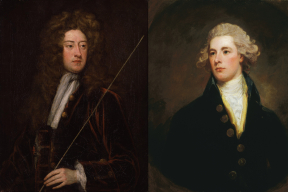
In Episode 2, Dr Robin Eagles (History of Parliament), examines the birth of Britain’s two party system in the form of the Whigs and the Tories; two parties, whose rivalry would define politics in Britain from the Restoration and Glorious Revolution to the middle of the Victorian Age. During this...
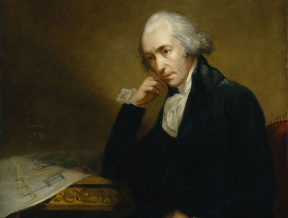
The 18th century represents a pivotal moment bridging early modern Britain with the social, economic and technological transformations of the Industrial Revolution. In Episode 3, Professor Emma Griffin (Queen Mary University of London), explores this period of invention, innovation and entrepreneurialism, how it affected ordinary families, and its role in...
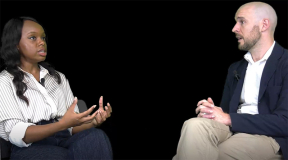
In Episode 4, Dr Montaz Marché (University College London) and Professor Ryan Hanley (University of Exeter), discuss the lives and experience of 18th century Black Britons. In this discussion they look at the lives of both the exceptional and the ordinary, and reflect upon the politics of race and gender...
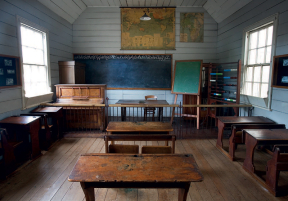
The history of schooling and the British Empire encompasses a complex body of literature. Histories of formal education intersect with work on race, class and capitalism and link to adjacent fields such as histories of childhood. A basic contention shared throughout this field, however, is that there was a profound...