
Teaching History articles
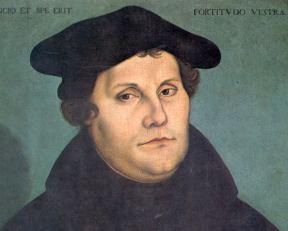
Year 13 play a competitive game to help them arrive at strong and substantiated judgements. Year 13 were in the library again, sinking under tomes of weighty works on the German Reformation. James was feverishly rifling through a book on the ‘Reformation World' for something (anything!) to do with Luther's...
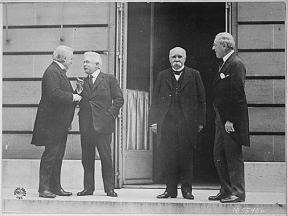
Planning and teaching linear GCSE: inspiring interest, maximising memory and practising productively As proposed changes to the National Curriculum are furiously debated, and details of future changes to GCSE are anxiously awaited, history teachers in England are already wrestling with the implications of one change to the public examination system:...
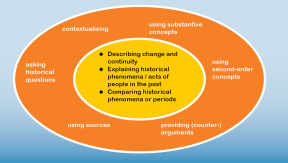
Historical reasoning in the classroom: What does it look like and how can we enhance it? The history education community has long recognised that historical thinking depends on the interplay between substantive knowledge about the past and the procedural, or second-order, concepts that historians use to construct, shape and give...

This issue's problem: Simon Montfort is given very little freedom to learn how to plan. Simon considered himself very fortunate when he arrived in his training school. Even on the induction day his mentor had been able to give him copies of the schemes of work for each year group...
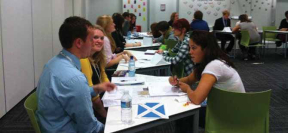
A collaborative project between Richard Rose Central Academy and University of Cumbria PGCE History trainees to meet the challenges of the A2 synoptic unit. "If I tell you to eat, you will eat! You wanted cake! You stole cake! And now you've got cake! What's more, you're going to eat...

This page is the starting point for all who are new to the published writings of history teachers. Every problem you wrestle with, other history teachers have wrestled with too. Quick fixes don't exist. But if you discover others' writing, you'll soon find - and want to join - something...
Like many other history departments nationally, Ed Podesta and his colleagues face a daunting practical challenge: redesigning three years' historical learning so that it can fit into a compressed two-year Key Stage 3, whilst enhancing, rather than compromising, the quality of students' historical learning. Podesta's article reports the beginning of...
The quest for the common characteristics of the genus ‘historian' with 16- to 19-year-olds Diana Laffin writes about historical language and explores how understanding different historians' use of language can help sixth form students refine and deepen both their understanding of the discipline of history and their abilities to practise...
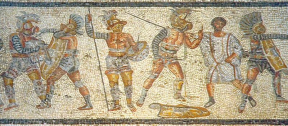
This seemingly straightforward question will prompt correspondingly straightforward answers from your mixed-ability Year 7 class, such as ‘they were slaves who fought with swords until one of the men died for the crowd's entertainment', as one of my pupils answered. Scratch the surface, and almost every word in this response...
Paula Worth was searching not only for a rigorous question, capable of engendering genuine debate, but also for an engaging and enjoyable activity that would secure GCSE students' substantive knowledge. The answer - or rather the question - lay in counterfactual thinking: a carefully crafted game that she devised, based...
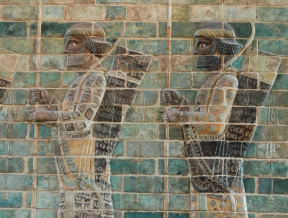
Truth-loving Persians do not dwell upon The trivial skirmish fought near Marathon. So begins Robert Graves' poem, The Persian Version. The conceit of the poem is to invert the standard narrative of the Persian war of the early fifth century BC - a narrative drawn from Greek sources such as...
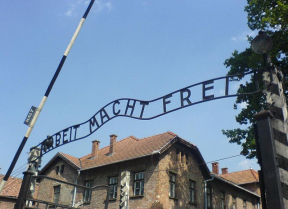
Maria Osowiecki's search for the right questions to frame her students' study of the Holocaust was driven initially by the proximity of her school to the site of Bergen-Belsen, and the particular interests and concerns of her students as members of British Forces families. But, as this article richly demonstrates,...
Every problem you're wrestling with in the history classroom, other history teachers have wrestled with too. This page is for all those new to the published writings of history teachers in Teaching History. It shows how to make a start in understanding how others have explored and discussed common and...

Teaching a class of newly arrived immigrant teenagers from various backgrounds and ethnicities poses many interesting challenges: varied levels of schooling, varied levels of mastery in a new language, no common frame of reference, varied ways of understanding and making sense of the world and very varied ways of making...
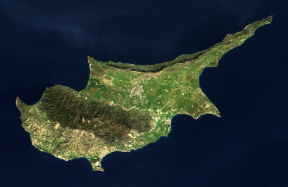
The Association for Historical Dialogue and Research (AHDR) is a Cyprus-based organization that works to foster dialogue among history teachers and other educators across the divide in Cyprus. In one of their UN-funded projects, ADHR members worked with UK colleagues to shape a lesson sequence and resources on the Ottoman...
This issue's problem: Helen Troy is uncertain how to provide appropriate support for certain students without restricting what they can achieve. Helen showed considerable determination in securing her teacher training place. Her own education had been within a highly selective school system and her first application was unsuccessful because of...
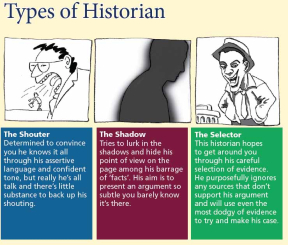
Keeley Richards secured a fundamental shift in some of her Year 13 students' ability to argue. She did it by getting them to engage more fully with the practice of argument itself, as enacted by four historians. At the centre of her lesson sequence was an original activity: the historians'...
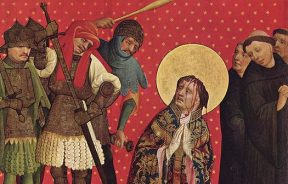
Jane Card has long been fascinated by the power of visual sources to stimulate pupil thought and discussion. In previous articles she has shared insights from her own expert practice, fusing deep subject knowledge with careful planning to generate highly skilful questioning. Here she presents another rich example of classroom...
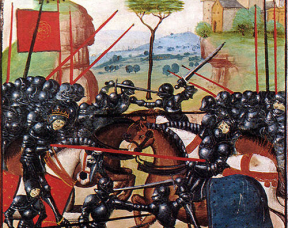
There are few periods in our history from which we turn with such weariness and disgust as from the Wars of the Roses. Their savage battles, their ruthless executions, their shameless treasons seem all the more terrible from the pure selfishness of the ends for which men fought, the utter...
This issue's problem: Matt Boulton is using Bloom's taxonomy in very mechanistic ways to plan lesson objectives and think about progression in history. Matt Boulton worked for 18 months as a Teaching Assistant before deciding to become a qualified teacher. His previous experience and understanding of the needs of students...