
Significance
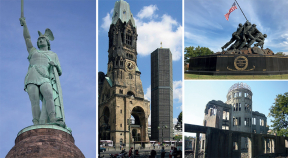
In this article, Julia Huber examines how task design can support pupils’ historical thinking in the primary classroom. Drawing on her own practice, she shares examples that develop conceptual understanding in areas such as significance, similarity and difference, continuity and change, and interpretations...
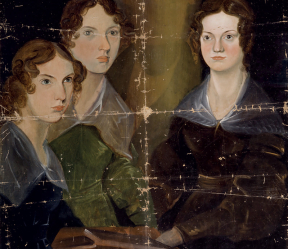
Lorna Spencer’s focus on the Brontë sisters as a significant local family provides an insight into both their lives and their challenges, and how far these can be compared with those of different classes of people in the locality. Their experiences can also be related to wider issues, such as...
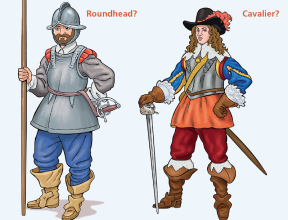
Denise Greany and Andrew Hopper show how to make the British Civil Wars of the mid-seventeenth century readily accessible to primary-aged children by focusing on the experiences of people who lived through these tumultuous times.
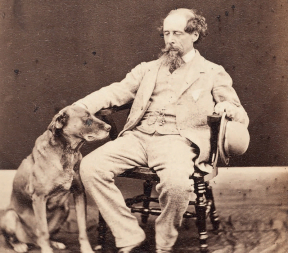
In this article Karin Doull looks at the 165th anniversary of Battersea Dogs and Cats Home. Our treatment of our most popular pets is reflective of society in a given time and Karin highlights several ways in which the history of Battersea can be used to spotlight different aspects of...
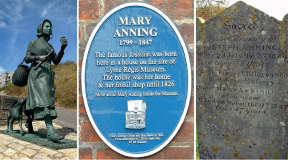
Mary Anning was a fascinating individual who would be a purposeful addition to a history curriculum. This article outlines the rationale behind including her as a significant individual but also offers ideas for developing young children’s understanding of historical interpretations.
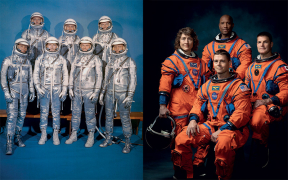
Children have long been captivated by the idea of space exploration and this year marks the anniversary of several significant events, including the 50th anniversary of the European Space Agency and the 10th anniversary of Tim Peake’s launch to the International Space Station. In this article, Kate Rigby explores how...
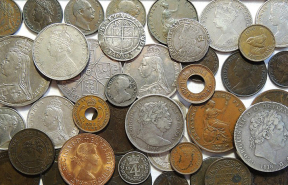
In this article, Damienne Clarke examines how coins can be used as a focus for history teaching and learning in Key Stage One. She describes the emergence of coins from older systems of bartering, as well as their role as tokens of commemoration for significant people and events. This article...
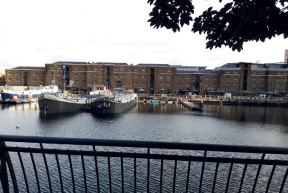
In this article Susie Townsend explores one of her favourite museums, the Museum of London Docklands, and explains why it has a real value and interest far beyond the locality. As well as covering the benefits of a visit, she also provides ideas for teaching activities across the primary age...
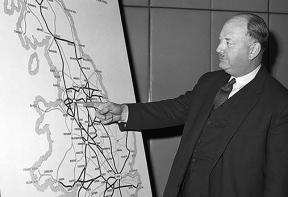
March 2023 sees the anniversary of a report that had profound significance on social history and which affected many parts of the United Kingdom. There is every chance that it had an effect close to your school especially if you are in a more rural or coastal area. The Beeching...
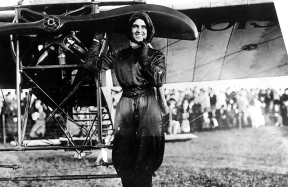
What makes a person or event significant? When looking at the past, some people or events stand out in our minds. Individuals such as Florence Nightingale or Walter Tull at Key Stage 1 or events such as the Blitz at Key Stage 2 may have particular resonance. However, if we...
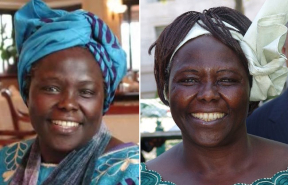
"Instead of a curriculum where race, gender and disability are mainly rooted in victim narratives, include positive representation. Go beyond teaching slavery and the Holocaust or gender narratives of victimhood…Actively use examples and narratives countering this dominance." Bennie Kara, (2021, p.59) The 2014 National Curriculum for history sets out that...
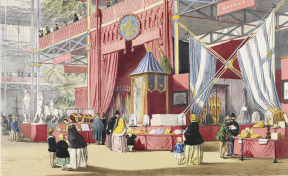
The Great Exhibition allows pupils to consider the impact of a particular event. The exhibition provides a means to look at Britain’s wider role in the world and social and technical developments such as the impact of the railways. Pupils can explore a variety of sources, consider the substantive concepts...
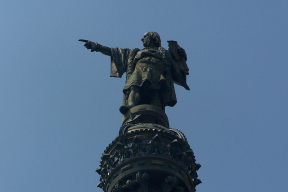
The terms ‘significance’ and ‘interpretation’ often go hand in hand with one another, but what do each of them mean and why is it that they fit together? Understanding both terms separately and how historians use interpretation to identify what is significant in history, and why historians cast their interpretations...
Please note: the 'What's the Wisdom On' film series has been produced principally for secondary school history teachers, however some of the content is transferrable to a primary setting. Secondary members can view this film here 'What’s the wisdom on…' is a popular feature in our secondary journal Teaching History...
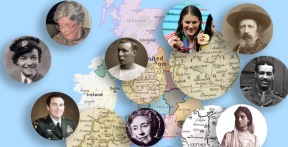
The National Curriculum specifies a local study both at Key Stages 1 and 2. Basing your local study around an individual is a great way to bring the heritage of your locality to life. Many of these individuals are part of larger national events and changes and seeing these changes...
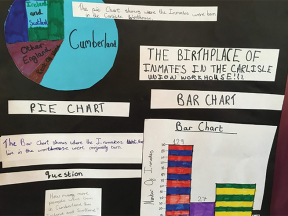
This article looks at how children can utilise and manipulate mathematical data to make sense of a historic past. The focus is on helping children see the numbers as a resource for understanding the experiences of those that lived in this place. Aim: Understand historical concepts such as continuity and...
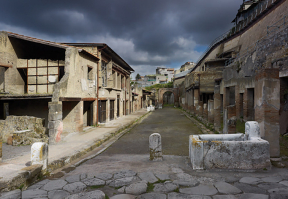
‘The ashes now began to fall upon us, though in no great quantity. I looked back; a dense dark mist seemed to be following us, spreading itself over the country like a cloud … We had scarcely sat down when night came upon us not such as we have when...
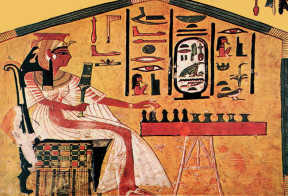
Perhaps one of the most perplexing aspects of teaching history is the fostering of conceptual understanding. History subject leaders often find this a challenging issue. Even if they have a decent grasp themselves, it can be difficult for others in the school who have to teach the subject. Over recent...
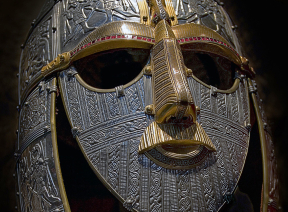
Sri Lankan garnet in Anglo-Saxon graves? In 2009 news broke of a fabulous hoard of gold and garnet military ornaments unearthed in a Staffordshire field. TV reports mentioned the garnet might have come from Sri Lanka or India, but how could it have got here? I began reading up what...
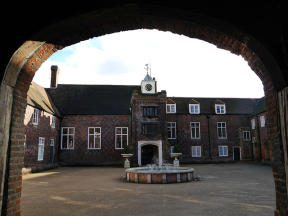
In the south-west corner of London, nestled up against the Thames, lies Fulham Palace. This is a palace that was not for kings and queens but bishops, the princes of the church. This was the summer palace for the bishops of London which they retreated to when the heat and...