General

When considering planning for any topic perhaps the first question should be to question your rationale for teaching this topic and how it relates to wider issues such as diversity, learning outside the classrooms, and whether to teach history discreetly or as a part of meaningfully linked cross curricular approach. In this section, you will find articles, guides, resources that will support you to develop your planning and helping children to make progress.

Sort by: Date (Newest first) | Title A-Z
Show: All | Articles | Podcasts | Multipage Articles
  • Teaching primary history thematically – why it makes sense

    Article

    Recognising that most schools deliver history as separate units that are then divided into themes,  Nick Mackintosh argues that this means a lack of a narrative thread, which can result in children struggling to analyse it effectively. A thematic history curriculum is much better at developing children’s understanding of chronology,...

    Click to view
  • Teaching the Maya in upper Key Stage 2

    Article

    In this article, Jo identifies a rationale for learning about this civilisation and addresses some of the ways it can be taught, especially with older primary children. It includes a comparative enquiry with Anglo-Saxons. She also highlights how recent research has developed a greater understanding of the Maya and, at...

    Click to view
  • Developing a love of history through historical fiction

    Article

    In this article, Steven Kenyon reminds us of the importance of historical fiction as part of good primary history. He examines its current role and, in this National Year of Reading, identifies a few of the best examples that can enhance the teaching of history, covering EYFS right up to...

    Click to view
  • Objects and objections: getting critical about using artefacts in primary history

    Article

    Jenny uses her experience and expertise from a school committed to using museum education to outline ways in which artefacts can be used effectively in primary settings. This article is based on practice at Langley Heritage Primary Academy. She outlines some of the challenges and how practice was refined, including actual...

    Click to view
  • ‘Golden threads’ in primary history

    Article

    The term ‘golden threads’ has become increasingly part of primary history planning. It is often recommended as a means of avoiding curriculum atomisation and aiding retrieval. In this article Tim Lomas attempts to unpack what is meant by the term, what are some of the most popular ‘golden threads’ and...

    Click to view
  • Artificial Intelligence (AI) in primary history – take CARE!

    Article

    Teaching has embraced many revolutionary changes before: the photocopier, the calculator, the internet, even the smartboard!  The Assistant Director-General of UNESCO (2023) though feels that these could pale into insignificance when compared to the rise of AI. This article looks at ways in which Generative AI might be used by...

    Click to view
  • Creativity in history

    Article

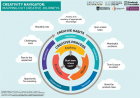
    Ask anyone for a list of creative subjects in schools and it is unlikely that history will be top of that list. However, over the last two-and-a-half years we have been working as part of a Creativity Collaborative of schools that seeks to foster creativity across the whole curriculum, including...

    Click to view
  • How diverse is your history curriculum?

    Article

    The past was full of diverse people and our students are entitled to learn about this diverse past. History lessons should enable students to see their connection to the past and to understand the world today. Here are a list of questions for history teachers to use to support a...

    Click to view
  • Film: Making an effective History curriculum

    Article

    Richard Kennett is a senior leader, teacher, blogger, text-book author and member of HA secondary committee. In November 2018, Richard visited the Yorkshire History Forum to talk about his school’s experience of reviewing and re-planning their Key Stage 3 curriculum. This film is of Richard’s keynote speech at the Forum....

    Click to view
  • Primary history and British values

    Article

    In this article, Michael Maddison provides an overview of what schools must do in relation to promoting British values, as well as preventing extremism and radicalisation, and why it is so important that opportunities are taken in history to  deal with these two pressing issues. It is an updated version...

    Click to view
  • What your local Archive Service can offer to schools

    Article

    Imagine a place where your pupils become detectives working on mysteries from the past such as the tale of Thomas Sargeant, a 15-year-old factory worker who died in a chemical works in 1898. Your local archive is bursting with stories about real people like this which can give children an...

    Click to view
  • The importance of history vocabulary

    Article

    Teachers and schools should surely be forgiven for quickly turning to the pages containing the ‘subject content' - within the new 2014 history curriculum - and finding out ‘what' they should be teaching. This is especially true for Key Stage 2 where children must now learn British history from the...

    Click to view
  • Ideas for Assemblies: Lest we forget

    Article

    Over the next three editions of Primary History our assemblies pages will be linked to the theme of commemorating the First World War. We have found that while many teachers wish to remember these events in school, they are unsure how to approach the subject with primary aged children. It...

    Click to view
  • Curriculum Planning: which non-European society might we offer at school?

    Article

    A non-European society that provides contrasts with British history - one study. chosen from: early Islamic civilization, including a study of Baghdad c. AD 900; Mayan civilization c. AD 900; Benin (West Africa) c. AD 900-1300. That's quite clear then - there's a choice between early Islam, Central America or...

    Click to view
  • Britain from the Iron Age to Robin Hood

    Article

    ‘...if children are to ever fully appreciate history the development of historical time has to be central to our teaching methodologies' This lesson aims to provide an overview of this period, developing pupils' sense of chronology and their understanding of cause and consequence. The context for these ideas comes from...

    Click to view
  • Including the Muslim Contribution in the National Curriculum for History

    Article

    History education has a key role to play in creating the informed, critical attachment of young people to the nation and in creating the feeling that young people belong and can participate in national life. The Curriculum for Cohesion Team, comprising Muslim and non-Muslim academics and community leaders, believes that...

    Click to view
  • A History of the World: 100 objects that tell a story

    Article

    ‘A History of the World in 100 Objects' was the most creative, imaginative and dynamic development in primary History Education for thirty years. It ties in perfectly with and supports the government's draft NC for History...

    Click to view
  • Helping pupils to view historical film critically

    Article

    Please note: this article pre-dates the 2014 National Curriculum. Introduction: The teaching potential of film Films about historical events seem like the nearest thing we can give our pupils to a time machine. In commercial film, the physical appearance of the past has often been carefully researched, thus a snippet from...

    Click to view
  • Bring on the iPad revolution

    Article

    Please note: this article pre-dates the 2014 National Curriculum. The opening ceremony of the London 2012 Olympic games celebrated change whilst demonstrating the challenges revolutions have on the world. From green pastures to belching chimneystacks, from post-war Britain to the World Wide Internet and text messaging, the way society interacts is...

    Click to view
  • The digital revolution

    Article

    Please note: this article pre-dates the 2014 National Curriculum. Developments in information technology continue at an extraordinary pace. Many young children will have little or no idea of what it was like to live in a world without mobile phones, computers and the Internet. Most children will regularly make use...

    Click to view