
Chronological Understanding

Please note: this article pre-dates the 2014 National Curriculum and some content may be outdated. I chose Horrible Histories for this exploration of children's understanding of chronology because I thought it would be fun - and I approve of the Horrible Histories. They use sources, question sources, provide alternative interpretations...
Introduction This article explores how working in partnership with museums can help to build the concept of chronology. In 2009 the Education team at the Royal Armouries Museum, Leeds, worked with the Gifted and Talent Advisor at Education Leeds to provide a series of CPD days for teachers, and pupil...
Please note: this article pre-dates the 2014 National Curriculum and some content may be outdated. Editorial note: This short paper introduces a highly creative, imaginative and enthralling case-study of a local history project for year 6 pupils. The teaching programme has a chronological spine that provides coherence and focus. Chronology...
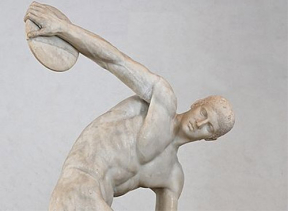
Please note: this article pre-dates the 2014 National Curriculum and some content may be outdated. Three curricular editions of Primary History, PH 50, Autumn 2008 , PH 53, Autumn 2009 and PH 57, Spring 2011 are directly relevant to teaching the Olympics. PH 50, Autumn 2008 History Education in the...
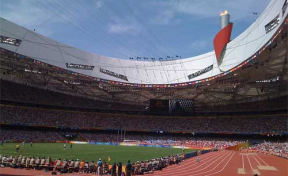
Please note: this article pre-dates the 2014 National Curriculum and some content may be outdated. Citizenship links. While most of us engage with the nature of the sporting aspects of an Olympics throughout its modern day reincarnation, there are many aspects of the Games on and off the sporting field...
Please note: this article pre-dates the 2014 National Curriculum and some content may be outdated. History flows like a river, sometimes quiet and unobtrusive, sometimes a raging torrent with wide-ranging effects on the world around us. It is punctuated by momentous events and significant individuals, who impact on its direction...

Please note: this article pre-dates the 2014 National Curriculum. For more recent resources see: Chronology: Developing a coherent knowledge (2014) Scheme of work (KS2): Chronology: Books through time Scheme of work (KS2): Chronology: Numbers through time Britain and World timeline 4000-2000BC Britain and World timeline 2000BC to 0BC Britain and...
Please note: this article pre-dates the 2014 National Curriculum and some content may be outdated. Editorial note: Hilary Cooper outlines the main features of historical thinking. These ideas are embedded in the government's current requirements for teaching National Curriculum History [England] Introduction It is important that children develop a coherent,...

Please note: this article pre-dates the 2014 National Curriculum and some content may be outdated. First let me say that I did not research the materials used or plan this lesson. For this I must acknowledge, with thanks, that this is the work of my colleague, Mike Huggins, and the...

Please note: This article pre-dates the current National Curriculum and some content and references may be outdated. Introducing the youngest children to the concept of history can be a challenging prospect for some foundation stage practitioners, particularly if they feel their experience of the subject has been limited or their...
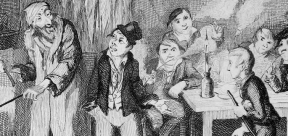
Please note: This article pre-dates the current National Curriculum and some content and references may be outdated. Classic fiction provides useful sources of information for investigating the lives, beliefs and values of people in the past. In this article Ann Cowling describes activities undertaken with student teachers which may also...
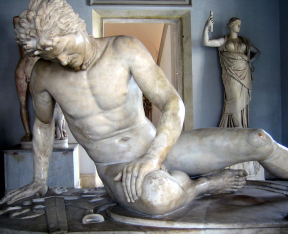
Please note: this article pre-dates the 2014 National Curriculum and some content may be outdated. Editorial comment: A History of the World is the most creative, imaginative and dynamic development in primary History Education for thirty years. It ties in perfectly with and supports the government's re-vitalisation of primary education...
Please note: this article pre-dates the 2014 National Curriculum and some content may be outdated. Editorial note: John Fines produced two case studies of Local History for the Nuffield Primary History Project. One on them is published here for the first time.
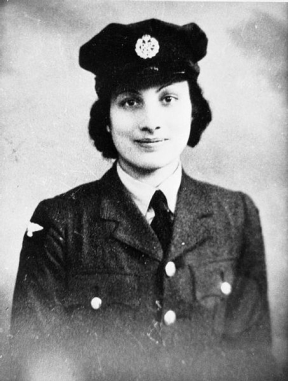
Please note: This article pre-dates the current National Curriculum and some content and references may be outdated. If you are considering studying someone other than Florence Nightingale you have two basic options. You can either choose a local character who would be more relevant to the children, or you could...
Please note: this article pre-dates the 2014 National Curriculum and some content may be outdated. ‘Some primary schools are like the High Street in many of our towns. I can predict what I will see before I go through the door. What I want to see is something that gives...
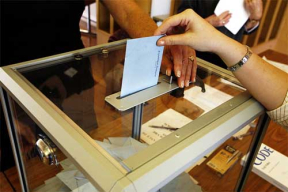
This free-to-use and publically accessible website has now been updated and re-launched with a new look, extra content and improved search tools thanks largely to funding from JISC (the Joint Information Systems Committee of Britain's universities).Among the latest additions is a full listing of every General Election result, 1832 to...
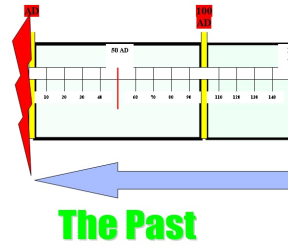
This article pre-dates the 2014 National Curriculum and some content may be outdated. Once upon a time, educators believed that there was a property of children’s minds known as ‘understanding of time’. According to this belief, young children had little ability to understand when things happened, even within their own...
Please note: this article pre-dates the 2014 National Curriculum and some content may be outdated. In essence, history is a record of human affairs. The problem in making this record is that events are past and gone and have to be reconstructed. Evidence may be uncertain and incomplete. Inevitably, several...
Please note: this article pre-dates the 2014 National Curriculum and some content may be outdated. Research during the last eighty years has suggested that ‘time’ concepts, such as chronology, duration and the usage of dating systems are difficult for children to assimilate. However, my recent research would suggest that temporal...