
Diversity

Mae Jemison is a groundbreaking individual who provides a purposeful and diverse addition to the history curriculum. This article outlines the rationale for pairing her with Neil Armstrong through an enquiry-led approach, while offering practical ideas for developing young children’s understanding of disciplinary concepts such as evidence, similarity and historical...
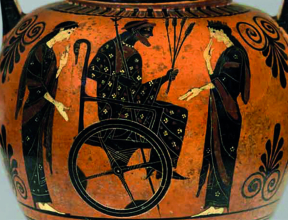
Susie Townsend explores ancient Greece through the use of maps in this innovative and interesting article. The focus here is on diversity within ancient Greek civilisations and the article includes some activities to support learning. There is something for everyone to take from this piece.
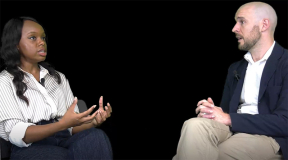
In Episode 4, Dr Montaz Marché (University College London) and Professor Ryan Hanley (University of Exeter), discuss the lives and experience of 18th century Black Britons. In this discussion they look at the lives of both the exceptional and the ordinary, and reflect upon the politics of race and gender...
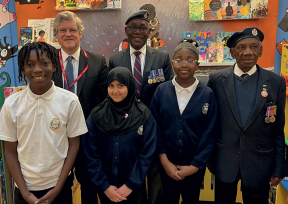
This article is free to everyone. For access to hundreds of other high-quality resources by primary history experts along with free or discounted CPD and membership of a thriving community of teachers and subject leaders, join the Historical Association today Andrew Wrenn shares examples from a fascinating project with which...
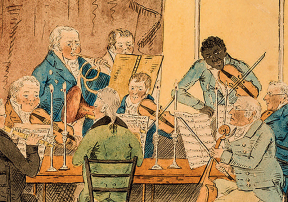
It is commonplace to include significant people when looking at the history of a given locality. The Historical Association has a series of case studies of significant local individuals organised by counties or regions. In this article Tim Lomas builds on that resource by looking at the way such individuals...
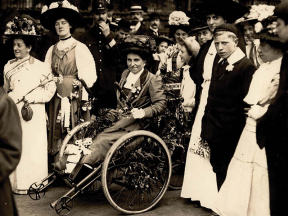
This article is based on a session by Bev Forrest and Mel Jones at the HA Conference in May 2024. The central concern is to support teachers to weave the experiences and lives of disabled people in the past into the primary curriculum. It looks at possible opportunities in EYFS,...
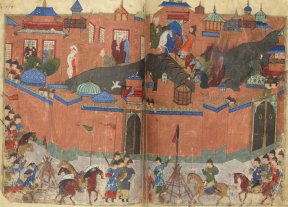
Lucy Hawker demonstrates her school’s approach to teaching early Islam though focusing on its significance and demonstrating how lessons are effectively sequenced to develop subject knowledge and understanding. The article also indicates rich opportunities that this topic provides for links with other subjects...
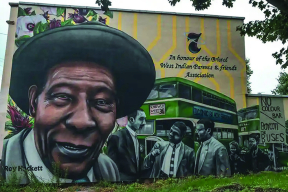
It is sixty years since the Bristol Bus Boycott highlighted race inequalities and discrimination in the workplace. In this article, Stuart Boydell revisits this watershed moment and considers how the Bristol Bus Boycott could be incorporated into the curriculum today. Sixty years ago, Bristol was at the centre of a...
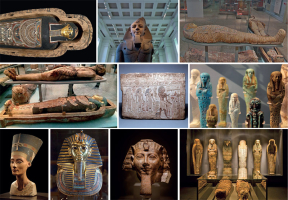
Richard Harris invites us to consider how the teaching of ancient Egypt can be decolonised by considering non-Western perspectives. The article provides a fascinating viewpoint on this popular period of history and shares examples of how this can be explored with children. One of the joys of working in history...
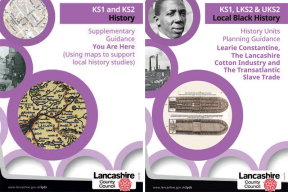
The huge benefits that local archives can bring to primary history are explored by Steven Kenyon. He illustrates this with a case study of Lancashire Archives. The central focus is on ways in which local history can support diversity in the curriculum by providing three examples – one for Key...
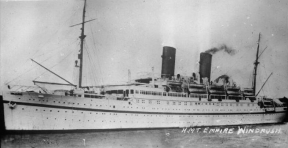
It is 75 years since the ship called the Empire Windrush brought people from the Caribbean to begin a new life in the United Kingdom. Those who also arrived in the years leading up to 1971 are often referred to as ‘the Windrush generation’. Their contribution to Britain socially, culturally...
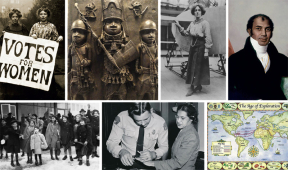
There has been much emphasis on ensuring that we teach a balanced history curriculum which reflects diversity. Teachers often ask the Historical Association where they can get their ideas and find examples of good practice. From the start, the journal Primary History has addressed the many strands of a diverse...

Controversial History formed the focus of the Historical Association’s report, Teaching Emotive and Controversial History 3-19 (TEACH). Published in 2007, it offered teachers invaluable guidance for teaching historical topics that can stir emotion and controversy. However, the authors noted how the nature of the sensitivity can be affected by ‘time,...
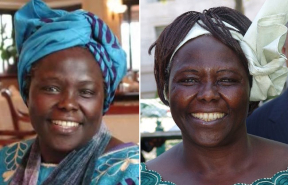
"Instead of a curriculum where race, gender and disability are mainly rooted in victim narratives, include positive representation. Go beyond teaching slavery and the Holocaust or gender narratives of victimhood…Actively use examples and narratives countering this dominance." Bennie Kara, (2021, p.59) The 2014 National Curriculum for history sets out that...
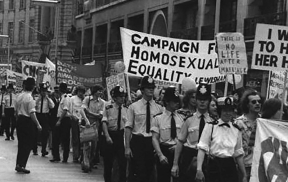
2022 is a special year as it marks the 50th anniversary of the first official UK Pride march which was held in London on 1 July 1972. The Pride movement, and events like the London in Pride march, were inspired and influenced by the Stonewall riots. These were protests that...
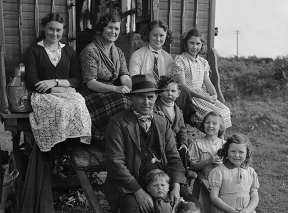
It goes without saying that the events of Black Lives Matter have prompted many leaders and teachers to take a step back and reflect on their curriculum content and how effectively it reflects the diverse story of our islands. However, it is not just Black History that is requiring more...
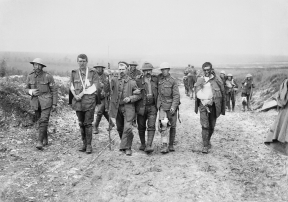
This webinar was presented by Richard Rieser, who is a campaigner and champion for disability rights and the coordinator of UK Disability History Month. His presentation is part of our ongoing work to explore disability history and the arguments and representations of it and ensure that people from disability groups...

In summer 2020 the Historical Association in partnership with the The Royal Historical Society, The Institute of Historical Research, Runnymede Trust and Schools History Project established a steering group to review content and approaches in GCSE and A-Level History examination specifications and in the history curriculum generally. This was in...
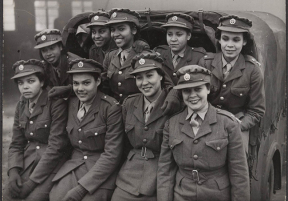
The National Army Museum is a leading authority on the British Army, exploring its role from the British Civil Wars to the present day. Through its collections, the Museum preserves and shares stories of ordinary people with extraordinary responsibilities. The Museum’s Learning team is committed to providing engaging and curriculum-driven...
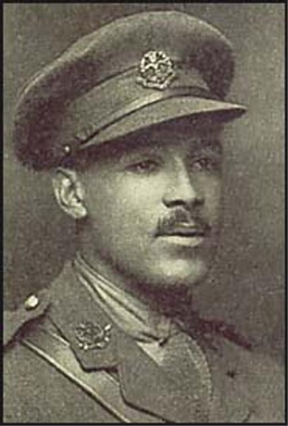
Schemes of work and resource packs Produced by the Northamptonshire Black History Association and originally published in 2008, these packs comprise a teachers' resource book and a schemes of work booklet of 10 activities for teachers to use in the classroom. The resource book contains a description of how to...