
The Anglo-Saxons, Vikings & the Normans
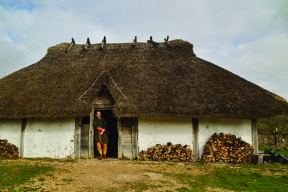
These images help to tell us more about Anglo-Saxon daily life.
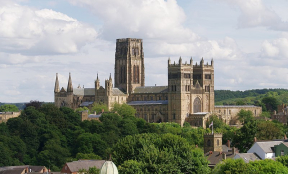
The best thing about Durham Cathedral is how it impresses on every scale and from every viewpoint. As you approach the city by train, it looms over the skyline hugging the River Wear and even dwarfing its imposing neighbour, Durham Castle. When you finally make the steep walk up towards...
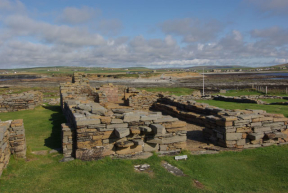
This article outlines how one Year 4 teacher approached the topic of the Vikings. The teaching of The Vikings allows for a range of historical concepts to be explored such as: Chronological understanding – how long did Viking influence last? Where does it appear on the timeline of Britain? What...
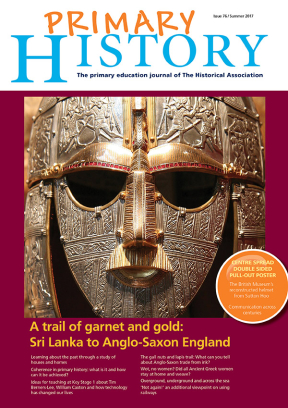
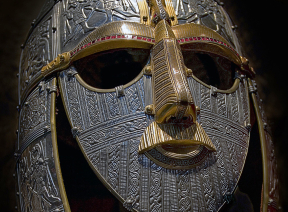
1. Communication Across the Ages; 2. The British Museum's Sutton Hoo Helmet
Sri Lankan garnet in Anglo-Saxon graves? In 2009 news broke of a fabulous hoard of gold and garnet military ornaments unearthed in a Staffordshire field. TV reports mentioned the garnet might have come from Sri Lanka or India, but how could it have got here? I began reading up what...
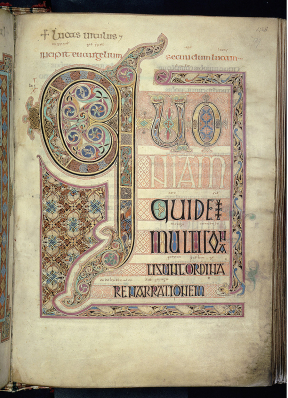
We are used to images of monks copying out texts in a very ornate manner. Books such as the Lindisfarne Gospels still absolutely amaze us with their colour, style and appearance. It must have taken hours and hours to copy out a text like that. But how was it done?...
The Anglo-Saxon era is a diverse period that stretches across just over 650 years. Those we call Anglo-Saxons were not homogenous nor were their experiences. In AD 410 the Roman legions leave and the first Anglo-Saxon raiders appear. These pagan warrior bands would come to terrorise Romano-British settlements until, inevitably,...
In this HA Podcast Series Professor Joanna Story of the University of Leicester looks at the history of the Anglo-Saxons.
An HA Podcasted History featuring Professor David Bates and Professor Nicholas Vincent of the University of East Anglia, Dr Philip Morgan of Keele University, Professor Mark Ormrod of the University of York, Dr James Davis of Queens University Belfast, Professor Michael Hicks of the University of Winchester, Dr Sean Cunningham...
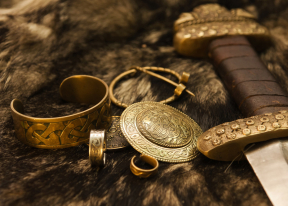
An HA Podcasted History of the Vikings featuring Professor Rosamond McKitterick, Sidney Sussex College, University of Cambridge.
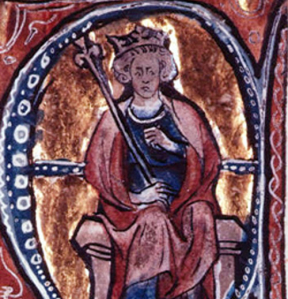
When Queen Victoria died in 1901, the Annual Register remarked that the feeling of forlorn-ness which swept the country had no parallel since the death of King Alfred. The men of the new century were driven to seek a Saxon parallel. So too were men at the beginning of the...
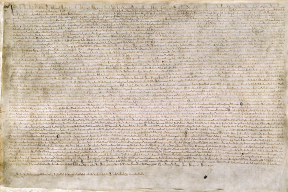
What precedents were there to Magna Carta? Why was the charter originally drawn up and signed in 1215? Why was it reissued during the thirteenth century? Would “ordinary” people have been aware of Magna Carta? How effective was Magna Carta as means to controlling medieval kings? Why was it resurrected...

The Vikings will be familiar territory to many primary teachers. For many, therefore, this section of the history curriculum should cause fewer headaches than others. This does not mean, however, that it is all straightforward. This article contains a number of elements that teachers might welcome including a timeline of...
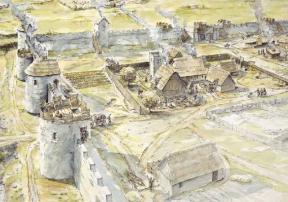
One way to use this image would be to focus on continuity and change. Portchester's history is that of a settlement which has passed through the hands of the Romans, Saxons, Normans and onwards. As a result, the appearance and purpose of the settlement has changed over time. One way...
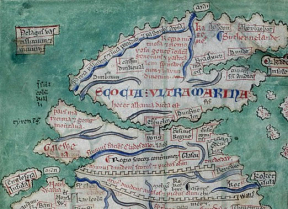
Anglo-Saxons have been a part of the primary national curriculum from the onset so they may not be as unfamiliar to teachers as some themes. Many teachers also report that pupils enjoy studying them so there is clearly much in their favour. That does not mean, however, that all is...

This image is a reconstruction, or interpretation, by Peter Dunn, an artist, of what Sandbach Crosses might have looked like in the ninth century. They are one of the few remaining Anglo-Saxon stone crosses in the country. They stand in the market place in Sandbach, Cheshire. You can find a...
Place-names, such as house or school names, are infinite in number and all around us. Every place-name may convey a message about the place. Often place-names record and celebrate local and national people, events and incidents, define what a place looked like in the past and how we used to...
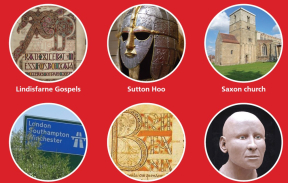
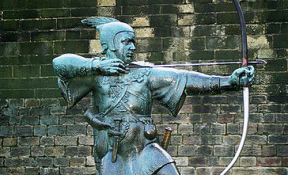
‘...if children are to ever fully appreciate history the development of historical time has to be central to our teaching methodologies' This lesson aims to provide an overview of this period, developing pupils' sense of chronology and their understanding of cause and consequence. The context for these ideas comes from...
The purpose of this unit is to provide for teachers' subject knowledge on the Vikings. This reflects a need for up-to-date and scholarly historical knowledge, but this also demonstrates that it is essential to see the Vikings as having diversified experiences and impacts over time in a variety of geographical...