
The Middle East
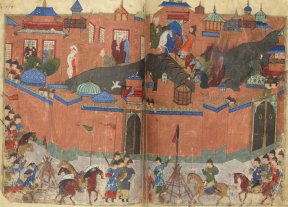
Lucy Hawker demonstrates her school’s approach to teaching early Islam though focusing on its significance and demonstrating how lessons are effectively sequenced to develop subject knowledge and understanding. The article also indicates rich opportunities that this topic provides for links with other subjects...
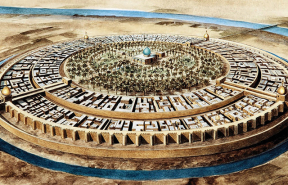
Baghdad of the Abbasid Caliphate was an architectural marvel, a round city protected by huge walls and surrounded by an intricate canal system. At the centre lay the caliph’s palace with a cupola of green, and the Great Mosque. The city was a series of concentric circles. The surrounding walls...
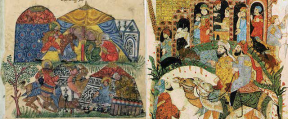
The Abbasid Caliphate stretched from North Africa across to Afghanistan and the North West Frontier. Within the caliphate there were movements of people, goods and ideas. The golden period of this early Islamic caliphate was around 900 AD. As the caliphs were building a major trading empire across the Middle...
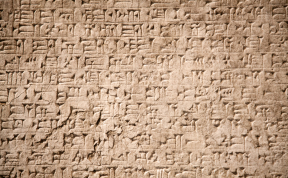
Ancient Sumer is often called 'the Cradle of Civilisation'. The Ancient Greeks called it Mesopotamia - the land between two rivers. It is where cities first developed, agriculture began and writing first appeared. One eminent historian records 39 'firsts' for Sumer! Most of this was lost until the 20th century,...
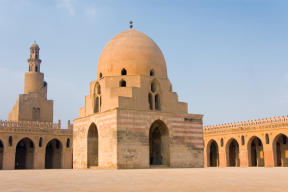
Children can be introduced to the idea that people from other civilisations have contributed to many ideas that impact on us still. They can learn about some of the differences in way of life between citizens of Baghdad and London c. AD 900. Links can be made with other cultures...
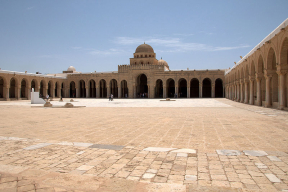
An HA Podcasted History of the Rise of an Islamic Civilisation featuring Dr Caroline Goodson of Birkbeck, University of London.
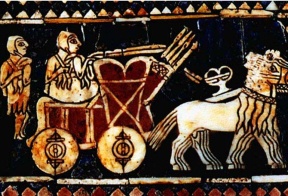
For many teachers and children alike, Ancient Sumer will be completely new. Although Sumer has always been an option for teaching about Early Civilisations, the fame of Ancient Egypt, as well as being a tried-and-tested topic, has meant that Sumer has perhaps been overlooked. There is little danger of failing...
The Primary National Curriculum pinpoints Early Islamic Civilisation as Baghdad c. AD 900 - yet it was so much more. For approximately a thousand years after AD 700 there was an extraordinary amount of activity that radiated out from Baghdad and along a glittering crescent through North Africa and into...
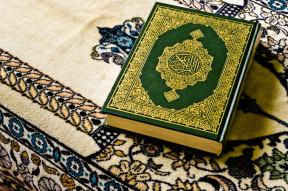
A non-European society that provides contrasts with British history - one study. chosen from: early Islamic civilization, including a study of Baghdad c. AD 900; Mayan civilization c. AD 900; Benin (West Africa) c. AD 900-1300. That's quite clear then - there's a choice between early Islam, Central America or...
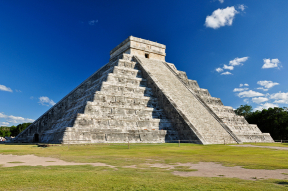
‘A non-European society that provides contrasts with British history - one study chosen from: early Islamic civilization, including a study of Baghdad c. AD 900; Mayan civilization c. AD 900; Benin (West Africa) c. AD 900-1300.' That's quite clear then - there's a choice between early Islam, Central America or...
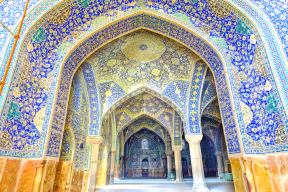
In this set of podcasts Emeritus Professor Gerald Hawting of SOAS, University of London provides an introduction to the Umayyad (661-750) and Abbasid (750-1258) Caliphates.
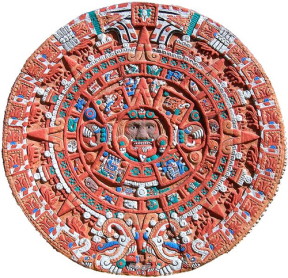
Please note: this article pre-dates the 2014 National Curriculum and some content may be outdated. Even an inclusive national history curriculum can make Britain (and Europe) appear as the lynchpin of world history. Without a coherent structure for global history, young people remain unaware that continents beyond Europe have histories...

Sometimes particular problems can lead to unexpected solutions. In this case, Sally Burnham decided to solve a problem that she had identified among her Year 12 students by changing the way in which she teaches Year 7. Her Year 12s were finding it difficult to set appropriate questions for their...