The Victorians

A popular unit of study in Key Stage 2 has in the past been the Victorians. It is possible to continue to study the Victorians through either a local study or through a unit of study beyond 1066, although the emphasis now shifts to the Victorians representing a turning point. Given that so much reform and industrial change took place during this period, turning points are not difficult to find. In this section, you will find articles and resources to help you to plan to teach the Victorian period as a turning point. 

Sort by: Date (Newest first) | Title A-Z
Show: All | Articles | Podcasts | Multipage Articles
  • Teaching Gypsy, Roma and Traveller history

    Article

    Gypsy, Roma and Traveller people are the largest minority ethnic group in some communities (and therefore in some schools) in the UK. Yet the past of Gypsy, Roma, Traveller people may rarely be part of history lessons. The result is that pupils of Gypsy, Roma and Traveller heritage may not...

    Click to view
  • Teaching the British Empire in primary history

    Article

    The height of the BBC Proms season is its last night in the Royal Albert Hall. It features traditional patriotic songs such as Rule Britannia and Land of Hope and Glory. Cheerful crowds wave union flags as the magnificent music of Elgar and others swells to a crescendo. Contrast this...

    Click to view
  • The British Empire on trial

    Article

    In the light of present-day concerns about the place, in a modern world, of statues commemorating figures whose roles in history are of debatable merit, Dr Gregory Gifford puts the British Empire on trial, presenting a balanced case both for and against. In June 2020 when the statue of slave-trader Edward Colston...

    Click to view
  • The Great Exhibition

    Article

    ‘Of all the decades to be young in, a wise man would choose the 1850s’ concludes G.M. Young in his Portrait of An Age. His choice is understandable. Historians and contemporaries have long viewed the middle years of the century as a ‘plateau of peace and prosperity’, an ‘age of...

    Click to view
  • The Great Exhibition of 1851: teaching a significant event at Key Stage 1

    Article

    The Great Exhibition allows pupils to consider the impact of a particular event. The exhibition provides a means to look at Britain’s wider role in the world and social and technical developments such as the impact of the railways. Pupils can explore a variety of sources, consider the substantive concepts...

    Click to view
  • The Poor Law in Nineteenth-century England and Wales

    Article

    Variety rather than uniformity characterised the administration of poor relief in England and Wales, and at no period was this more apparent than in the decades before the national reform of the poor law in 1834. Unprecedented economic and social changes produced severe problems for those responsible for social welfare,...

    Click to view
  • The Stockton and Darlington Railway (S&DR)

    Article

    This article is free to everyone. For access to hundreds of other high-quality resources by primary history experts along with free or discounted CPD and membership of a thriving community of teachers and subject leaders, join the Historical Association today In a celebration of the 200-year anniversary of the Stockton...

    Click to view
  • The Victorian Age

    Article

    This Classic Pamphlet was published in 1937 (the centenary of the accession of Queen Victoria, who succeeded to the throne on June 20, 1837). Synopsis of contents: 1. Is the Victorian Age a distinct 'period' of history? Landmarks establishing its beginning: the Reform Bill, railways, other inventions, new leaders in...

    Click to view
  • The Victorians

    Multipage Article

    The Topic Pack gives you a brief summary of the Victorians.

    Click to view
  • The back cover image: Malachite Urn

    Article

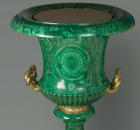
    This large green urn was given as a gift to Queen Victoria in 1839 by Emperor Nicholas I, to thank her for the way in which his son Alexander had been welcomed in England the previous year. It was placed in the Grand Reception Room of Windsor Castle, and has...

    Click to view
  • Three first-class ladies – teaching significant individuals in Key Stage 1

    Article

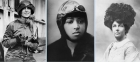
    The turn of the 20th century was in many ways a golden age of aviation. In 1903 the Wright brothers conquered heavier-than-air flight. From that time onward there were many other visionaries who wanted to be part of the dream of flying. The topic of early aviation history is an...

    Click to view
  • Using cemeteries as a local history resource

    Article

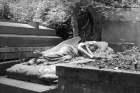
    Why visit a cemetery as part of the history curriculum? Local studies now feature prominently in the primary history curriculum for both key stages. This development challenges teachers to find easilyaccessible, inexpensive and relevant resources on their doorstep. A rich resource which has traditionally been overlooked is the local churchyard...

    Click to view
  • Using children’s illustrators as a focus for learning about ‘Past and Present’ in EYFS

    Article

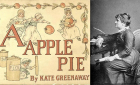
    The EYFS framework places a key emphasis on the value of giving children rich encounters with stories and picture books. With World Book Day just around the corner, this article suggests how a focus on children’s illustrators could be used to develop children’s understanding of ‘past and present’...

    Click to view
  • Using different sources to bring a topic to life: The Rebecca Riots

    Article

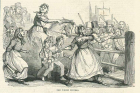
    For primary school pupils a key aim of the National Curriculum for history is to understand the method of historical enquiry. Working with original sources is of course central to the whole process and provides a great way to inspire pupils’ experience of the subject. Young pupils, once they have...

    Click to view
  • Using the back cover image: Exploring the collections of Victorian naturalists

    Article

    Many museums around the country house natural history collections that offer children the opportunity to engage with a wide variety of species from around the world. Using the collections of Victorian explorers and naturalists offers children a historical perspective with a cross-curricular approach which has a great appeal. Yet for...

    Click to view
  • Using the back cover image: Moustache cup

    Article

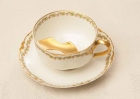
    The moustache cup I purchased on ebay is one of the most popular artefacts I use with students in a good game of ‘guess the object’. It has a wonderful quality of being at the same time familiar yet strange. Despite telling the students not to start with the question...

    Click to view
  • Victorian Britain - Lessons

    Article

    Please note: these free resources pre-date the 2014 National Curriculum. You could start the Victorians with a story. See the Victorian chimney sweep short lesson exemplar and the Upstairs Downstairs story in the History section of the Urban Spaces material. Lessons and short lesson exemplars available on this site: Victorian Britain: short...

    Click to view
  • Victorian Britain and the Victorian World

    Multipage Article

    This E-CPD unit has a number of possible focuses within the broader topic of Victorian Britain and the wider Victorian world.  This follows a pattern that is strong within the structures of the School History Project.  Each sub-topic needs to mirror what is best in history education at primary level, including...

    Click to view
  • Victorian Britain: a brief history

    Article

    Victorian era | Questions | Industrial revolution | Social reforms | Empire | Teaching the Victorians | Citizenship | Victorian achievements | Key concepts < This resource is free for everyone For access to hundreds of other high-quality resources by primary history experts along with free or discounted CPD and...

    Click to view
  • Victorian Britain: short lessons and exemplars

    Multipage Article

    Please note: these resources pre-date the current National Curriculum and some content may be outdated. A series of lessons, exemplars and guides to help you teach your students about Victorian Britain.

    Click to view