
Classroom Resources

In the children’s picture book Wilfrid Gordon McDonald Partridge, Wilfrid is a small boy who meets Miss Nancy, an old lady who has lost her memory. Wilfrid wants to help, and so he carefully fills a basket with special objects and takes them to her. He places a medal in...
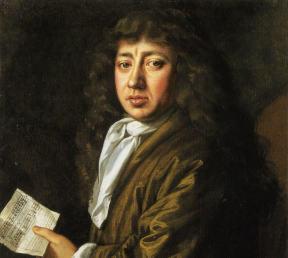
Teaching about significant individuals at Key Stage 1. Workshop by Professor Penelope Hartnett, University of the West of England The history programme of study for Key Stage 1 requires pupils to be taught about: The lives of significant individuals in the past who have contributed to national and international achievements,...

Learning in the Early Years through Local People and Places: developing historical concepts in the Early Years Foundation Stage Using the local environment as a starting point for historical learning in EYFS not only helps young children engage and make learning meaningful and relevant, but also helps them develop a...
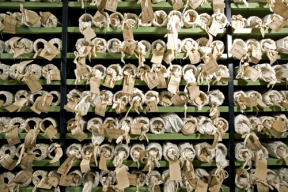
Imagine a place where your pupils become detectives working on mysteries from the past such as the tale of Thomas Sargeant, a 15-year-old factory worker who died in a chemical works in 1898. Your local archive is bursting with stories about real people like this which can give children an...
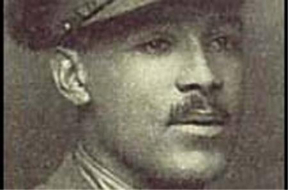
Events which encapsulate family, community, national and global history provide rich opportunities for engaging children. Some of these draw on positive memories associated with past events: the coronation of Queen Elizabeth II, how people responded to the first flight to the moon, the Millennium celebrations. Yet it is perhaps gruelling...
Using ‘Development Matters' to plan learning for history in the Foundation stage You won't find the term history in the Early Years curriculum framework at all. That being so, it can be difficult to know how best to support our Nursery and Reception colleagues when developing historical understanding within the...
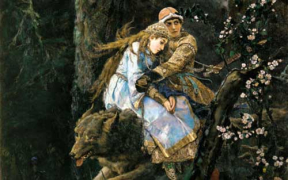
Please note: this article was written before the 2014 National Curriculum and some content and references may no longer be relevant. During the Early Years and Foundation Stage children should listen to stories, ask how and why and talk about the past (DfE 2012). Young children are comfortable with stories....

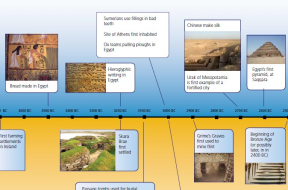
Chronology: Developing a coherent knowledge and understanding of Britain's past and of the wider world First, this article considers the reasons why it is essential for children to develop a chronological framework. Next it considers ways in which this framework is necessary for the development of the time concepts set...
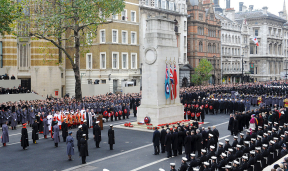
War Memorials Trust (WMT) is the charity that works for the protection and conservation of war memorials in the UK. It defines a war memorial as ‘any physical object created, erected or installed to commemorate those involved in or affected by a conflict or war' (WMT 2009, ‘Definition of a...
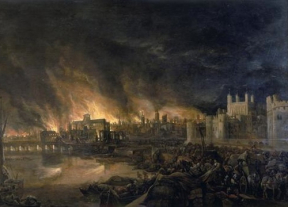
The Great Fire of London is a favourite National Curriculum teaching topic. This paper draws on the latest resources and teaching ideas to suggest how you can meet both the NC history requirements and the wider ones of the National Curriculum, particularly in integrated programmes that include teaching about the...
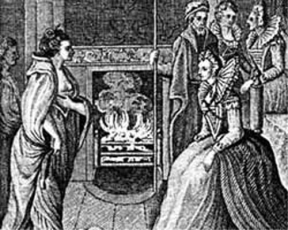
"Why are you so angry Grace?" Teaching and learning about Grace O'Malley as a significant woman at Key Stage 1 Grace O'Malley was an Irish queen in the Tudor period and her story provides insights about life in Ireland at the time of the Elizabethan conquests. Grace, also known as...

‘A History of the World in 100 Objects' was the most creative, imaginative and dynamic development in primary History Education for thirty years. It ties in perfectly with and supports the government's draft NC for History...
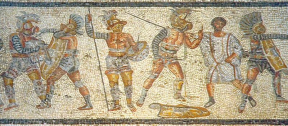
Please note: this article pre-dates the 2014 National Curriculum. Introduction: The teaching potential of film Films about historical events seem like the nearest thing we can give our pupils to a time machine. In commercial film, the physical appearance of the past has often been carefully researched, thus a snippet...
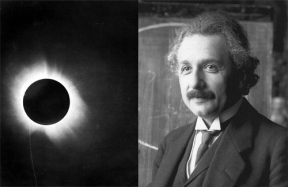
Introduction A great deal has been written recently defining what is meant by creativity in primary education. And much has been written urging us to ‘teach creatively'. Yet there had been no exploration of what teaching creatively means in terms of teaching history until a group of colleagues and I...
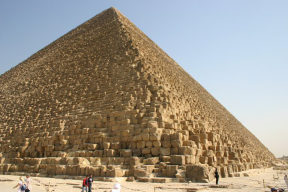
Ideally when teaching history, teachers will look to deliver projects that will engage and motivate, hopefully making the hard work of being creative stimulating and rewarding, based upon questioning, enquiry, investigation of sources and reaching conclusions grounded in the evidence.Ancient Egypt is one of those history topics which, because it...

Please note: this article pre-dates the 2014 National Curriculum. Developments in information technology continue at an extraordinary pace. Many young children will have little or no idea of what it was like to live in a world without mobile phones, computers and the Internet. Most children will regularly make use...

Please note: this article pre-dates the 2014 National Curriculum. Three things are important 1.Don't fall for the hype You are not a bad teacher if you are not using a lot of technology in history or any other area! Research evidence does not support many of the claims made about...
Please note: this article pre-dates the 2014 National Curriculum. The interactive whiteboard [smartboard] has opened a pathway to explore sources and develop historical interest for children of all ages. It can be used in varied ways that allow a teacher to customise activities to match their intended outcomes. Support for...
Please note: this article pre-dates the 2014 National Curriculum. Introduction: Research into chronological understanding Chronological understanding is both one of history's most important disciplinary organising concepts (Lee and Shemilt: 2004) required for developing a full understanding of history, and certainly one of the most researched, though often with a broader...