
Classroom Resources

Please note: this article pre-dates the 2014 National Curriculum. The opening ceremony of the London 2012 Olympic games celebrated change whilst demonstrating the challenges revolutions have on the world. From green pastures to belching chimneystacks, from post-war Britain to the World Wide Internet and text messaging, the way society interacts...
Please note: this article pre-dates the 2014 National Curriculum. Primary History's editorial team set me the challenge of seeing how useful ICT would be in my teaching. The challenge was timely, as I recently inherited a Year Six History class with its unit of work "Life in Britain since the...
Please note: this article pre-dates the 2014 National Curriculum. The ICT revolution A paper register, a pink-lined A4 mark book and a written school log book are surely historical artefacts? The transition from paper to digital technology continues, changing the world of the classroom teacher whose working life like mine,...

Please note: this article pre-dates the 2014 National Curriculum. [THINK BUBBLE, has burst, r.i.p... Diogenes, a curmudgeonly Ancient Greek cynic, has taken its place. The original Grumpy Old Man Diogenes typically looks back to a mythical golden age] Introduction Unfortunately I'm old enough to remember a time when primary school...
Please note: this article pre-dates the 2014 National Curriculum and some content may be outdated. I chose Horrible Histories for this exploration of children's understanding of chronology because I thought it would be fun - and I approve of the Horrible Histories. They use sources, question sources, provide alternative interpretations...
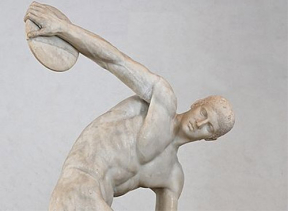
Please note: this article pre-dates the 2014 National Curriculum and some content may be outdated. Three curricular editions of Primary History, PH 50, Autumn 2008 , PH 53, Autumn 2009 and PH 57, Spring 2011 are directly relevant to teaching the Olympics. PH 50, Autumn 2008 History Education in the...
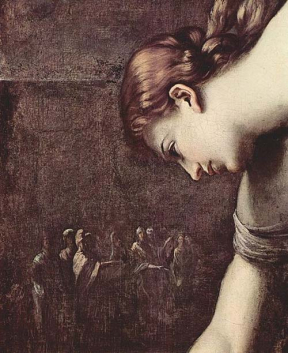
Please note: this article pre-dates the 2014 National Curriculum and some content may be outdated. Time and change in stories Everyone loves a story and stories have always been at the heart of early years education. Children can relate their own experiences of time to stories in picture books about...
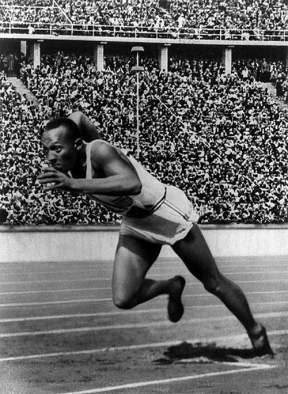
Please note: this article pre-dates the 2014 National Curriculum and some content may be outdated. Allocated the task of researching and presenting ideas for teaching about significant Olympians, I thought: ‘Brilliant, this is the easy one'. How wrong can one be! I expected to be able to access a plethora...
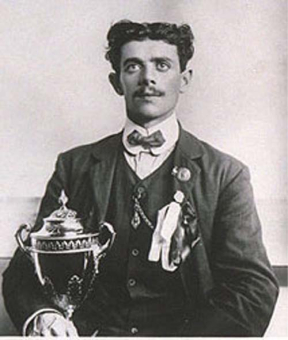
Please note: this article pre-dates the 2014 National Curriculum and some content may be outdated. The Italian confectioner Dorando Pietri is one of the most famous figures from the 1908 Olympics - famous for not winning. His story raises issues of sportsmanship suitable for class discussion. There are detailed accounts...
Please note: this article pre-dates the 2014 National Curriculum and some content may be outdated. History flows like a river, sometimes quiet and unobtrusive, sometimes a raging torrent with wide-ranging effects on the world around us. It is punctuated by momentous events and significant individuals, who impact on its direction...

IntroductionI was talking about ‘Doing History' with historical artefacts and objects with a young teacher when she closed the discussion with the statement ‘It's alright for you, you're old, your house is full of old things - how do I get them?' Alas - I had to agree with her,...
Please note: this article pre-dates the 2014 National Curriculum and some content may be outdated. A research project was carried out with Maltese primary school children at San Andrea Infant and Middle school to see if learning strategies could accelerate pupils' cognitive development. The research involved a range of historical...
Please note: this article pre-dates the 2014 National Curriculum and some content may be outdated. In the autumn of 2009 I saw some of the Anglo-Saxon Staffordshire Hoard on display at Birmingham Museum and Art Gallery, and stood in awe at the skills of the craftsmen. Reminded so vividly of...
Please note: this article pre-dates the 2014 National Curriculum and some content may be outdated. This article will argue that although history can seem a ‘hard' discipline for young children, it can be made accessible and exciting through telling stories about objects. The article does not contain advice about obtaining...
Please note: this article pre-dates the 2014 National Curriculum and some content and links may be outdated. Editorial note: This article reveals the power of the Internet in helping us all, adults and children, to bring portraits like Drake's to life. So, as you read, follow the links.
Editorial note: This article introduces teachers to ss Great Britain as an artefactual teaching resource. It links closely to Teachers TV programmes, see page 30, and should be read in conjunction with them.
Please note: this article pre-dates the 2014 National Curriculum and some content and links may be outdated. The class had composed its Anglo-Saxon funeral poem for Raedwald, an Anglo-Saxon king, https://en.wikipedia.org/wiki/R%C3%A6dwald_of_East_Anglia, the high king or Bretwalda of all seven Anglo-Saxon kingdoms in the early seventh century as well as being...
IntroductionIn this short paper you will discover some of the tools for ‘doing' local history. They are based on where I live: you can get similar types of sources from where you live, work or teach. Your main source will be a local library or record office, but there is...
Please note: this article pre-dates the 2014 National Curriculum and some content may be outdated. Before the 1960s British Rail's spider-web network of railway lines reached every town and thousands of villages. Where you live would have been within a thirty minute journey from a station; scroll down to look...
Editorial comment: Barbara writes from the viewpoint of a classroom teacher facing the challenge of ‘Doing local history' for the first time.