Individuals & Events

Of course, individuals and events permeate history. However, the Key Stage 1 units of study particularly require the study of significant individuals and events. What makes an individual significant? What might be considered a significant event? The emphasis is upon a comparison of individuals and events that can be used to make links across time, themes and geographical space. In this section you will find resources and articles to help you to plan innovative units of work based around individuals and events that can either be used to reveal a local, national and international picture, or that can be used to illustrate themes over time or geographical space.

Sort by: Date (Newest first) | Title A-Z
Show: All | Articles | Podcasts | Multipage Articles
  • Ukraine, children and schools

    Article

    Children of different ages and maturity will have different levels of understanding and capacity for processing the information unfolding in Ukraine. Children under the age of five may have a very limited understanding of the conflict in Ukraine. If your young child asks you a question about what is happening, you...

    Click to view
  • Teaching about the Russian invasion of Ukraine and events happening there

    Article

    The events of the last few days appear to have come out of nowhere to many people, especially children. While tensions have existed in the region for some time Russia’s decision to attack Ukraine was without provocation. To have war return in such a way to the edges of Europe...

    Click to view
  • Scheme of work: Queen Elizabeth II

    Article

    Prior to completing this unit of work, it would be useful for the children to have started to develop an understanding of the substantive concepts of monarchy and royalty through their prior learning. Direct links can be made between studies of specific monarchs and their roles, as well as stories...

    Click to view
  • How can we make effective use of the census in the primary history classroom?

    Article

    If there is a list of sources that teachers are likely to be familiar with, it is almost certain that the census will be included. In part this is because this is something that we all participate directly in anyway so it has a personal resonance. It can hold a...

    Click to view
  • Women and space: reaching for the stars

    Article

    The exploration of the heavens has drawn mankind since the dawn of time. Vast monuments reached to the stars marked with astrological key points. Astronomers sought to understand the movement of the universe. Since the twentieth century however this investigation has moved into space itself, pioneered by restless and inquisitive souls...

    Click to view
  • Pull-out posters: Primary History 88 – Diversity

    Article

    There has been much emphasis on ensuring that we teach a balanced history curriculum that reflects diversity. Teachers often ask the Historical Association where they can get their ideas and find examples of good practice. From the start, this journal has addressed the many strands of a diverse primary history...

    Click to view
  • Arthur Wharton: the world’s first professional black footballer

    Article

    Schools are now looking to extend their study of significant individuals away from many of the conventional ones.  This article looks at a lesser known individual, Arthur Wharton, which could make a good choice for teachers wanting to tap into pupils’ interest.  Arthur Wharton was the world’s first black professional...

    Click to view
  • Anniversary: Festival of Britain 1951

    Article

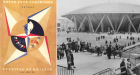
    The Festival of Britain was held 70 years ago. For many this provided a boost for the country after the deprivations of World War II and the economic struggles afterwards. It was designed to be educational and was held 100 years after the Great Exhibition. It was designed to show pride...

    Click to view
  • Sources for the Great Fire of London and its context

    Article

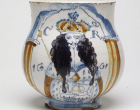
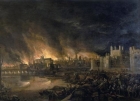
    Nina Sprigge reveals two interesting sources that can supplement teaching the Fire of London.   Fire of London: fundraising for refugees The receipt on the back cover provides evidence of national fundraising in 1666. It is touching that people from Cowfold, a little village outside London, cared enough to want to...

    Click to view
  • Recorded webinar: The Great Fire of London

    Article

    Capture the sights and sounds of the insanitary and overcrowded capital city of Stuart England in 1666 with Andrew Wrenn. Compare how city fires were fought in London then and today, learn why the Great Fire spread so quickly from Pudding Lane, hear how Samuel Pepys the diarist witnessed events...

    Click to view
  • Belmont’s evacuee children: a local history project

    Article

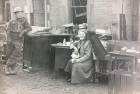
    Teaching about World War II, particularly the home front, continues to be popular in primary schools, despite the government deciding not to include it as a compulsory subject in the new National Curriculum introduced in 2014. Many primary schools still choose to organise an evacuee experience of some kind for pupils...

    Click to view
  • Take one day: undertaking an in-depth local enquiry

    Article

    Local history units of study provide teachers with valuable opportunities, but these can also seem daunting. Potential challenges for teachers include the perceived overwhelming scope of the topic, difficulties in developing subject knowledge and knowing where to find resources. However, none of these is insurmountable, if teachers identify a clear learning...

    Click to view
  • One of my favourite history places: Eyam

    Article

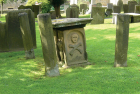
    Imagine……… walking down the street and crossing the road to avoid having to talk to a friend……. declining a friend’s invitation to enter her house…... feeling angry and trapped that you cannot travel away from your home….  Are such feelings familiar to you during the coronavirus crisis?  Maybe they are – but I am...

    Click to view
  • Scheme of work: Journeys - the story of migration to Britain

    Article

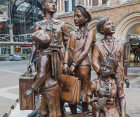
    This unit is designed as a thematic course looking at the big picture of migration to Britain over time. There are many ways that the course can be adapted to include different content which may be more relevant for the local community around your school. Most of the content described in...

    Click to view
  • Scheme of Work: Significant Individuals at Key Stage 1: Ibn Battuta

    Article

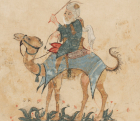
    The history programme of study for Key Stage 1 requires pupils to be taught about: 'The lives of significant individuals in the past who have contributed to national and international achievements, some of whom should be used to compare aspects of life in different periods.' In this unit, children are...

    Click to view
  • Anniversaries: The Coventry Blitz and the Grave of the Unknown Soldier

    Article

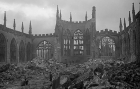
    This Autumn we remember two events related to the impact of war and how people have reacted to them.  The first anniversary remembers the Nazi devastation of Coventry 80 years ago on 14 November 1940 and the second event relates to the body of the ‘Unknown warrior’ who was laid...

    Click to view
  • One of my favourite history places: Studland Village

    Article

    Studland village is situated in the Isle of Purbeck in Dorset. Purbeck is not an island in the normal sense of being surrounded by sea. However, it is surrounded by large hills to its north and has a coastline to its south, both of which cut it off from the...

    Click to view
  • Storytelling the past

    Article

    This article will demonstrate how to engage children through storytelling and how it can be used to develop their critical understanding of the past. Why story? Despite their common derivation, the words ‘history’ and ‘story’ suggest very different kinds of knowledge, the former carrying overtones of detached understanding of the...

    Click to view
  • The back cover image: Malachite Urn

    Article

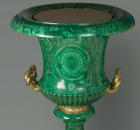
    This large green urn was given as a gift to Queen Victoria in 1839 by Emperor Nicholas I, to thank her for the way in which his son Alexander had been welcomed in England the previous year. It was placed in the Grand Reception Room of Windsor Castle, and has...

    Click to view
  • Local significant individuals

    Multipage Article

    The National Curriculum specifies a local study both at Key Stages 1 and 2. Basing your local study around an individual is a great way to bring the heritage of your locality to life. Many of these individuals are part of larger national events and changes and seeing these changes at...

    Click to view