
Classroom Resources

Please note: this article pre-dates the 2014 National Curriculum. [THINK BUBBLE, has burst, r.i.p... Diogenes, a curmudgeonly Ancient Greek cynic, has taken its place. The original Grumpy Old Man Diogenes typically looks back to a mythical golden age] Introduction Unfortunately I'm old enough to remember a time when primary school...

Please note: this article pre-dates the current National Curriculum and some content may be outdated. Vivid pictures from and of the past, its material culture, can be stimulating and effective tools for teaching chronology. Their use is not, however, straightforward. Children bring into school mental images and stereotypes about the...
Please note: this article pre-dates the 2014 National Curriculum and some content may be outdated. I chose Horrible Histories for this exploration of children's understanding of chronology because I thought it would be fun - and I approve of the Horrible Histories. They use sources, question sources, provide alternative interpretations...
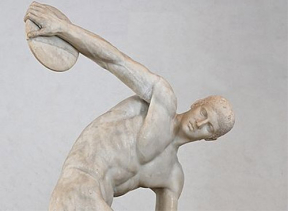
Please note: this article pre-dates the 2014 National Curriculum and some content may be outdated. Three curricular editions of Primary History, PH 50, Autumn 2008 , PH 53, Autumn 2009 and PH 57, Spring 2011 are directly relevant to teaching the Olympics. PH 50, Autumn 2008 History Education in the...
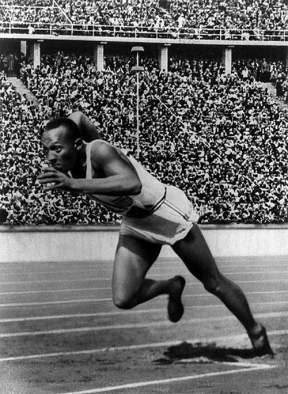
Please note: this article pre-dates the 2014 National Curriculum and some content may be outdated. Allocated the task of researching and presenting ideas for teaching about significant Olympians, I thought: ‘Brilliant, this is the easy one'. How wrong can one be! I expected to be able to access a plethora...
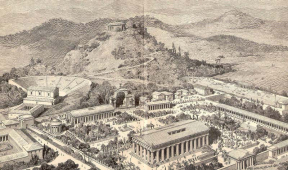
Please note: this article pre-dates the 2014 National Curriculum and some content may be outdated. In a 10-week unit on Ancient Greece, we gave the fourth lesson over to the ancient Olympic Games. The class was a delight: 32 enthusiastic Year 6 children in an urban county primary school. We...

Please note: this article pre-dates the 2014 National Curriculum and some content may be outdated. First let me say that I did not research the materials used or plan this lesson. For this I must acknowledge, with thanks, that this is the work of my colleague, Mike Huggins, and the...

IntroductionI was talking about ‘Doing History' with historical artefacts and objects with a young teacher when she closed the discussion with the statement ‘It's alright for you, you're old, your house is full of old things - how do I get them?' Alas - I had to agree with her,...
Please note: this article pre-dates the 2014 National Curriculum and some content may be outdated. A research project was carried out with Maltese primary school children at San Andrea Infant and Middle school to see if learning strategies could accelerate pupils' cognitive development. The research involved a range of historical...
Please note: this article pre-dates the 2014 National Curriculum and some content may be outdated. This article will argue that although history can seem a ‘hard' discipline for young children, it can be made accessible and exciting through telling stories about objects. The article does not contain advice about obtaining...
Please note: this article pre-dates the 2014 National Curriculum and some content and links may be outdated. Editorial note: This article reveals the power of the Internet in helping us all, adults and children, to bring portraits like Drake's to life. So, as you read, follow the links.
Editorial note: This article introduces teachers to ss Great Britain as an artefactual teaching resource. It links closely to Teachers TV programmes, see page 30, and should be read in conjunction with them.
Please note: this article pre-dates the 2014 National Curriculum and some content and links may be outdated. The class had composed its Anglo-Saxon funeral poem for Raedwald, an Anglo-Saxon king, https://en.wikipedia.org/wiki/R%C3%A6dwald_of_East_Anglia, the high king or Bretwalda of all seven Anglo-Saxon kingdoms in the early seventh century as well as being...
IntroductionIn this short paper you will discover some of the tools for ‘doing' local history. They are based on where I live: you can get similar types of sources from where you live, work or teach. Your main source will be a local library or record office, but there is...
Please note: this article pre-dates the 2014 National Curriculum and some content may be outdated. Before the 1960s British Rail's spider-web network of railway lines reached every town and thousands of villages. Where you live would have been within a thirty minute journey from a station; scroll down to look...
Editorial comment: Barbara writes from the viewpoint of a classroom teacher facing the challenge of ‘Doing local history' for the first time.
Please note: this article pre-dates the 2014 National Curriculum and some content may be outdated. Editorial note: John Fines produced two case studies of Local History for the Nuffield Primary History Project. One on them is published here for the first time.
Please note: this article pre-dates the 2014 National Curriculum and some content may be outdated. ‘Some primary schools are like the High Street in many of our towns. I can predict what I will see before I go through the door. What I want to see is something that gives...
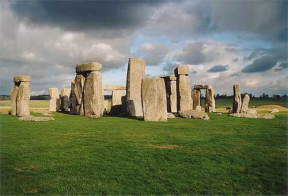
Please note: this article pre-dates the 2014 National Curriculum and some content may be outdated. An article in the Sunday Times newspaper on 7 December reported that Britain is to stop making nominations to UNESCO (United Nations Educational, Scientific and Cultural Organisation) for heritage sites to be granted World Heritage...
The Ephemera Society is a non-profit body furthering the collection, conservation, study and educational uses of ephemera. The term embraces a wide range of antique paper - Victorian and earlier billheads, advertising, music covers, ball invitations, dance cards, et al - in short, all the printed and handwritten incidentals of...