
General
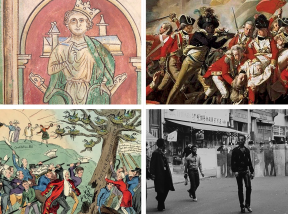
Have you ever felt that teaching significance at Key Stage 4 is hard with a limited cast of characters? Do students ask questions that you don’t have the resources to answer? Are you stuck for sources that push the standard narratives of key topics? These four workshops will fix that:...
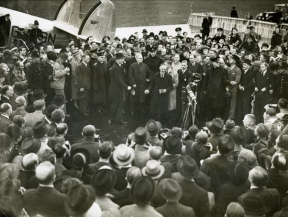
This project has been created on the initiative of Professor Julie. V. Gottlieb, Dept. of History, University of Sheffield. British political history, political conflict, appeasement and the Munich Crisis (1938) itself is the focus of her research and publications. Rather than approach these topics from ‘traditional’, elite and history from...

Move Me On is designed to build critical, informed debate about the character of teacher training, teacher education and professional development. It is also designed to offer practical help to all involved in training new history teachers. Each issue presents a situation in initial teacher education/training with an emphasis upon...
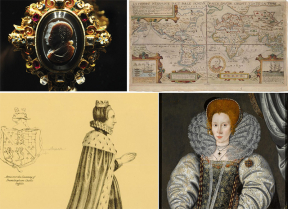
The events of recent years led many to reflect upon the diversity of representation of their history curricula, what they teach and how they teach it. In the autumn of 2020 the Historical Association convened a diversity steering group of key stakeholders in history education. Over the course of the...
‘Who hates PEE paragraphs?’ A collective groan resounds around my classroom. ‘Today, Year 10 we are going to master PEE paragraphs, and make our written historical explanations explode.’ I always remember one deflated Year 10 student who said, ‘Miss, I just don’t get PEE paragraphs. I couldn’t do them in...
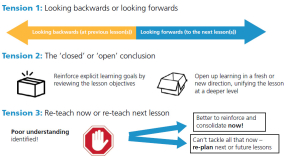
Reflecting on her efforts to improve her trainee’s lesson conclusions, Paula Worth decided to brush up her own. A journey of self-evaluation led her to revisit the Cambridge Conclusions Project. Through its lens, she judged her own lesson conclusions wanting. Worth examines the way in which the final episode of...
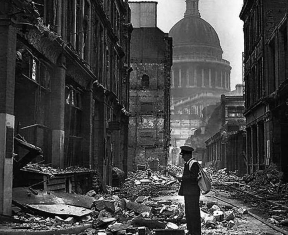
Frustrated by his pupils’ tendency to compartmentalise source analysis into two discrete parts of ‘source’ and ‘own knowledge’, Jonathan Sellin reflected that his use of scaffolds might be to blame. Inspired by recent work by teacher-researchers Hammond and King on the importance of secure substantive knowledge in the area of...
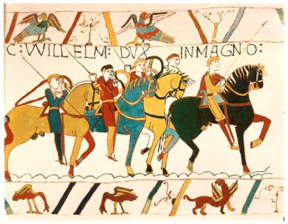
This feature is designed to build critical, informed debate about the character of teacher training, teacher education and professional development. This issue’s problem: Bob Williams is struggling to get the pitch right in teaching topics at GCSE that the school previously taught to Year 7. Bob Williams, now half way...

This short guidance is designed to help you compare the 9-1 GCSE specifications. The first examinations of these new linear GCSEs was in the summer of 2018.

At the HA, we know it’s hard enough trying to grapple with new GCSE units of study, assessment and content without also having to research where you can find interesting or supportive resources, either for your own, or your students subject knowledge. Our secondary committee have pooled resources and helped...
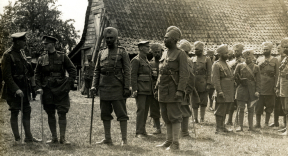
Nick Dennis shows how a ‘multidirectional memory’ approach to teaching history can move history teachers beyond seeing black history as separate or distracting from the history that must be aught at examination level. He gives examples of ways in which a diverse history can be built into examination courses, strengthening...
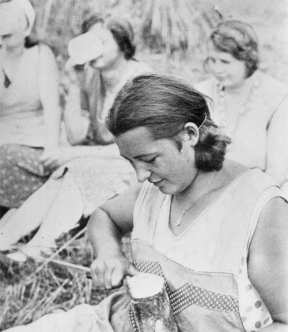
The question of how to prepare students to succeed in the examination while also ensuring that they are taught rigorous history remains as relevant as ever. Faced with preparing students to answer a question that seemingly precluded argument, Rachel Foster and Kath Goudie demonstrate how they used historical scholarship both...

Disappointed that the use of the ‘PEEL’ writing scaffold had led her Year 11 students to write some rather dreary essays, Claire Simmonds reflected that a lack of specific training on historical writing might be to blame. Drawing on genre theory and the work of the history teaching community, Simmonds...
Big changes in assessment at Key Stage 4 took place the last time specifications were reformed. If you want to compare the assessment approaches taken by different examination Boards, then this handy briefing guide will provide you with the introductory information you need to be able to make sense of...

In this article, Michael Maddison provides an overview of what schools must do in relation to promoting British values, as well as preventing extremism and radicalisation, and why it is so important that opportunities are taken in history to deal with these two pressing issues. It is an updated version...
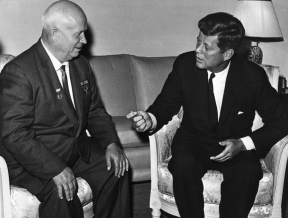
Planning to deliver the new GCSE specifications presents a challenge and an opportunity to any history department, whatever their previous specification. The sweep of history that students will now study at GCSE is much broader than ‘Modern World’ departments are used to; including a medieval or early modern depth study...
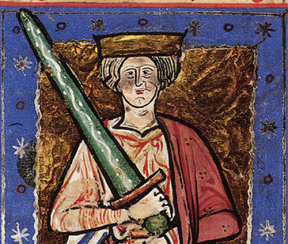
As you will no doubt be aware, GCSEs are changing. New specifications (subject to accreditation) will require students to learn history from a range of different time periods. Different specifications will specify different content, but whichever specification you end up teaching, you are very likely to be teaching some medieval...
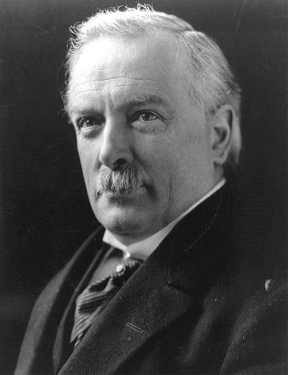
Let's play Supermarket ‘Evidential' Sweep: developing students' awareness of the need to select evidence Despite having built a sustained focus on historical thinking into their planning for progression across Years 7 to 13, Rachel Foster and Sarah Gadd remained frustrated with stubborn weaknesses in the evidential thinking of students in...
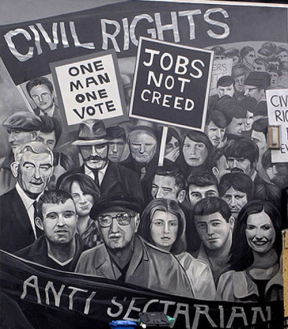
A place for individual enquiry? Why we would miss controlled assessments in history Most history teachers will, at some point, recognise the tension between teaching an engaging history course while at the same time meeting the requirements of an exam specification. Mark Fowle and Ben Egelnick reflect here on how...
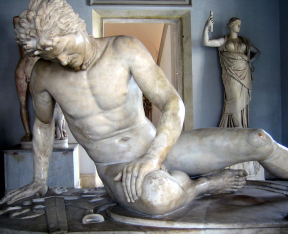
The principles outlined here were developed in response to three key concerns. The first was consideration of the needs of students learning English as an additional language who face particular challenges with reading and writing. Images could perhaps offer them more direct, less abstract, ways into an understanding of challenging...