
Progression & Assessment
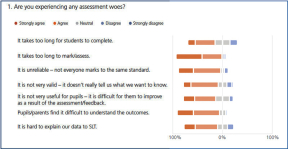
In seeking to answer the question of how to make valid, reliable, and meaningful judgements about students’ work in history, Elizabeth Carr’s department abandoned criteria-based mark schemes and replaced them with a form of comparative judgement conducted in relation to a series of exemplars. In this article, Carr explains the...

Move Me On is designed to build critical, informed debate about the character of teacher training, teacher education and professional development. It is also designed to offer practical help to all involved in training new history teachers. Each issue presents a situation in initial teacher education/training with an emphasis upon...
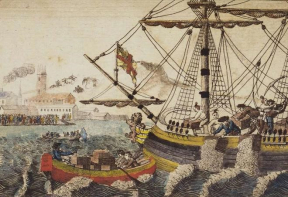
Jonathan Grande explains how he and his department faced up to the paradox that teaching rich detail is vital for good historical learning and is vital for students to remember in the short term, but is not essential to remember for ever. This article sets out his exploration of why...
Move Me On is designed to build critical, informed debate about the character of teacher training, teacher education and professional development. It is also designed to offer practical help to all involved in training new history teachers. Each issue presents a situation in initial teacher education/training with an emphasis upon...
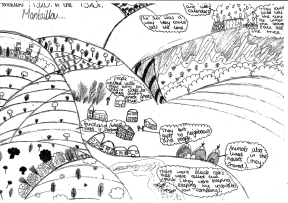
Jacob Olivey set out to design enquiries which would enable his pupils to reconstruct, using evidence, the perspectives of people in the past. In this article he shares in detail the planning and outcomes of two enquiries: one for Year 7 and one for Year 8. Olivey offers a example...
Between 1991 and 1995, secondary history teachers in England and Wales had something of a collective awakening about assessment. It followed a huge policy shift in history education: history’s first National Curriculum, rolled out in 1991. What's the Wisdom On... is a short guide providing new history teachers with an...
Move Me On is designed to build critical, informed debate about the character of teacher training, teacher education and professional development. It is also designed to offer practical help to all involved in training new history teachers. Each issue presents a situation in initial teacher education/training with an emphasis upon...
The 'Move Me On' feature of Teaching History is designed to build critical, informed debate about the character of teacher training, teacher education and professional development. It is also designed to offer practical help to all involved in training new history teachers. Each issue presents a situation in initial teacher...

Move Me On is designed to build critical, informed debate about the character of teacher training, teacher education and professional development. It is also designed to offer practical help to all involved in training new history teachers. This issue’s problem: Robert Nivelle is nearing the end of his first (relatively...
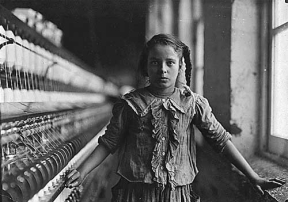
‘Disastrous and terrible.’ For Arnold Toynbee, the historian who gave us the phrase ‘industrial revolution’, these three words sum up the period of dramatic technological change that took place in Britain across the eighteenth and nineteenth centuries. We may not habitually use Toynbee’s description in the classroom, but it is...

The emphasis on the power of secure substantive knowledge reflected in recent curriculum reforms has prompted considerable interest in strategies to help students retain and deploy such knowledge effectively. One strategy that has been strongly endorsed by some cognitive psychologists is regular testing; an idea that Nick Dennis set out...

Narrative is shedding its status as the ‘underrated skill’, re-emerging as a requirement of the new GCSE in England. As Counsell has argued, constructing a narrative is ‘no easy option’, however, and asking students to ‘Write an account…’ lacks the comfortable familiarity of ‘Explain why…’ or ‘How far…’. Fortunately, many...
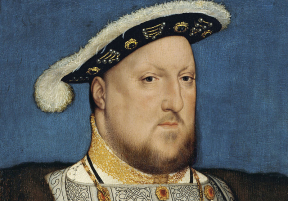
In Teaching History 157, Assessment Edition, a number of different teachers shared the ways in which their departments were approaching the assessment and reporting of students’ progress in a ‘post-levels’ world. This article adds to those examples, first by illustrating how teachers from different schools in the Bristol area are...

You have a wealth of fascinating sources you would love to explore with students but despair at their seeming inability to connect ‘source work' with the construction of historical claims. Year 7 get stuck in the ‘it's biased so we can never know' trap again and again. Year 9 students...
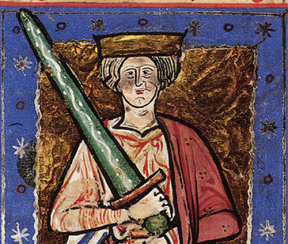
Ten years ago, two heads of department in contrasting schools presented a powerfully-argued case for resisting the use of level descriptions within their assessment regimes. Influenced both by research into the nature of children's historical thinking and by principles of assessment for learning, Sally Burnham and Geraint Brown argued that...
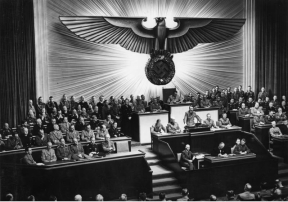
The knowledge that ‘flavours' a claim: towards building and assessing historical knowledge on three scales While marking some Year 11 essays, Kate Hammond found her interest caught by significant differences between one kind of strong analysis and another. Some scored high marks but were less convincing. The achievement in these...
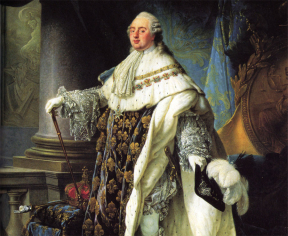
Setting us free? Building meaningful models of progression for a ‘post-levels' world Alex Ford was thrilled by the prospect of freedom offered to history departments in England by the abolition of level descriptions within the National Curriculum. After analysing the range of competing purposes that the level descriptions were previously...
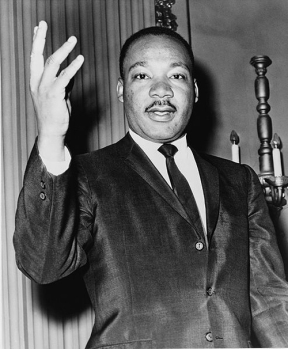
Using regular, low-stakes tests to secure pupils' contextual knowledge in Year 10 Lee Donaghy was concerned that his GCSE students' weak contextual knowledge was letting them down. Inspired by a mixture of cognitive science and the arguments of other teachers expressed in various blogs, he decided to tackle the problem...
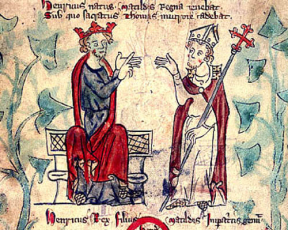
Bridging a twenty-year gap in their practice, Elizabeth Carr and Christine Counsell bring out the similarities in their use of timelines in their planning, teaching and assessment. What they also have in common is the fact that their experimentation with timelines as a way of strengthening cumulative knowledge emerged in...
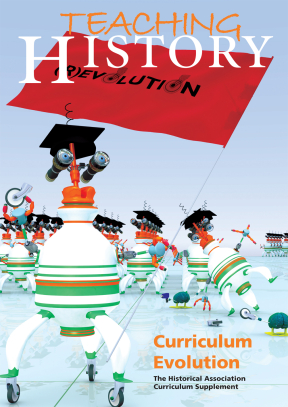
Although modifications to the content of the National Curriculum for history have not been as dramatic as once feared, the effective revocation of the previous attainment target is radical indeed. When these changes are considered alongside the fact that more than half of maintained secondary schools (all academies and free...