
Religion
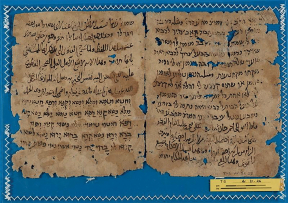
A conversation with some undergraduate students prompted Rob Kanter to explore how his own historical research on Jewish–Muslim relations could be integrated into the history curriculum in secondary schools. Kanter identified two stories of Muslim rescue during the Holocaust which he shares here to empower teachers to challenge misconceptions and...
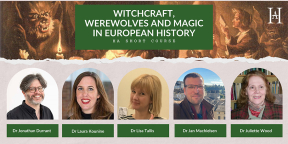
This self-guided short course provides an introduction to European witchcraft history from the fifteenth century to the present. Using a range of primary sources, the course explores important themes and questions relating to witchcraft history, examining how witchcraft has been imagined and understood at different times and in different places,...
Sarah Jackson-Buckley and Jessie Phillips found themselves perennially dissatisfied with the outcomes of their teaching of the Protestant Reformation. Determined that students should take away a sense of the momentous political and social consequences of the Reformation, they turned to historical scholarship, and to the work of other history teachers...
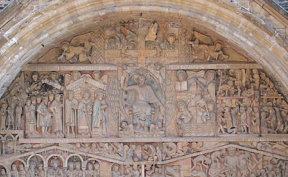
In principle, Rachel Foster had long been aware of the value of creating an interplay between depth and overview across the history curriculum. But in practice, as she acknowledges here, she had tended to shy away from telling outline stories that encompassed a big chronological or geographical range. Recognising the...

Offered five weeks to teach ‘whatever he wanted’ to Year 7, Andrew Slater decided that he wished to tackle the concept of significance head-on early in his students’ time in his school. He chose the expectedly unfamiliar substantive content of the Khmer Empire, challenging his students to justify the significance...
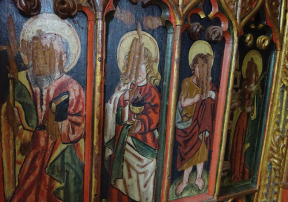
Since the first stirrings of religious reform in the sixteenth century, people have been writing the history of the Reformation, debating what happened and why it happened. John Foxe arguably became the first historian of the English Reformation when he published Actes and Monuments in 1563. Better known as ‘The...
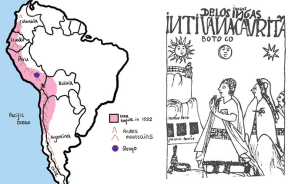
As part of her department’s effort to diversify the history curriculum, Paula Worth began a quest to research and then shape a lesson sequence around the Inkas. Her article shows how she allowed the new topic and its historiography to challenge and extend her own use of sources, particularly oral...
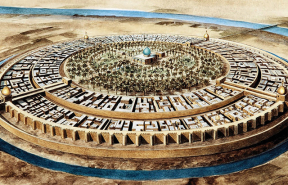
In 2005, in a Teaching History article entitled, ‘A need to know’, Nicolas Kinloch built an argument for teaching the history of Islamic civilisations to all pupils. Afia Chaudhry returns to this theme, reflecting deeply on the needs of her own students – Muslim and non-Muslim alike – within a...
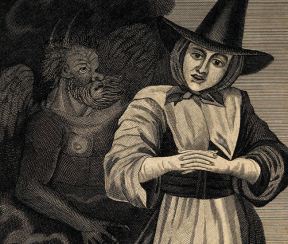
‘Gruesome!’ was how we decided to describe our teaching of seventeenth-century British history, although ‘inadequate’ was probably more accurate. Oh, how much was wrong! We had… Incoherence. The Civil War and Protectorate years plonked in between the Elizabethan Age and the origins of the industrial revolution. We had lost years!...
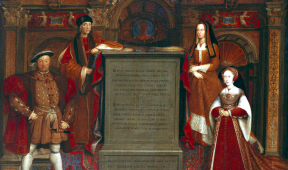
In this film, Professor Sue Doran, Jesus College, University of Oxford, discusses provides an overview of how Tudor Royal Authority developed and evolved from the first Tudor King, Henry VII, to the final Tudor Queen, Elizabeth I. This film is part of a series looking at interpretations of the development...
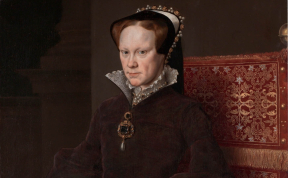
In this film Dr Anna Whitelock from Royal Holloway, University of London, discusses the life of Mary I, the first crowned Queen of England. Dr Whitelock looks at Mary's difficult early life, her submission to Henry VIII and the rise of a warrior princess. Dr Whitelock explores Mary as a...
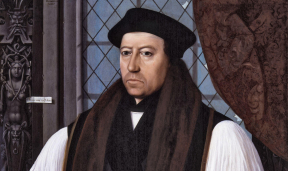
In this film Professor Sue Doran, Jesus College, University of Oxford and Professor Steven Gunn, Merton College, University of Oxford, look at the role religion played in defining the reigns and authority of the Tudor monarchs.
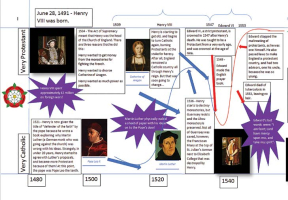
The authors of this article take a well-known structural framework for students’ thinking about the Reformation and give it a twist. Their Tudor religious rollercoaster is informed by local visits in their setting in Guernsey – an area where the local picture was not quite the same as the national...
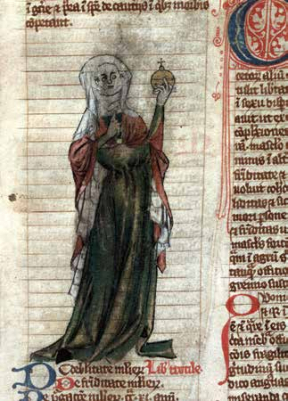
The history of medicine, health, and illness between c. 500 AD and 1500 has received a great deal of scholarly attention in recent decades. It’s a fascinating field that can tell us a great deal about medieval people’s everyday lives and their day-to-day worries: after all, everyone is ill or...
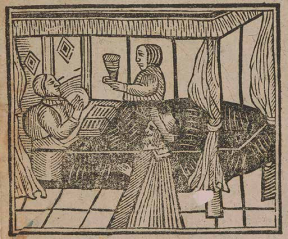
History teachers frequently show pupils visual images and often expect pupils to interrogate such images as evidence. But confusions arise and opportunities are missed when pupils do this without guidance on how to ‘read’ the image systematically and how to place it in context. Barbara Ormond gives a detailed account...
These podcasts and the accompanying scheme of work provide an introduction to some of the key rituals of Ancient Greek religion. The podcasts are for advanced KS2, and KS3 students; Year 13 students (ancient languages) have also successfully used them for background, and they may be helpful in preparation for...
In Part 5 of our series on Social and Political Change in the UK 1800-present we look at religion in the U.K. This set of podcasts features Dr Janice Holmes of the Open University, Revd Dr Jeremy Morris, Dean, Fellow, and Director of Studies in Theology at King's College, Andrew...
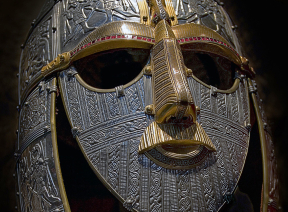
In this HA Podcast Series Professor Joanna Story of the University of Leicester looks at the history of the Anglo-Saxons.
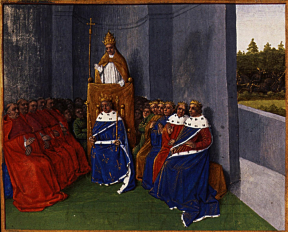
An HA Podcasted History of the Crusades featuring Professor Jonathan Riley-Smith, Professor Jonathan Phillips of Royal Holloway, University of London and Dr Tom Asbridge of Queen Mary, University of London.
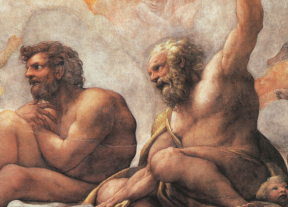
In this set of podcasts Professor Mark Humphries of the University of Swansea discusses the life and significance of both St Peter and Constantine the Great, focusing on their roles in the development of Christianity in the Roman Empire.