
World 1509-1745
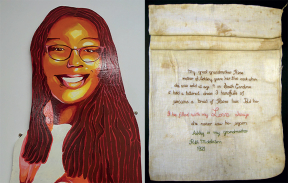
An enslaved mother faces permanent separation from her nine-year-old daughter who is to be sold. She hurriedly places some items in a sack – a lock of her own hair, some pecan nuts, a tattered dress. The daughter, Ashley, keeps the sack and passes on its story to her children....
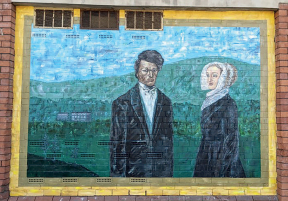
This article summarises the learning from a project that uses local history and geography to support the process of diversifying and decolonising the school curriculum. The project was inspired by a seminar within the University of Sheffield PGCE course, initially taught by Mark Cottingham and intended for history student teachers....
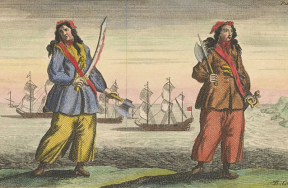
The topic of early modern global piracy has attracted increasing scholarly attention in recent decades, partly due to its own intrinsic interest and, it must be said, its entertainment value. However, historians have also explored its connections with broader themes such as empire and colonisation, social history, global economic networks,...
It has been the same for history teachers all over the country: the dramatic shift in perspective after reading Peter Frankopan’s The Silk Roads. Frankopan’s groundbreaking scholarship transported me to distant lands. His book introduced me to cultures and civilisations previously unknown. I wanted my pupils to venture along the...
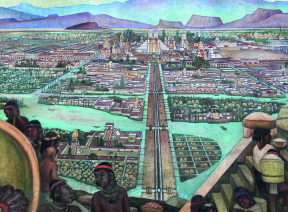
After discussing a new book about the Mexica (Aztecs) during a routine meeting with a trainee teacher, Niamh Jennings decided to construct a sequence of lessons around the history of the Mexica Empire. Struck by the vivid storytelling of historian Camilla Townsend in her book Fifth Sun, and fascinated by...
Professor Malcom Gaskill joined the HA Virtual Branch on Thursday 10 December 2022 to discuss the subject of his book, The Ruin of all Witches, Life and Death in the New World, which was shortlisted for the Wolfson History Prize in 2022. His research explores the attitudes, beliefs and treatment...
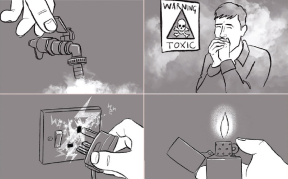
Alarmed by his students’ random use of causal language in their essays, James Edward Carroll resolved to help his students improve their understanding of causal processes. Carroll decided to introduce his students to the metaphors that historians use to describe causation in the historiography of the Salem witch trials. By...
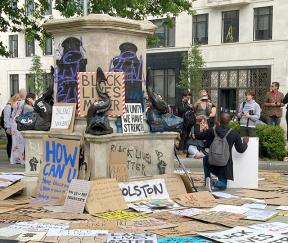
In the light of present-day concerns about the place, in a modern world, of statues commemorating figures whose roles in history are of debatable merit, Dr Gregory Gifford puts the British Empire on trial, presenting a balanced case both for and against. In June 2020 when the statue of slave-trader...
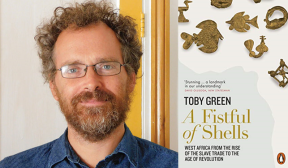
In this Virtual Branch webinar we were joined in conversation with Dr Toby Green on his acclaimed book 'A Fistful of Shells'. Shortlisted for the 2020 Wolfson Prize and winner of the 2019 Nayef Al-Rodhan Prize for Global Cultural Understanding, the book explores West Africa from the Rise of the...
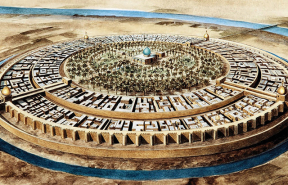
In 2005, in a Teaching History article entitled, ‘A need to know’, Nicolas Kinloch built an argument for teaching the history of Islamic civilisations to all pupils. Afia Chaudhry returns to this theme, reflecting deeply on the needs of her own students – Muslim and non-Muslim alike – within a...
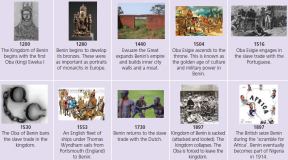
Josh Garry describes his effort to refresh his approach to teaching the British transatlantic slave trade. Drawing on reading, lectures and discussions during an Historical Association Teacher Fellowship programme, Garry built a sequence of lessons designed to contextualise the trade while showing African agency and complexity. The result was a...
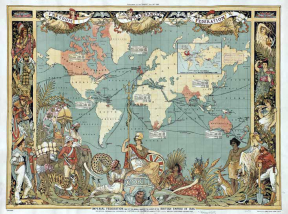
The murder of George Floyd during the summer of 2020 and the ongoing ‘culture war’ in Britain over the legacy of the British Empire have reignited interest in imperial history. This focuses, in particular, on the question of the empire’s impact on Britain itself: on how the act of conquering...
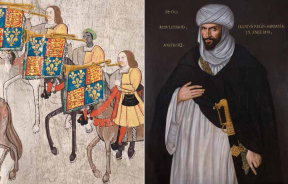
Having been given some additional curriculum time, Kerry Apps and her department made decisions about what had been missing in the previous curriculum diet. Building on an existing enquiry (in TH 176), Apps decided to focus on how and when the idea of race in its modern sense developed in...
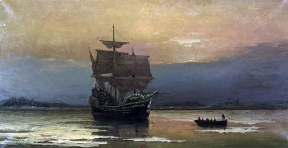
Historian and author Martyn Whittock recently gave a lecture for the HA Virtual Branch on 'Mayflower Lives: building a New Jerusalem in the New World'. In 1620, 102 ill-prepared asylum seekers landed two months later than planned, in the wrong place on the eastern coast of North America. By the...
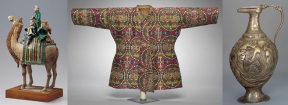
The stimulus for this article came from two developmental tasks that Barbara Trapani was set during the course of her initial teacher education programme: planning her first historical enquiry and bringing the work of an historian into the classroom. Trapani chose to tackle the two tasks together, using Susan Whitfield’s...
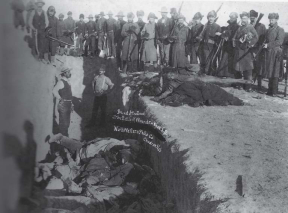
Few sub-fields of American history have undergone as many changes over time as the study of Native Americans/American Indians. While nineteenth- and early twentieth-century historians portrayed Native Americans as savage barbarians or ignored them entirely, late twentieth-century historians portrayed them as victims of circumstance and aggressive European conquest. Today, modern...
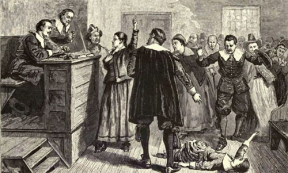
Puzzled by the shrugs and unimaginative responses of his students when asked certain counterfactual questions, James Edward Carroll set out to explore what types of counterfactual questions would elicit sophisticated causal explanations. During his pursuit of the ‘gold standard’ of counterfactual reasoning, Carroll drew upon theories of academic history in...
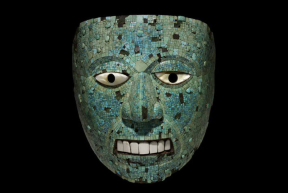
Ian Mursell set up Mexicolore in 1980 with his Mexican partner Graciela Sánchez and has worked since then with a wide variety of heritage and academic partners specialising in Aztec and Maya history. With the Aztecs now becoming a study unit on the OCR 2016 GCSE specification B, the Historical...
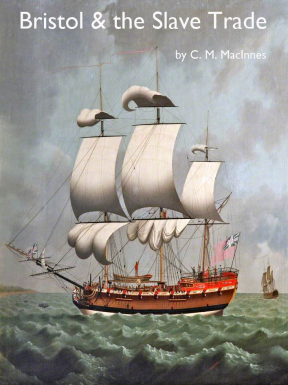
Captain Thomas Wyndham of Marshfield Park in Somerset was on voyage to Barbary where he sailed from Kingroad, near Bristol, with three ships full of goods and slaves thus beginning the association of African Trade and Bristol. In the late sixteenth and seventeenth centuries, Bristol was not a place of...
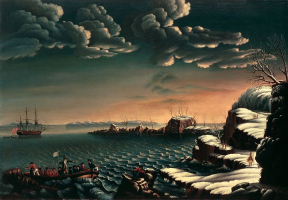
An HA Podcasted History of the early British Empire featuring Professor Trevor Burnard of the University of Warwick, Professor Stephen Conway of University College London, Dr Jon Wilson of King's College London, Professor Gad Heuman of the University of Warwick.